
Table of Contents
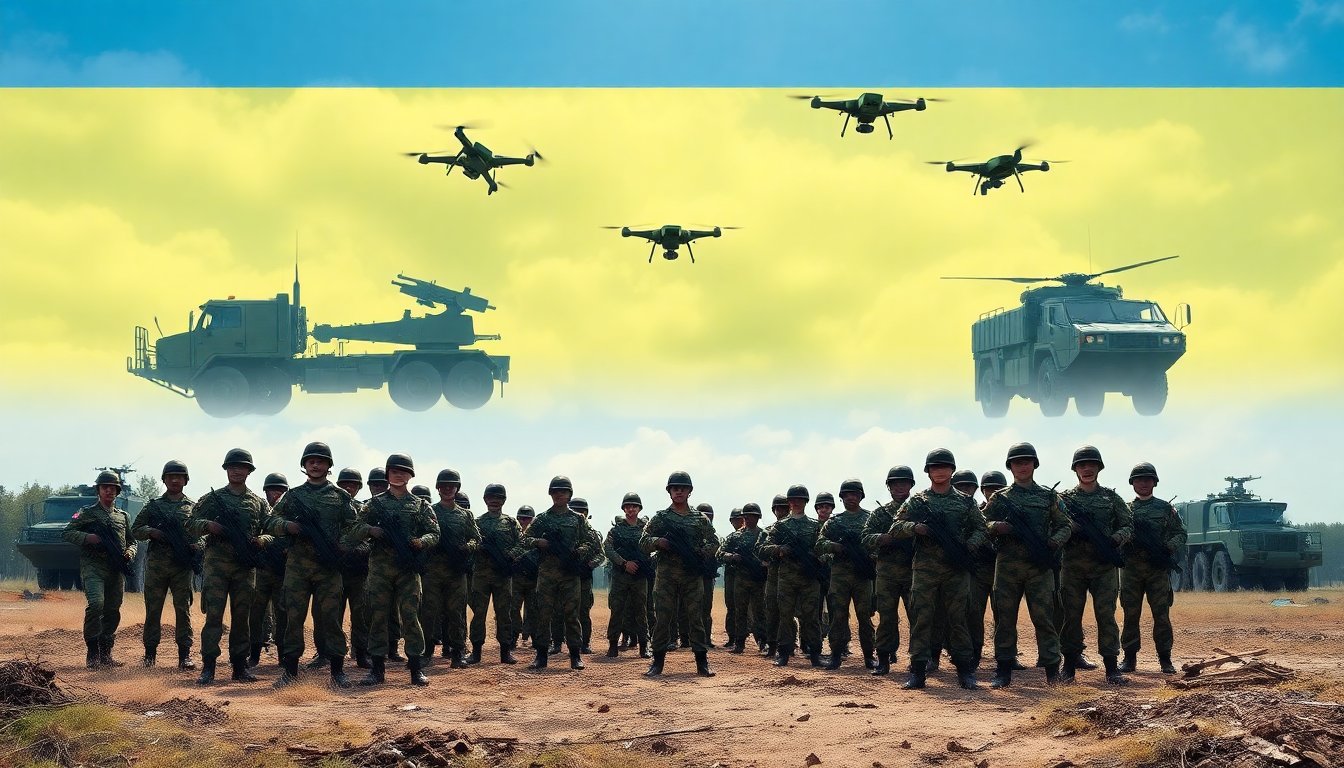
As the dust settles from the ongoing conflict, Ukraine has emerged with the largest military force in Europe. This transformation carries significant implications for both Ukraine and the broader European landscape. The war has accelerated a remarkable evolution in military capacity, yet as the possibility of peace arises, questions remain regarding the sustainability and strategic direction of this newfound strength.
With the threat of Russian aggression still present, Europe recognizes the necessity for a robust defensive posture. However, the challenges of maintaining a large military force amid shifting geopolitical dynamics cannot be overlooked. This article examines the future of Ukraine’s military and the obstacles that accompany such a formidable transformation.
The rise of Ukraine’s military
Ukraine’s journey to becoming a military powerhouse began following the annexation of Crimea in 2014, which prompted a reevaluation of its defense strategy. Armed with support from Western allies, Ukraine has invested significantly in modernizing its forces, acquiring advanced weaponry, and enhancing training protocols. The ongoing conflict has served as a crucible, refining Ukraine’s military capabilities in the face of one of the largest military powers in the world.
Strategic alliances and support
International support has been vital in strengthening Ukraine’s military capabilities. Assistance from NATO countries has been instrumental, providing not only equipment but also intelligence sharing and strategic guidance. Consequently, Ukraine has improved its operational effectiveness across various fronts. Western nations have acknowledged the importance of a secure Ukraine as a bulwark against further Russian expansion, reinforcing the notion that a strong Ukrainian military is essential for European stability.
Challenges of maintaining military strength
While Ukraine’s current military might is impressive, sustaining this strength presents several challenges. The economic impact of war has been profound, and as the nation looks toward reconstruction, reallocating resources to maintain a large military may prove difficult. Securing funding and managing military personnel are crucial factors that require careful planning.
Demobilization and transitioning forces
One pressing issue will be the demobilization of troops once hostilities cease. Transitioning from a wartime footing to a peacetime military can be fraught with complications. Veteran reintegration programs must be developed to assist former soldiers in adapting to civilian life, while ensuring a core of trained personnel remains ready for any future threats. Balancing readiness with the needs of veterans will be both delicate and necessary.
The future landscape of European defense
As Ukraine navigates its post-war military strategy, the implications for European defense are significant. A strong Ukrainian military not only deters aggression from Russia but also influences the security considerations of neighboring countries. European nations may look to Ukraine as a model for enhancing their own defenses, potentially leading to a reassessment of military spending and strategic partnerships across the continent.
Long-term implications for NATO and the EU
Looking ahead, the integration of Ukraine’s military into the broader European security framework presents both opportunities and challenges. NATO’s role in ensuring stability in Eastern Europe will become increasingly important, as a robust Ukrainian military can serve as a deterrent against potential threats. However, the alliance must also address the complexities of integrating a large military force shaped by recent conflicts.
Moreover, the European Union’s role in supporting Ukraine’s military transition will be critical. Economic assistance, coupled with military collaboration, will be essential in ensuring that Ukraine can maintain its military capabilities without compromising economic recovery. The path forward will require strategic foresight and cooperative efforts among European nations to adapt to a new security environment.
As Ukraine emerges from conflict with a formidable military force, the future holds both promise and challenges. The journey to peace necessitates careful planning and coordination, not only for Ukraine but for the entire European continent. The lessons learned during this tumultuous period will shape military alliances and defense strategies for years to come.