
Table of Contents
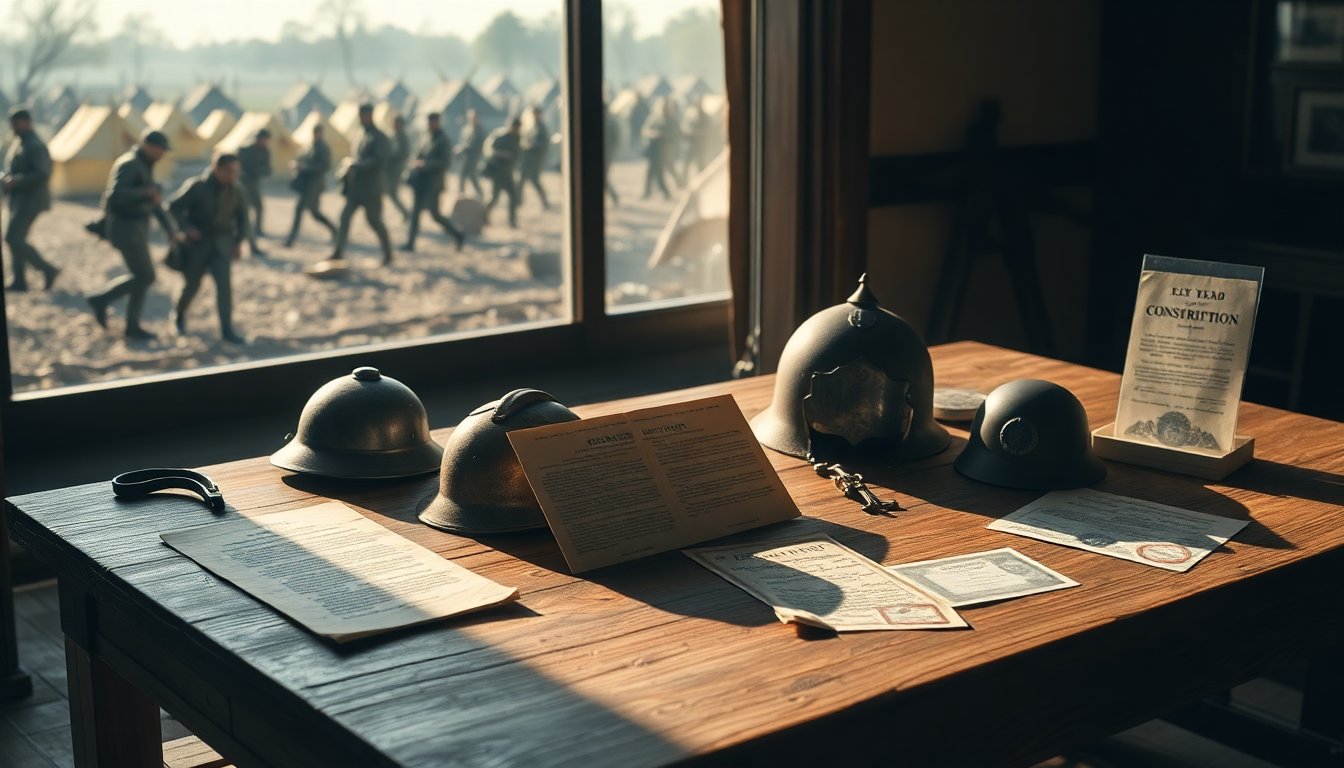
Throughout history, conscription, commonly known as the draft, has significantly influenced military forces in various countries. This practice requires individuals to enlist in military service, particularly during wartime. The roots of conscription date back to ancient civilizations, where mandatory service emerged to meet the state’s demands.
The historical roots of conscription
One of the earliest documented systems of conscription was in the Babylonian Empire during the reign of Hammurabi, around 1791–1750 BC. This system, known as Ilkum, mandated eligible citizens to serve in the royal army during conflicts and to provide labor for state projects in peacetime. In return for their service, individuals received the right to hold land, a privilege often subject to the state’s discretion.
Evolution through the ages
As societies progressed, the methods and implications of conscription adapted accordingly. By the medieval period in Europe, landowners implemented a system mandating all able-bodied men to serve under their local lords. This system, known as the arrière-ban in France, required men aged 15 to 60 to participate in military campaigns, with their equipment determined by their financial status. Such practices underscored the link between social class and military duty, often placing the burden of defense on the lower classes.
Modern developments in conscription
The idea of universal conscription emerged prominently during the French Revolution in the late 18th century, establishing the groundwork for a formidable national army. Following this example, numerous European nations adopted various forms of conscription, compelling young men to serve between one to eight years in active duty before transitioning to reserve forces.
The early 21st century marked a notable change in military policy when countries like Norway and Sweden began to include women in conscription. This development aimed to promote equality within the armed forces, acknowledging the skills and potential of individuals irrespective of gender.
Controversies surrounding conscription
Conscription remains a controversial topic, particularly during times of conflict. Many individuals express concerns regarding the moral implications of mandatory military service. Reasons for opposition range from conscientious objection based on personal beliefs to political dissent against certain governments or wars. Additionally, the historical focus on drafting predominantly men has led to discussions about sexism and fairness in military obligations.
Various countries have established alternative services for individuals who oppose military engagement, enabling them to fulfill civic duties in non-combat roles. Nations such as Finland and Austria offer options for civil service, which provide essential support without direct involvement in military actions.
The contemporary landscape of conscription
Many nations have transitioned away from traditional conscription, opting instead for professional volunteer armies. This shift is based on the belief that military needs can be anticipated, allowing for a standing army made up of volunteers rather than draftees. However, numerous states retain the authority to reinstate conscription during periods of war or crisis, indicating a continued reliance on this historic practice.
Democracies tend to impose conscription less frequently than authoritarian regimes. This trend is often shaped by historical contexts that influence modern policies. For instance, many former British colonies exhibit lower rates of conscription due to a strong anti-conscription sentiment rooted in British history.
Global perspectives on conscription
The practice of conscription varies significantly around the world. Countries like Singapore uphold mandatory military service, while many nations in Western Europe have transitioned to professional volunteer forces. Understanding the historical context of conscription is essential for grasping current military policies, as countries navigate the complex balance between individual rights and collective security.
The history of conscription illustrates a complex relationship among governance, society, and individual rights. As nations develop, the conversations about the necessity and ethics of mandatory military service will continue to evolve, influencing the future of armed forces globally.