
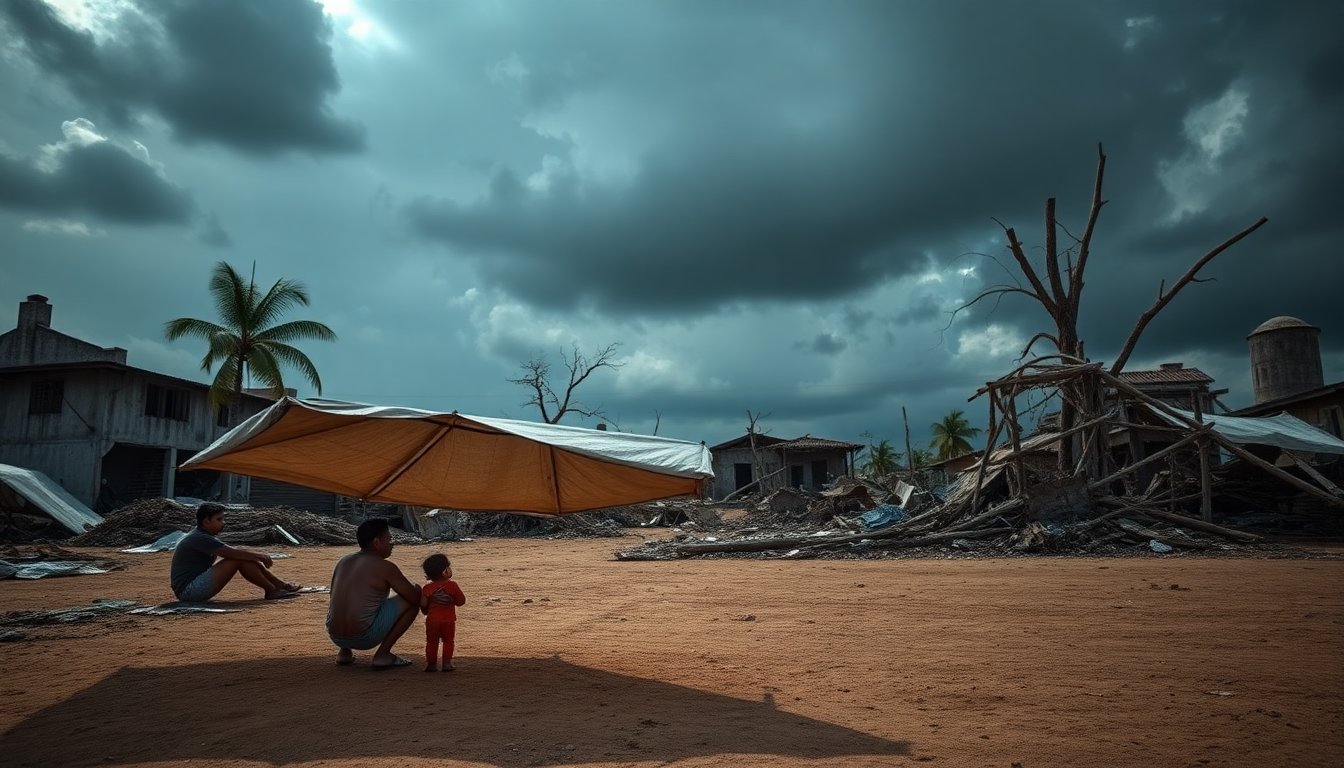
The Philippines is no stranger to the devastating impact of natural disasters. In a short span, the nation has confronted the aftermath of six cyclones, further complicating challenges already posed by a major earthquake. For residents of San Remigio, located in the central region, a simple tarpaulin has become a fragile shield against relentless elements, underscoring their plight.
Weeks prior, a powerful 6.9-magnitude earthquake reduced vibrant neighborhoods to rubble. The survivors, stripped of their possessions, find refuge under thin layers of plastic, struggling for warmth and safety as rain continues to pour.
The impact of Typhoon Kalmaegi
As if the earthquake was not enough, early November brought Typhoon Kalmaegi, locally known as Tino. This fierce storm unleashed heavy rainfall upon already beleaguered families, worsening their dire living conditions. Roads that once connected communities were washed away, isolating those who desperately needed assistance.
The struggle for survival
In the face of such adversity, the resilience of the Filipino people becomes evident. Many families have sought refuge in makeshift shelters, constructed from salvaged materials. These structures, while providing minimal protection, exemplify the human spirit’s capacity to endure.
However, the psychological toll of living in constant fear of destruction cannot be ignored. The uncertainty of each storm weighs heavily on the minds of those affected. Survivors often grapple with not only the elements but also the emotional scars left by previous disasters.
Building a foundation for recovery
Recovery from catastrophic events is a lengthy and challenging process. Local and national governments, along with various humanitarian organizations, are mobilizing to provide aid. Food, clean water, and medical supplies are critical components of these relief efforts, striving to restore a sense of normalcy amidst chaos.
Community support systems
The strength of community ties becomes increasingly evident during these trying times. Neighbors come together to share resources, offering support and comfort. This solidarity serves as a lifeline for many, fostering an environment where hope can thrive despite the devastation.
Alongside immediate relief, there is a growing recognition of the need for long-term solutions. Infrastructure improvements are essential to withstand future disasters, and educational programs focused on disaster preparedness are being implemented. These initiatives aim to equip communities with the knowledge and tools necessary to navigate nature’s challenges.
The cycle of resilience
The Philippines’ struggle against the forces of nature is ongoing, yet the resilience of its people remains profound. Each disaster presents new challenges while highlighting the unyielding spirit of a nation that refuses to be defeated. As the country continues to rebuild and recover, it stands as a testament to the power of hope, community, and the relentless pursuit of a better future.


