
Table of Contents
“`html
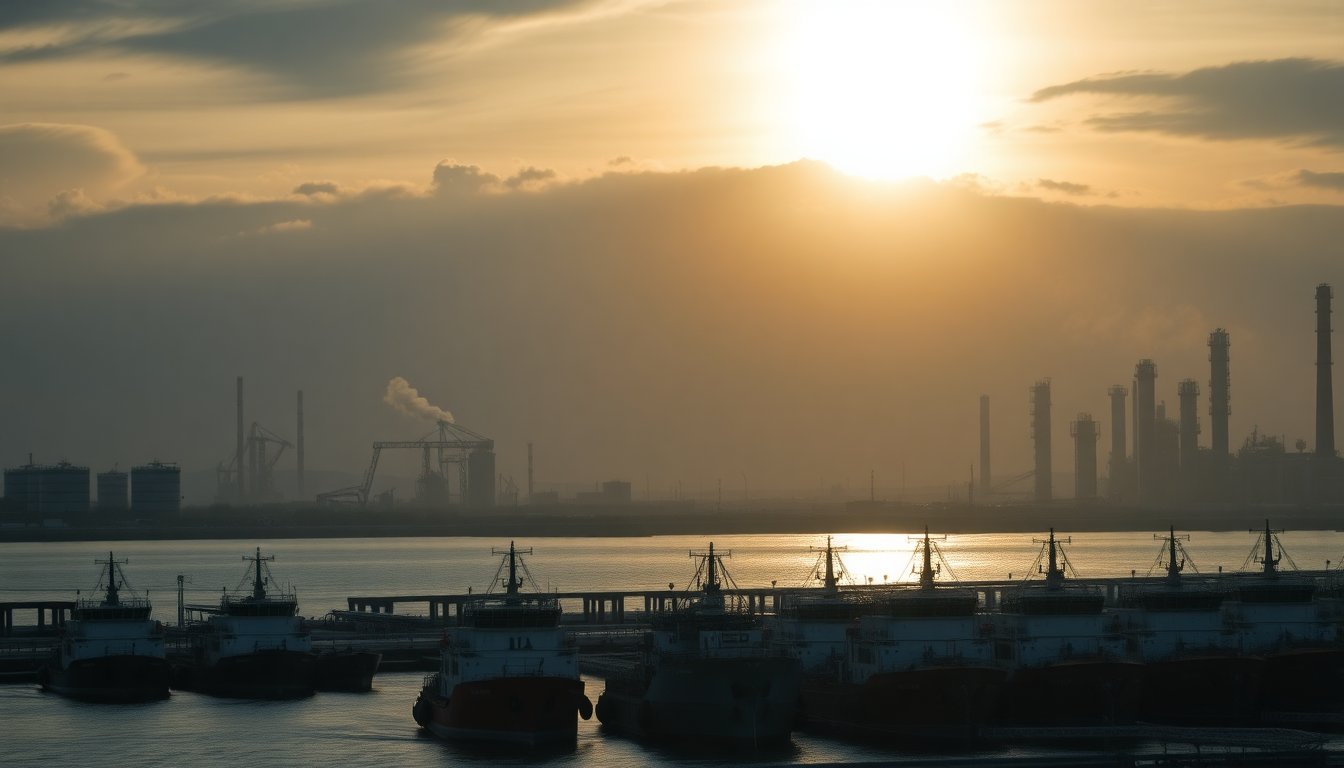
Recent developments in the U.S.-Venezuela relationship have cast a shadow over the future of Venezuelan oil exports. With approximately 70% of the nation’s oil shipments depending on a fleet of vessels already under sanctions, the U.S. military is now ramping up its efforts to enforce these restrictions. This shift not only threatens Venezuela’s struggling economy but also reshapes the broader global oil market.
President Donald Trump announced a comprehensive blockade targeting all sanctioned oil tankers associated with Venezuela. The decision, communicated via his social media platform Truth Social, marks a significant escalation in the United States’ economic pressure on the regime of President Nicolás Maduro. Trump asserted that the Venezuelan government exploits its oil resources to fund various illicit activities, including narcoterrorism and human trafficking.
U.S. Military Strategy in the Caribbean
Trump’s declaration comes amid a broader military initiative to combat drug trafficking emanating from Venezuela. Since August, the U.S. has increased its naval presence in the Caribbean, targeting vessels suspected of engaging in drug trade. Although the U.S. claims these actions are part of a war on drugs, their legality has been questioned by international bodies such as the United Nations.
As part of this intensified campaign, U.S. forces have engaged in operations against numerous vessels. Reports indicate that at least 26 ships have been targeted, resulting in the loss of approximately 95 lives. This military strategy aims to create a significant naval blockade that, according to Trump, represents the largest in South America’s history.
Venezuela’s Response to U.S. Actions
In response to these aggressive measures, the Venezuelan government has labeled Trump’s actions as ridiculous threats. Officials in Caracas assert that the U.S. is irrationally attempting to impose a naval blockade to seize Venezuelan resources. They argue that this strategy is aimed at undermining the government and appropriating the nation’s wealth, particularly its lucrative oil reserves.
This narrative portrays Venezuela as a target of U.S. imperialism, with Maduro’s administration alleging that the true aim of Washington is to destabilize the government and gain control over Venezuelan oil. The Venezuelan officials maintain that they are fighting against an unjust external aggression.
The Impact of Sanctions on Venezuelan Oil Exports
Since 2019, Venezuelan oil has been under a strict U.S. embargo, drastically limiting its ability to engage in international trade. The country has resorted to selling its oil on the black market, primarily to nations like China, but at significantly reduced prices. The economic ramifications of these sanctions have been dire, with the Venezuelan economy facing severe contractions.
Recently, U.S. military forces seized a tanker named the Skipper in the Caribbean, which was reportedly en route to Cuba. This vessel was allegedly carrying between one and two million barrels of Venezuelan crude oil, valued at approximately $50 to $100 million. The Skipper had been under U.S. sanctions for some time due to its alleged connections with Iranian Revolutionary Guards and the Lebanese group Hezbollah.
International Reactions and Future Outlook
The tightening of U.S. sanctions has garnered mixed reactions both domestically and internationally. Venezuelan opposition leader María Corina Machado welcomed the U.S. government’s actions, urging Washington to apply increased pressure on Maduro to facilitate his departure. This perspective aligns with the sentiments of many who view the sanctions as necessary to restore democracy in Venezuela.
However, the long-term effects of such aggressive policies remain uncertain. While they aim to cripple the Maduro regime economically, they may also lead to increased hardship for ordinary Venezuelans, who are already facing critical shortages of essential goods and services. As the situation continues to evolve, the global oil market must brace for potential disruptions stemming from these geopolitical tensions.
“`