
Table of Contents
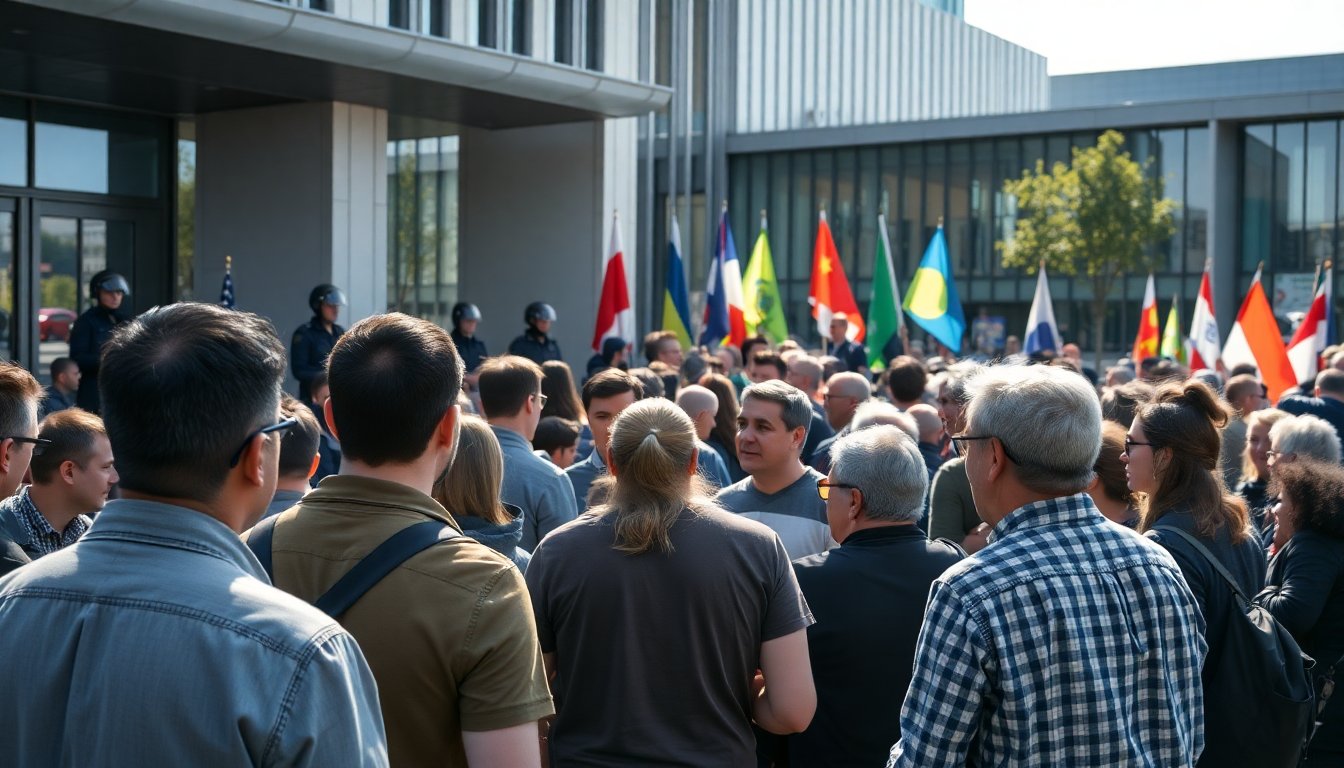
The recent Battle for the Soul of Europe conference in Brussels has become a focal point for discontent toward the European Union’s political establishment. Following last year’s event, which was marred by protests and security concerns, this year’s gathering featured an open-door policy and increased security, reflecting a shift in the political climate. With public sentiment increasingly critical of EU governance, organizers aim to harness this wave of dissatisfaction.
Amid a significant corruption scandal involving high-ranking EU officials, the atmosphere at the conference was charged with opportunity. Hosted by MCC Brussels, a think tank closely associated with Hungarian Prime Minister Viktor Orbán, the event gathered a diverse array of right-wing politicians, activists, and commentators from across Europe, all eager to voice their grievances against the establishment.
Corruption and the EU’s image
Just a day before the conference began, news broke of the arrest of two prominent EU figures, which many attendees viewed as a validation of their long-standing criticisms of the Brussels elite. Balázs Orbán, political director to the Hungarian Prime Minister, emphasized the significance of this event in an interview, stating that the actions of a corruption-riddled elite have damaged public trust across Europe. He remarked, “The perception of a technocratic elite mismanaging policies is palpable among European voters, mirroring sentiments expressed by voters in the United States regarding Europe’s issues.”
Response from political leaders
During the gathering, the mood was one of defiance. Polish politician Ryszard Legutko, co-chairman of the European Conservatives and Reformists group, directed sharp criticism at EU Commission President Ursula von der Leyen, declaring, “The fish stinks from its head,” which resonated with attendees who feel that leadership is disconnected from the populace. This sentiment was echoed by John O’Brien, one of the conference organizers, who noted that public discourse around immigration and economic management has shifted dramatically, empowering individuals to voice their concerns.
Public sentiment and political ramifications
The unfolding scandal has provided ample material for right-wing factions to leverage against the EU’s mainstream leadership. During a panel discussion, French National Rally MEP Thierry Mariani and British political analyst Matthew Goodwin plan to delve into what they term the “deep-state web” comprising civil servants, NGOs, and institutions perceived as disconnected from the public. This discourse reinforces the narrative that the EU is plagued by systemic issues, further fueling right-wing populism.
Challenges and skepticism
However, not all perspectives within the conference were optimistic about the implications of the corruption scandal for upcoming elections. Balázs Orbán expressed skepticism, suggesting that such allegations are hardly surprising and may not significantly influence upcoming political contests, including his boss’s re-election campaign. He stated, “Honestly, this is not a big surprise for me, so it doesn’t add too much to our strategy.”
Conversely, Daniel Freund, a member of the European Parliament from the German Greens, challenged the far-right’s claims to be champions of anti-corruption efforts, asserting that they are part of the problem rather than the solution. Freund pointed out that the far-right Patriots group has consistently opposed measures aimed at strengthening anti-corruption frameworks.
The EU’s defensive posture
As the scandal unfolds, EU leadership finds itself on the back foot, with limited capacity to respond due to ongoing legal proceedings. This has raised alarms among some political figures, such as Manon Aubry, co-chair of The Left group in the European Parliament, who warned that the integrity of EU institutions is at stake. Simultaneously, calls for a stronger stance from von der Leyen’s coalition have emerged, urging decisive action to counter the narrative of bureaucratic corruption.
Raquel García Hermida-van der Walle, a Dutch MEP, articulated the need for a European-wide response to these issues, emphasizing an approach of zero tolerance towards corruption and the necessity for enhanced tools to address fraudulent activities, whether related to the ongoing Qatargate scandal or new fraud allegations.
The Battle for the Soul of Europe conference not only illuminates the rising tide of public frustration with the EU but also underscores the complex dynamics within European politics as far-right groups seek to capitalize on these sentiments in an increasingly polarized landscape.