
Table of Contents
“`html
In the midst of Hong Kong’s evolving political landscape, few figures stand out as prominently as Jimmy Lai. A renowned media tycoon, Lai’s journey from a factory worker to a billionaire entrepreneur is intertwined with his fervent advocacy for democracy. His story is not just about personal success; it reflects the broader struggle for freedom in a region increasingly under the shadow of authoritarianism.
Early life and rise to success
Born in mainland China, Lai’s childhood was shaped by the oppressive regime of Mao Zedong. His family, once prosperous, faced persecution, leading his father to escape to Hong Kong. At the tender age of 12, Lai followed his father, embarking on a perilous journey that would ultimately define his life and career. Arriving in Hong Kong on a fishing boat, he initially toiled in a factory, where he discovered his entrepreneurial spirit.
Establishing a media empire
After years in the textile industry, Lai ventured into the fast-paced world of media. In 1995, he launched Apple Daily, a newspaper that quickly became known for its bold reporting and critical stance against the Chinese government. The publication’s popularity soared, transforming Lai into a significant media figure. His vision was to provide a platform for free expression, which he believed was essential for a thriving society.
Advocacy and political involvement
As Hong Kong transitioned from British rule to Chinese sovereignty in 1997, Lai’s commitment to democracy intensified. He recognized the importance of freedom of speech and began to use his media influence to challenge the Chinese Communist Party (CCP). His activism reached new heights during the Umbrella Movement, where he joined thousands in demanding universal suffrage and political reforms.
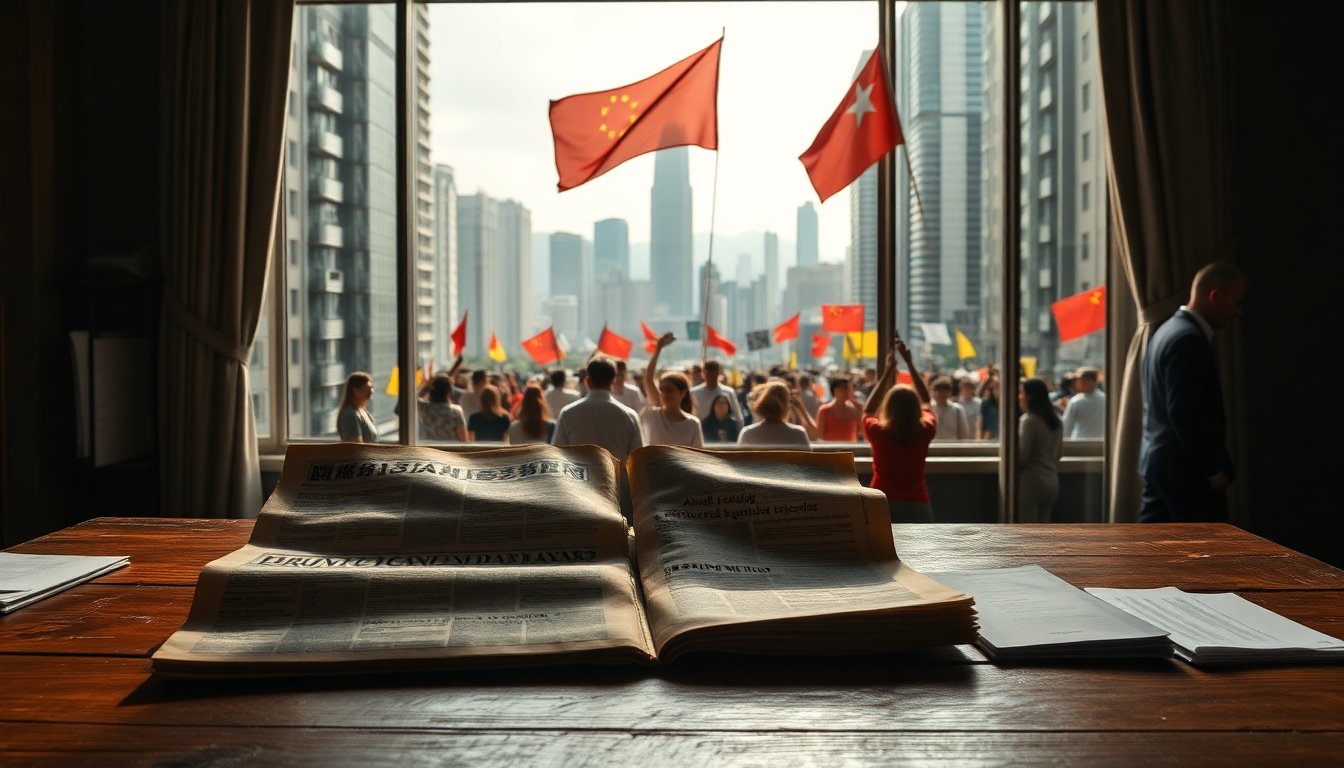
In 2019, the city erupted in protests against a controversial extradition bill, which many viewed as a direct threat to Hong Kong’s autonomy. Lai emerged as a key figure, using Apple Daily to rally support and mobilize citizens. However, his outspoken criticism of the CCP came with dire consequences.
Facing imprisonment
In recent times, the Chinese government implemented a sweeping national security law aimed at quelling dissent in Hong Kong. Lai was arrested and faced numerous charges, including colluding with foreign forces. Despite the risks, he remained steadfast in his beliefs, viewing his imprisonment as a badge of honor in the fight for democracy.
Personal beliefs and resilience
Throughout his trials, Lai’s faith has played a crucial role in his resilience. His Catholic beliefs deepened during solitary confinement, where he found solace in prayer and reflection. Friends who visited him reported that he maintained a sense of peace, despite the harsh conditions. Lai’s commitment to his principles remains unbroken, as he continues to advocate for the values he holds dear.
Through his journey, Lai has become a symbol of resistance against oppression. His story resonates with many who seek freedom and democracy in an increasingly authoritarian world. As Hong Kong grapples with its identity and future, Lai’s narrative serves as a powerful reminder of the enduring spirit of those who dare to stand up for their beliefs.
The impact of his legacy
Jimmy Lai’s influence extends beyond his media empire; he represents a larger movement for democratic ideals in Hong Kong. The challenges he faces highlight the struggles of countless others who fight for their rights. His legacy, marked by both triumph and tribulation, underscores the importance of resilience in the face of adversity.
In conclusion, the saga of Jimmy Lai is not just a personal story; it is emblematic of the broader fight for democracy in Hong Kong. As he continues to navigate the complexities of his situation, Lai remains a beacon of hope for many, inspiring future generations to pursue freedom and justice.
“`