
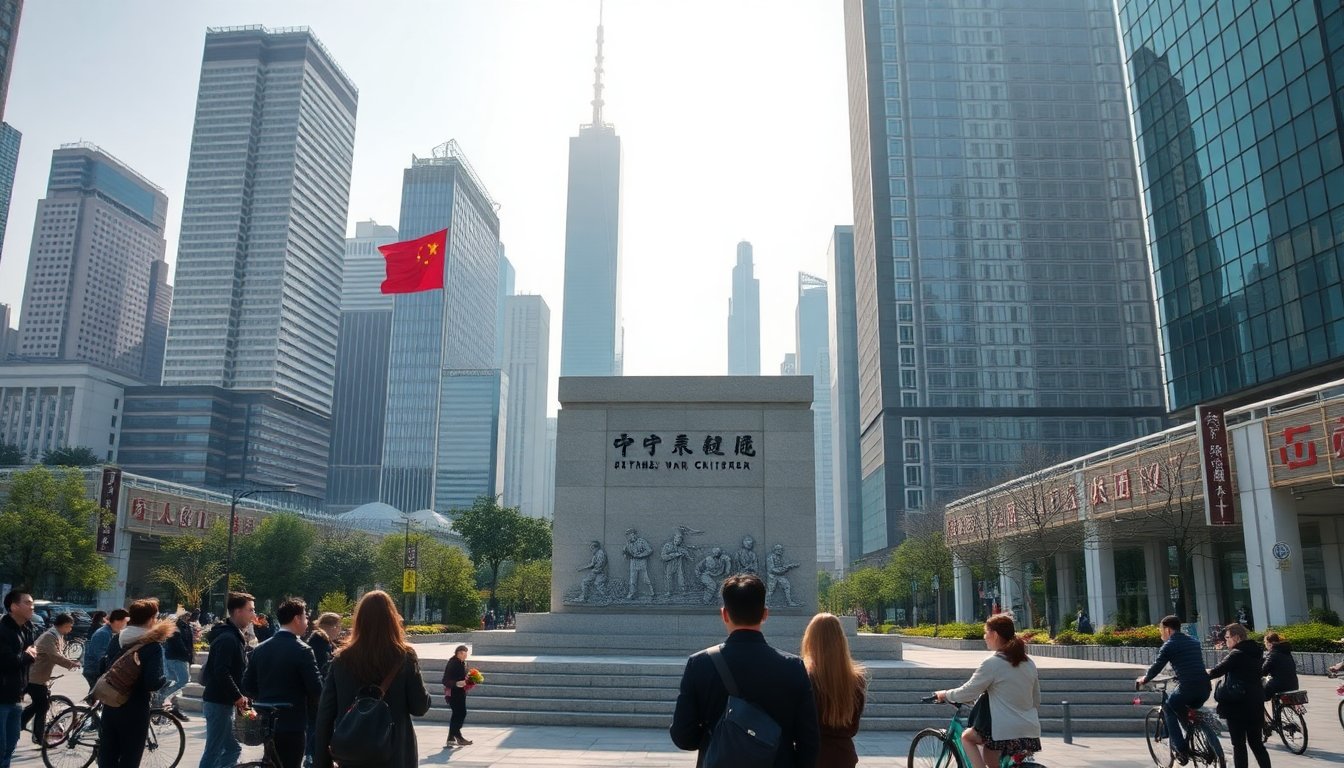
In the rich tapestry of modern Chinese identity, historical events play a vital role in shaping societal values and political ideologies. Have you ever wondered how past conflicts continue to influence a nation’s present? The commemoration of events like the war against Japan does more than honor those who fought; it unites diverse factions around a common narrative. This narrative is particularly relevant today as political groups wrestle with their identities in a rapidly changing geopolitical landscape.
Historical Context and Its Relevance
The war against Japan, which raged from 1937 to 1945, is often viewed through a dual lens in China’s historical narrative. On one hand, it’s a story of resilience and national pride; on the other, it’s a poignant reminder of the sacrifices made for national sovereignty. During this tumultuous period, the Kuomintang (KMT) and the Communist Party of China (CPC) formed a temporary alliance—a significant chapter that illustrates how shared struggles can transcend political divisions. Isn’t it fascinating how history can shape alliances even in the most challenging times?
As we reflect on this past, it’s crucial to consider how these historical memories are invoked in contemporary political discourse. For example, Hung Hsiu-chu, the former KMT chairwoman, highlighted the unified nature of this history, asserting that it transcends provincial and party lines. Such sentiments resonate deeply within the political fabric of both Taiwan and mainland China, where historical narratives continue to influence governance and public sentiment. How does this shared history impact the everyday lives of people today?
Political Implications of Shared History
In present-day China, commemorating the war against Japan is more than just a ritual; it’s a strategic element in political rhetoric. The KMT, which retreated to Taiwan after the civil war, is navigating its identity as the primary opposition party. By positioning itself as a more Beijing-friendly alternative to the ruling Democratic Progressive Party (DPP), the KMT reflects a complex relationship with historical memory. Their emphasis on resisting Japanese aggression seeks to reaffirm their legitimacy and relevance in Taiwanese politics. Isn’t it intriguing how history can be leveraged for political gain?
Moreover, acknowledging a shared historical narrative fosters a sense of national unity amid political fragmentation. As various factions strive to define their identities, invoking a collective memory of sacrifice and resilience becomes a potent tool for rallying support and asserting political legitimacy. This dynamic is particularly pronounced in cross-strait relations, where historical grievances can resurface in political discussions. What does this mean for the future of these relationships?
Future Perspectives: The Importance of Historical Reflection
Looking forward, the role of historical memory in shaping political identities is crucial. As tensions rise in the region, narratives surrounding the war against Japan are likely to play a vital role in both domestic and international politics. The lessons learned from that era may guide future actions and policies, especially in diplomacy and national security. How will these historical insights influence the decisions of tomorrow?
As younger generations engage more actively in political discourse, their understanding of this shared history will significantly impact the trajectories of both Taiwan and mainland China. Educational initiatives and public commemorations will be essential in ensuring that the sacrifices of the past are not forgotten but instead serve as a foundation for a more cohesive future. Ultimately, the dual legacy of the war against Japan will continue to resonate within the hearts and minds of the Chinese people, shaping their collective identity for years to come. Isn’t it powerful to think about how history continues to shape our present and future?


