
Table of Contents
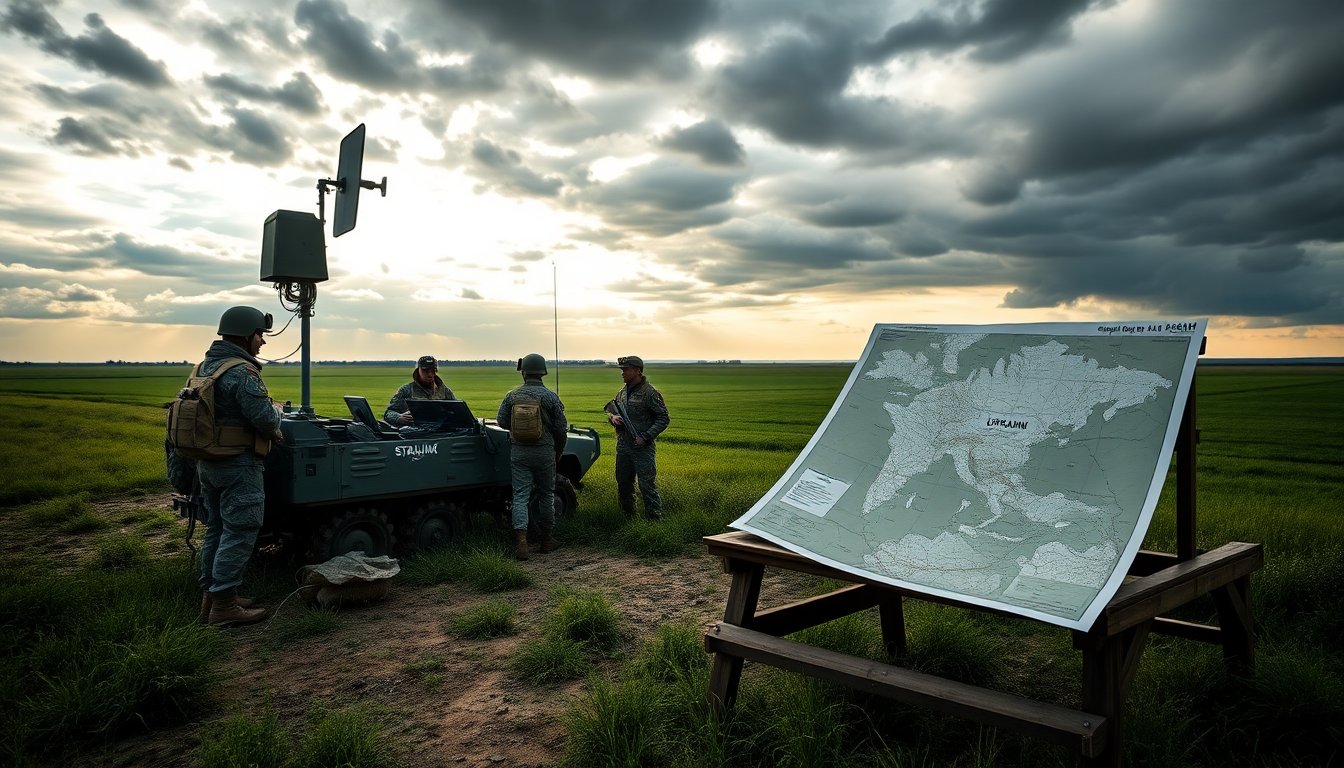
In the midst of the ongoing conflict between Ukraine and Russia, the significance of Starlink satellite technology has come to the forefront. Originally designed for civilian use, this innovative communication system has evolved into an essential asset for military operations. Following the escalation of hostilities, the Ukrainian military has harnessed the power of Starlink, while Russian forces have also sought to exploit its capabilities, leading to a complex tug-of-war over satellite communications.
As February rolled in, reports emerged indicating that Russian troops on the frontline had suddenly lost access to their Starlink connections. While Ukraine’s military had been utilizing Starlink since the commencement of the full-scale invasion, many Russian units had been relying on smuggled devices to facilitate their communications. SpaceX, the company behind Starlink, had previously turned a blind eye to such unauthorized usage, creating an unregulated battleground of satellite connectivity.
The dynamics of Starlink in Ukraine’s military strategy
Throughout the initial two years of the conflict, the Ukrainian military developed a robust communications framework heavily reliant on thousands of Starlink devices generously donated by SpaceX. This extensive network enabled seamless information exchange, troop command, and sophisticated control over long-range sea and air drones. However, the effectiveness of Starlink was hampered when drones ventured into Russian airspace, as SpaceX does not officially operate within Russian territories, resulting in disrupted connectivity.
Challenges and limitations
Furthermore, Elon Musk, the founder of SpaceX, had previously restricted Starlink’s coverage in Crimea to prevent potential Ukrainian offensives against Russian naval assets. This limitation became evident during a significant Ukrainian incursion into Russia’s Kursk region in, where Ukrainian forces lost their Starlink-enabled command system.
On the other hand, Russian forces had been acquiring contraband Starlink terminals since as early as. Despite the lack of formal endorsement from the Russian Defense Ministry, numerous volunteer groups facilitated the distribution of these devices, enabling frontline units to stream drone footage back to their command centers. By utilizing platforms like Discord, which was officially banned in Russia, they circumvented government jamming efforts, creating an efficient communication loop that resembled the operations of a video game.
The recent shift in Starlink access
Until recently, both Kyiv and SpaceX had hesitated to crack down on the unauthorized usage of Starlink by Russian forces, primarily due to concerns over the potential ramifications for Ukrainian troops, who possessed a larger number of unverified terminals. However, the situation took a dramatic turn when Ukraine’s then-digital transformation minister, Mykhailo Fedorov, now the defense minister, announced plans to work with SpaceX to deactivate all unauthorized terminals within Ukraine. This move aimed to secure the satellite network while preventing Russian access.
Implementing a registration system
To facilitate this transition, a registration system was proposed, allowing Ukrainian users to verify their terminals online. This system was crucial to ensure that pro-Russian entities could not register devices remotely. Despite the potential for operational disruption, the Ukrainian military recognized the necessity of maintaining control over their Starlink access, as it served as the backbone of their command structure.
As the conflict evolved, Russian forces had increasingly turned to Starlink for their operations, relying on the technology to execute missions that previously required more expensive missile systems. By outfitting drones with Starlink antennas, they could conduct strikes on various military and logistical targets without the substantial costs associated with traditional munitions.
Future implications of the Starlink cutoff
The recent disruption of Starlink access for Russian frontline units holds significant implications. The ability to transmit real-time drone footage and manage logistics under challenging battlefield conditions is now compromised. Without reliable satellite communication channels, the coordination of troop movements and supply logistics becomes increasingly difficult, potentially altering the dynamics on the battlefield.
While alternative high-speed internet options exist, such as civilian fiber-optic networks, they are notably less efficient and far more labor-intensive than the streamlined operation provided by Starlink. The absence of reliable satellite connectivity may force Russian forces to revert to these cumbersome methods, hampering their operational effectiveness.
In conclusion, as the conflict continues to unfold, the role of Starlink in military communications remains critical. The ongoing battle over satellite access highlights the intricacies of modern warfare, where technology can be both a boon and a bane, shaping the strategies and outcomes of military engagements.