
Table of Contents
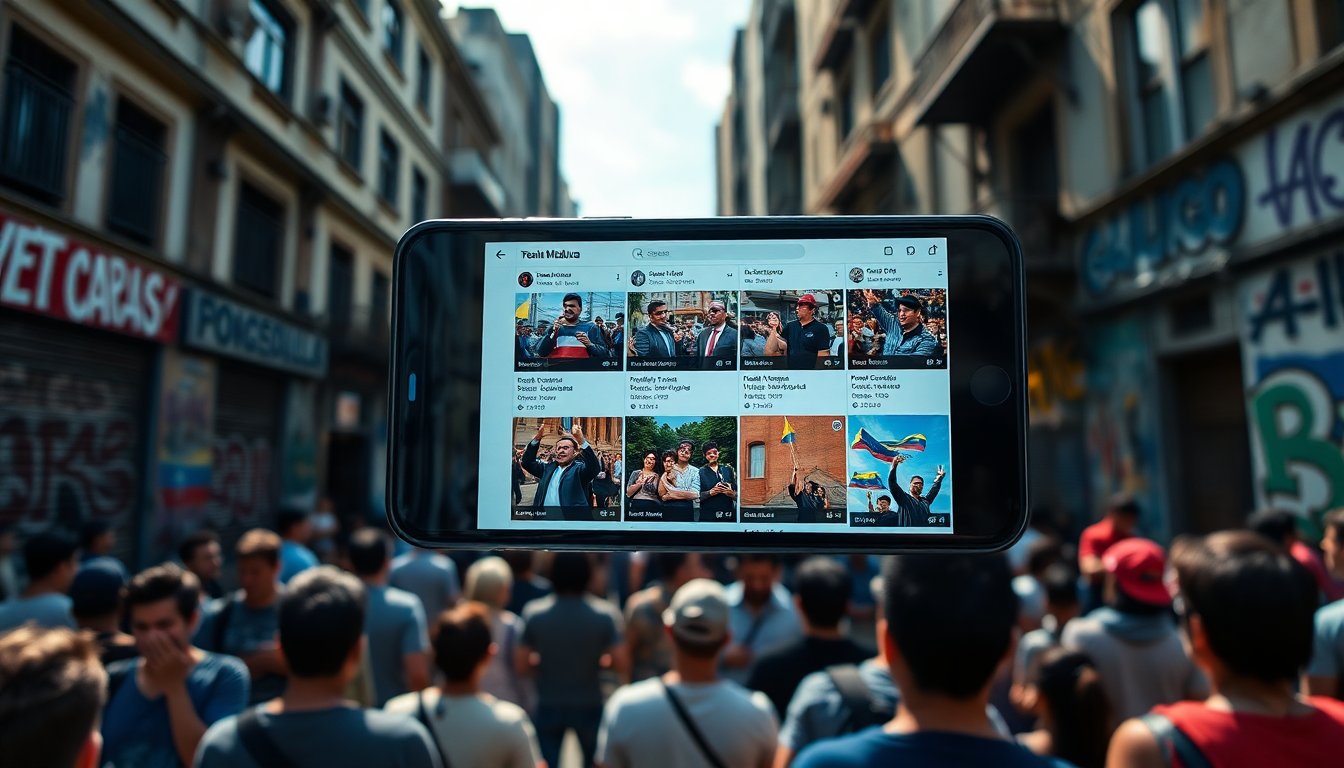
Following the capture of Venezuelan leader Nicolas Maduro<\/strong> by US forces, a surge of visual misinformation<\/strong> has emerged on social media platforms. This phenomenon, marked by a blend of AI deepfakes<\/strong> and outdated images, raises concerns about the prevalence of fabricated content overshadowing authentic news reports. Posts are accumulating millions of views, complicating the digital landscape as hyper-realistic yet misleading visuals compete for attention alongside genuine updates from journalists.<\/p>
The facts
Following a recent raid, social media users began sharing images claiming to show Venezuelan President Nicolás Maduro in U.S. custody. One image, depicting a younger-looking Maduro with American troops, was later revealed to be artificially generated. Google’s AI tool, Gemini, detected an invisible watermark known as SynthID, indicating the content’s AI origin.
The consequences
Additionally, several posts featured an image that purportedly showed an American soldier with a hooded Maduro. However, this image was actually from 2003, capturing the moment of former Iraqi leader Saddam Hussein’s capture. These examples highlight a troubling trend of misinformation that spreads quickly, often using historical images out of context to mislead viewers.
The facts
The disinformation monitoring organization NewsGuard reported seven notable instances of fabricated or misrepresented visuals related to operations in Venezuela. These misleading images and videos garnered over 14 million views on the platform X within 48 hours. This situation highlights the troubling reality of today’s digital environment, where the lines between fact and fiction are increasingly blurred.
The role of AI in misinformation
As AI technology advances, tools for creating hyper-realistic visuals have become more affordable and widely available. This trend, often termed AI slop, refers to mass-produced content that can mislead users due to its lifelike quality. Chiara Vercellone, a senior analyst at NewsGuard, stated that while these visuals may not significantly impact the factual landscape, they reflect an evolving strategy used by those disseminating misinformation. The challenge for fact-checkers lies in the fact that these visuals closely mimic reality, complicating efforts to debunk falsehoods.
The facts
Former President Donald Trump is among those who contributed to the spread of misinformation following a recent U.S. operation. Trump shared a viral video on his Truth Social network, claiming it showed Venezuelans celebrating and running through the streets in their underwear after the capture of President Nicolás Maduro. However, fact-checkers confirmed that the footage was unrelated to any political event.
What really happened
The video in question actually depicts students participating in the UCLA Undie Run, an annual tradition at the University of California, Los Angeles. This event features students running in their underwear through the streets to raise money for charity, not a political demonstration.
The facts
A recent surge of AI-generated content has sparked both creativity and confusion. One video featured Venezuelan President Nicolás Maduro and former U.S. President Donald Trump dancing in the Oval Office. Another clip depicted Maduro with prisoners in orange jumpsuits. These satirical portrayals highlight the digital landscape’s dual role as a platform for humor and a source of misinformation.
What happened
Maduro appeared in a New York court to plead not guilty to charges of drug trafficking and narco-terrorism. His legal troubles coincide with ongoing political tensions in Venezuela. Interim President Delcy Rodriguez stated that no foreign power controls Venezuela, countering Trump’s claims about U.S. involvement during the transition. This complex situation complicates public understanding amid widespread misinformation.