
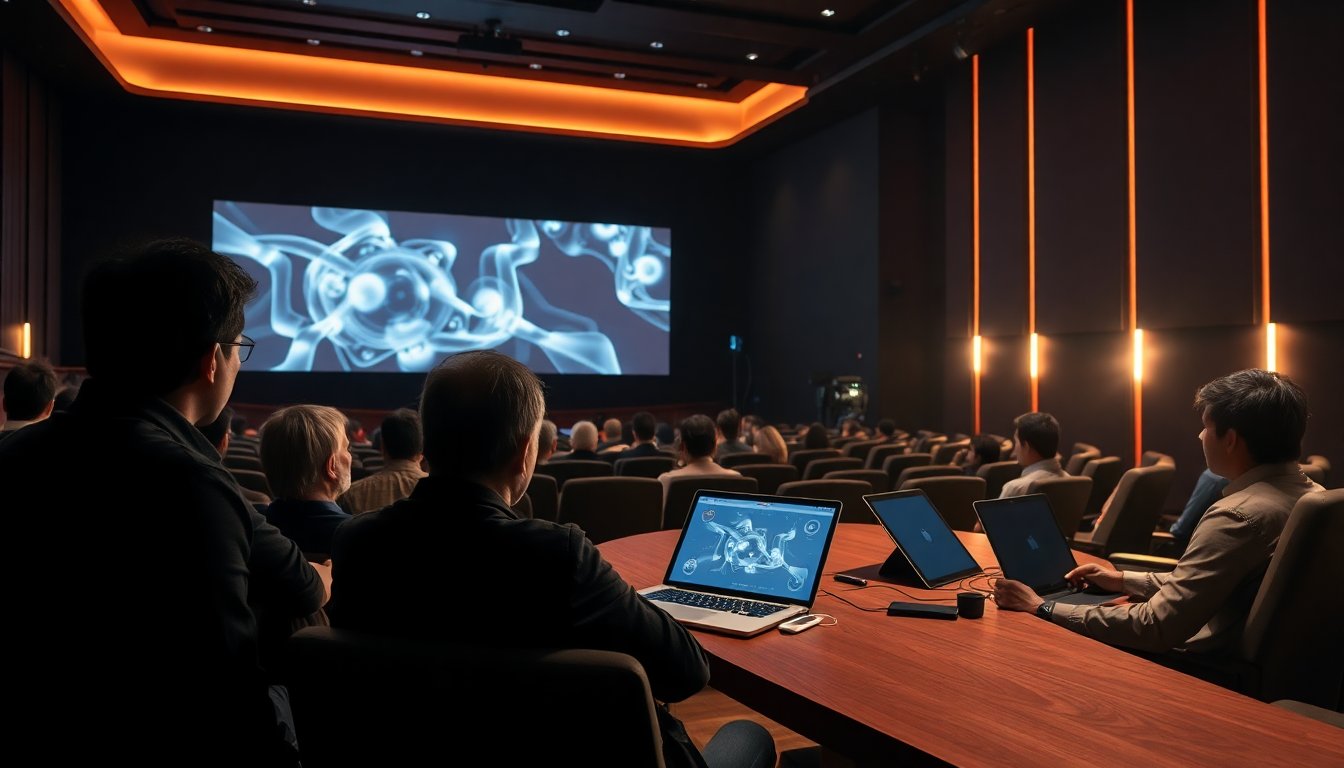
The advent of artificial intelligence (AI) in the film industry has sparked discussions among filmmakers and festival directors about its potential to reshape the cinematic landscape. At the recent International Film Festival of India (IFFI), notable figures such as Tricia Tuttle, director of Berlinale, and acclaimed director Shekhar Kapur, shared insights on the role of AI in filmmaking. Their dialogue emphasized the distinction between technological advancements and the intrinsic elements that define compelling cinema.
Tuttle voiced a critical perspective, arguing that while the accessibility of powerful AI tools is increasing, this does not guarantee an elevation in artistic quality. She stated, “Tools don’t make films good. Storytelling and craftsmanship do.” This sentiment was echoed by Kapur, who pointed out that the unpredictable nature of human creativity—particularly the dynamic interactions between actors, directors, and crew—remains irreplaceable by machines. He illustrated this idea by referencing the complexity of human expression, which is still beyond the reach of AI.
The dual-edged sword of AI in filmmaking
During their conversation, Kapur reflected on the history of disruptive technologies in the film industry. He noted how early implementations of digital workflows and sound mixing were often overused until the industry learned to strike a balance. He anticipates a similar trajectory for AI. “There’s always a phase of overexcitement,” he stated, predicting that filmmakers will eventually find a more measured approach to using AI-generated content.
Operational implications for film festivals
Tuttle raised significant points regarding the operational challenges that festivals like Berlinale face. With an annual influx of approximately 8,000 submissions, the integration of AI is expected to increase this volume considerably. As AI-generated content proliferates, quality control, rights verification, and originality checks may become more complicated. The introduction of AI into these processes will necessitate a reevaluation of existing frameworks.
AI’s potential to democratize filmmaking
Despite concerns about AI’s impact on traditional filmmaking, Kapur believes that it offers new opportunities for creators, particularly in emerging markets like India. He posited that rather than serving as a direct competitor to theatrical cinema, AI-generated content will cultivate its own ecosystem defined by unique platforms and consumption patterns, akin to the rise of TikTok. “There’s already an emerging AI look,” he noted, suggesting that this new aesthetic may not fit into conventional cinema but will form a distinct category of its own.
Fostering new creative voices
Kapur expressed optimism about the potential for a surge in AI-generated films created by younger, non-traditional filmmakers. He acknowledged that while AI tools could lower barriers to entry, there is a risk of diminishing the collaborative spirit that is fundamental to filmmaking. He cautioned against the isolation that may result from relying too heavily on technology, stating, “It’s going to be a bit lonely. I’m anxious about not being able to say action, and not being able to say cut, just sitting behind a computer.” This underscores the importance of maintaining the collaborative dynamics that enrich the filmmaking process.
As part of the IFFI, Kapur presented a teaser for his innovative AI project titled “Warlord.” This sci-fi series has been a decade in the making, yet the script was developed in a mere ten days using AI tools. The teaser showcased captivating visuals of jellyfish-inspired spacecraft and ethereal characters, prompting viewers to ponder profound questions about existence and love across dimensions. Kapur’s intention to release this project as open source, encouraging other creators to build upon it, showcases his belief in the democratization of film production through AI.
While Tuttle expressed her concerns regarding the economic implications of AI, specifically its potential to concentrate wealth and power in fewer hands, both she and Kapur agree that traditional cinema will not be replaced. Instead, they envision a broader landscape for moving images, where festivals, distributors, and filmmakers adapt to these changes while preserving the core values of cinema: emotional authenticity, narrative depth, and the essential human touch that defines storytelling.


