
Table of Contents
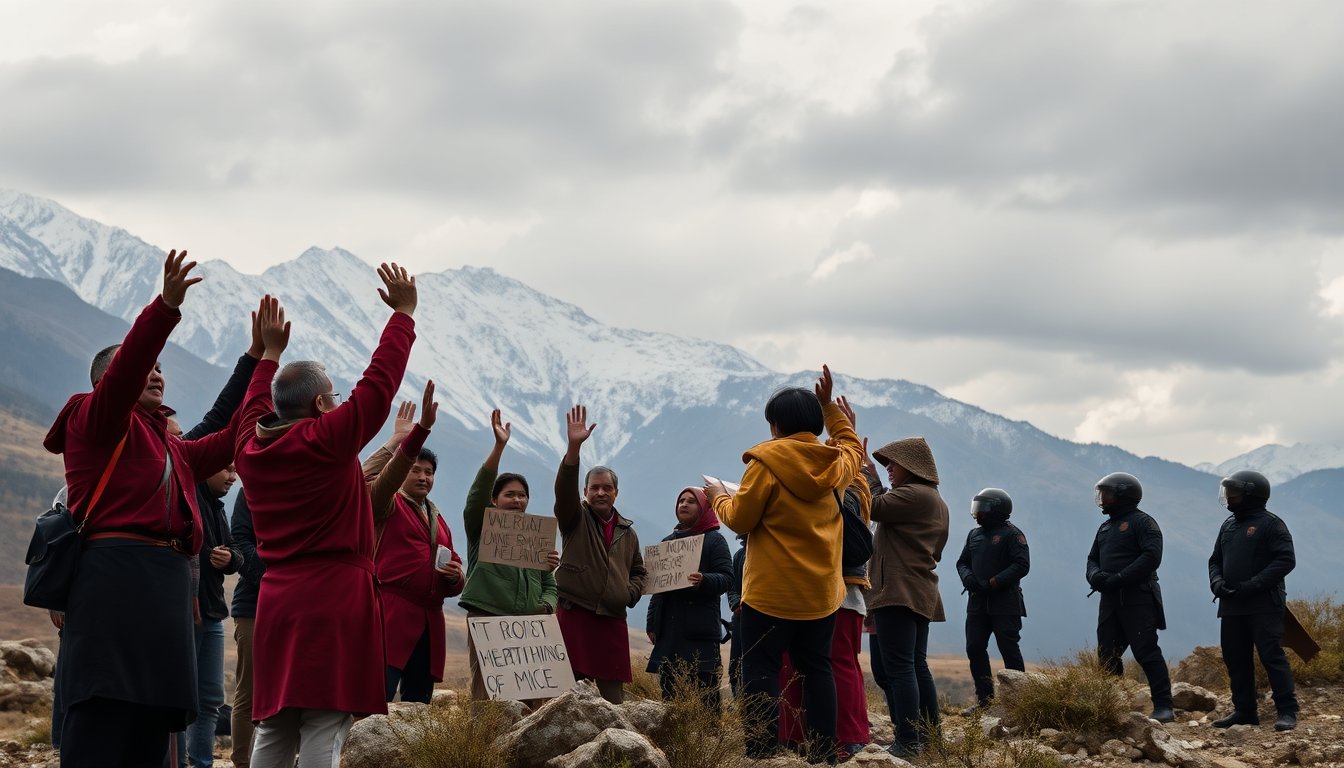
The struggle for Tibetan rights is intensifying as activists report a significant crackdown by Chinese authorities. Following a rare public demonstration against a controversial mining venture, dozens of Tibetans were detained. This incident highlights the ongoing tensions in the region and has drawn attention from various human rights organizations and the Tibetan government in exile.
Mining activities in Tibet have long been contentious, often seen as a threat to the environment and the cultural integrity of the Tibetan people. The recent protests reflect deep-seated frustrations among Tibetans regarding the management of their land and resources.
Background on the Tibetan protests
The recent protests remind us of the broader context in which Tibetan activism operates. Over the years, Tibetans have faced increasing repression from the Chinese government, which has sought to suppress any dissent that challenges its authority. Activists argue that these mining projects threaten not only the environment but also undermine the unique cultural heritage of Tibet.
Nature of the mining projects
Mining operations in Tibet often lead to environmental degradation, significantly impacting local communities. The extraction of minerals and resources can disrupt ecosystems, resulting in soil erosion and water pollution. Furthermore, these projects frequently involve the displacement of local populations, exacerbating the precarious situation for Tibetan communities.
Alongside environmental concerns, there is a growing fear among Tibetans that these mining activities are part of a broader strategy to assimilate Tibetan culture into the dominant Chinese narrative. The pressure to conform to Chinese cultural standards is evident in various aspects of life, including education, language, and religious practices.
The impact of recent arrests
The detentions following the protests have sent shockwaves through Tibetan communities, both within Tibet and in the diaspora. The Tibetan government in exile has condemned the actions of the Chinese authorities and called for international support to hold China accountable for its human rights violations.
International response
Global reactions to the arrests have varied. Some human rights organizations demand immediate action from the international community. Activists are calling for increased visibility on the plight of Tibetans and urging foreign governments to pressure China regarding its treatment of minority groups.
As human rights increasingly dominate international discussions, the situation in Tibet serves as a poignant reminder of the struggles faced by many marginalized groups. As global attention shifts toward raising awareness about human rights abuses, the plight of Tibetans must not be overlooked.
The broader implications
This incident is part of a larger geopolitical landscape where authoritarian regimes, such as China, challenge international norms regarding human rights. The ongoing violation of rights in Tibet exemplifies a trend that extends beyond a single region and reflects a global issue.
As the world grapples with these challenges, it is essential for advocates of human rights to remain vigilant and engaged. The Tibetan struggle is part of a broader narrative encompassing various movements seeking justice and recognition in the face of oppression.
Mining activities in Tibet have long been contentious, often seen as a threat to the environment and the cultural integrity of the Tibetan people. The recent protests reflect deep-seated frustrations among Tibetans regarding the management of their land and resources.0