
Table of Contents
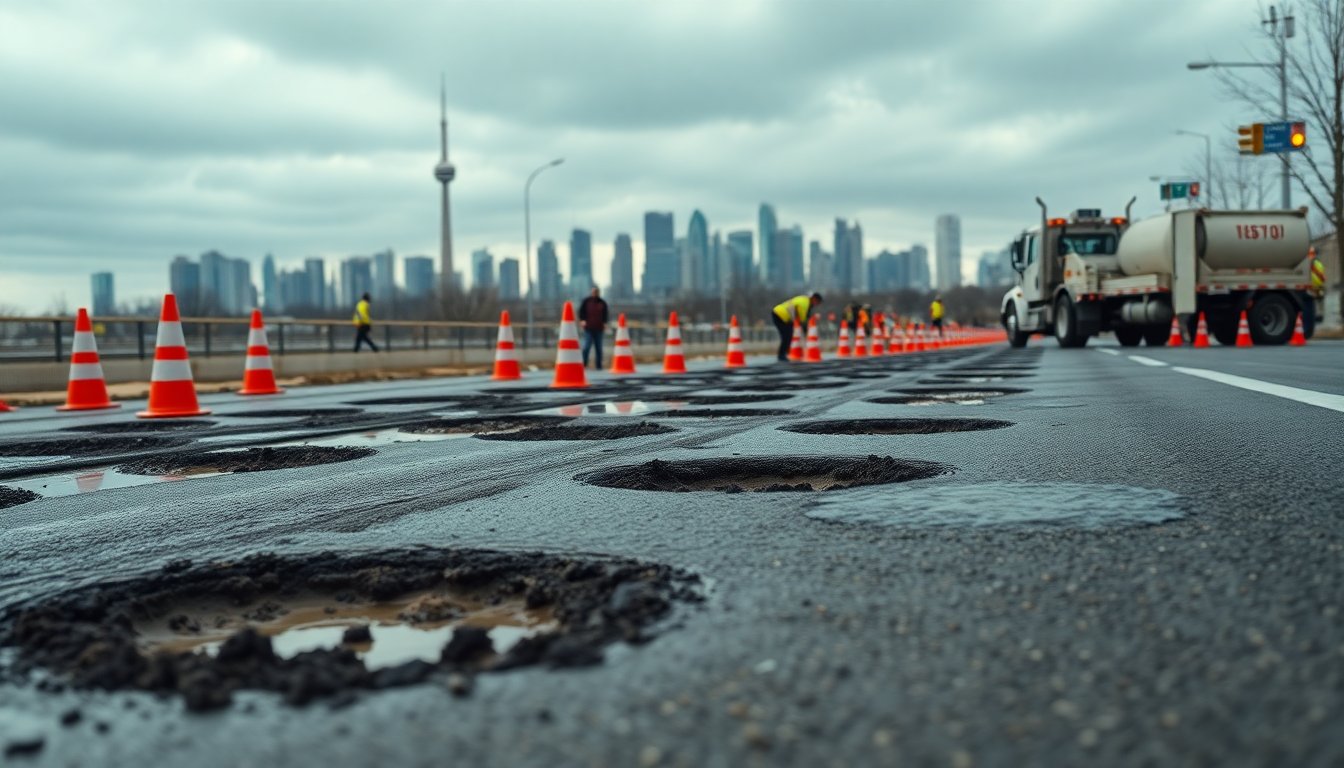
The City of Toronto mobilized its crews on the weekend of March 28, 2026, for a third concentrated round of road repairs aimed at the surge of pavement damage left by a particularly harsh winter. City officials say the program has already resulted in approximately 75,000 potholes patched so far this year, a remarkable tally that officials link to both higher funding and focused, multi-day work efforts.
This latest push is part of a broader maintenance strategy that mixes short-term patching with surface reshaping to try to reduce future failures. Municipal leaders emphasize that the initiative is not simply cosmetic: it is intended to protect vehicles, cyclists and people walking or using micromobility devices, while reducing longer-term repair costs through improved road preparation.
Why the third blitz was necessary
After an unusually severe winter, the city saw a rapid increase in pavement breakdown. Officials describe the operation as a pothole blitz, a concentrated, multi-day campaign that routes extra crews and equipment to the worst-affected neighbourhoods. To support that work, Toronto increased its road repair budget by 34 percent compared with 2026 and has allocated $6.2 million specifically for pothole work this cycle. The combination of increased resources and targeted scheduling has led to crews filling roughly 44 percent more potholes than in 2026.
City leaders have stressed that the aim goes beyond quick patches. Teams are also reshaping and preparing road surfaces before applying material, an approach intended to extend the lifespan of repairs and limit recurring failures where freeze-thaw cycles cause repeated cracking.
Operational hurdles and weather constraints
Crews have not been able to work at full capacity every day because of unpredictable spring temperatures and intermittent thaw-freeze cycles. Officials explained that uneven conditions — swings from below-freezing to well above zero Celsius over short periods — hinder both safe deployment and the effectiveness of certain repair methods. In some months, particularly February, teams were constrained by weather that prevents reliable compaction and curing of asphalt mixes.
How weather affects repairs
Cold or wet surfaces make it difficult to achieve durable patches because material needs stable conditions to bond properly. When temperatures dip or the ground is saturated, crews often switch from permanent paving to interim fixes designed to keep roads passable until conditions improve. City staff say they will step up the frequency of permanent repairs as the weather stabilizes, moving from temporary tack-and-fill methods to longer-lasting pavement restoration.
Resource allocation and scheduling
Even with more funding, logistics remain complex: deploying crews, staging materials and coordinating traffic management take planning. The blitz model concentrates effort over weekends and specific corridors to maximize visible progress, while weekday teams continue routine maintenance. Officials report that concentrating crews for multi-day efforts has allowed them to repair far more holes in a short time than standard daily patrols.
Technology, public reporting and the path forward
To identify and prioritize dangerous defects, the city is expanding its use of technology alongside traditional 311 reports. An accelerated AI program tied to the municipal 311 intake system is helping detect road distress and direct crews where they are most needed. Officials encourage residents to keep reporting potholes to ensure the system has up-to-date information and to help crews triage safety risks.
Beyond immediate repairs, the city is balancing short-term patching with investments in pavement preparation aimed at reducing future pothole formation. That means more time spent on surface preparation, improved material selection and targeted paving schedules where traffic volumes and freeze-thaw exposure make roads vulnerable.
What residents should know and how to help
Motorists and cyclists should expect some localized delays during blitz events as crews work to make repairs. The municipal government asks users to report defects via the 311 portal or phone service and to exercise caution near work zones. Residents who document and report hazards help crews respond faster, and the combination of public input plus the AI-assisted detection is intended to reduce response times and improve prioritization.
City officials frame the third blitz as a continued effort to restore safe, smooth streets after an unusually damaging winter and say they will continue coordinating funding, technology and labor to keep repairs moving until conditions normalize. With increased budgets, concentrated effort and modern detection tools, Toronto aims to reduce the backlog of road damage and limit the recurrence of hazardous conditions in the months ahead.