
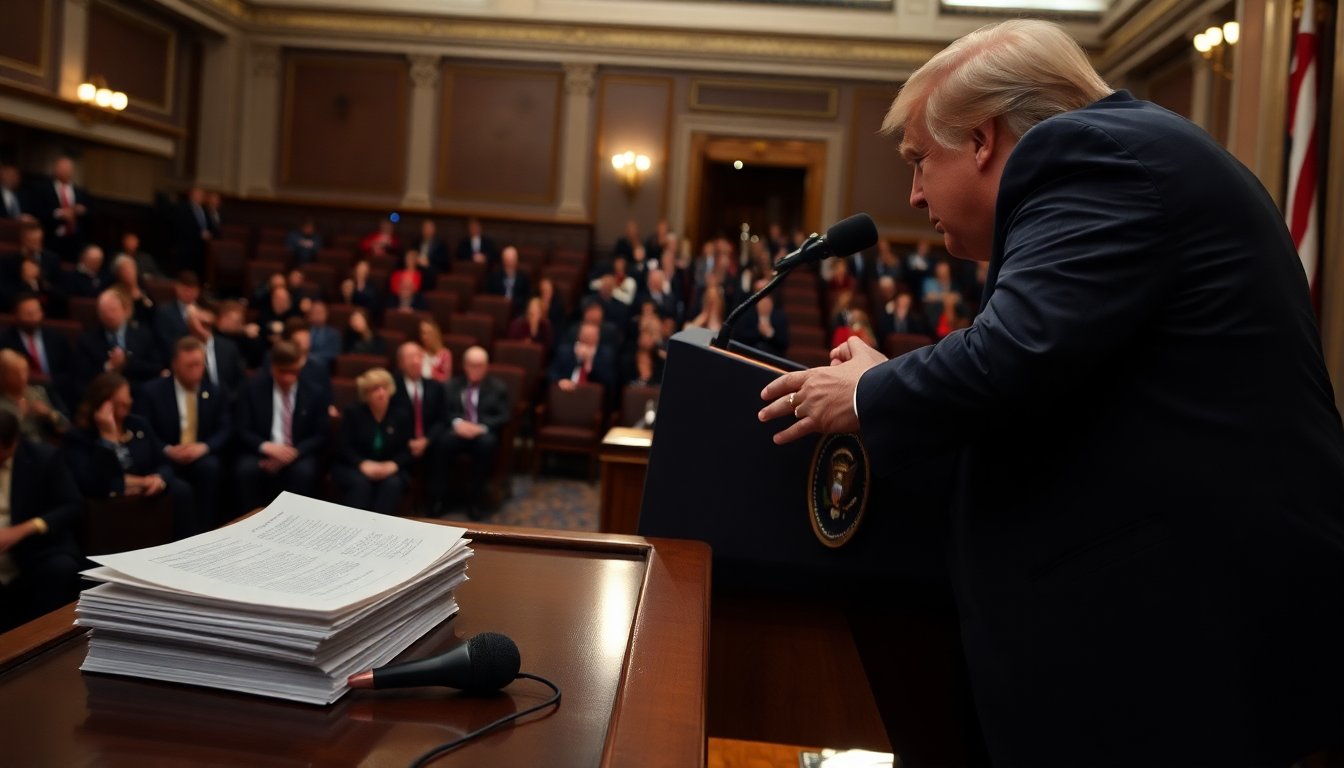
On Feb. 24, 2026, President Donald Trump addressed a joint session of Congress and delivered a bold assertion: “the nation is back.” The speech — his sixth to lawmakers — aired live and drew a wide audience. For both parties, it was less a ceremonial ritual than a high-stakes attempt to change the political weather: to steady frayed support, reassure donors, and recast the storylines heading into the midterms.
A speech can dazzle on its own, but real politics happens in the constraints behind the podium. The Supreme Court recently pared back parts of the administration’s signature tariff program. Polls show slippage on immigration and pocketbook issues that once buoyed Republican standing. Legal challenges and intraparty divisions raised the pressure: the address needed to calm unease among independents, shore up wavering voters, and keep the GOP coalition intact.
Turning a speech into momentum
Timing matters. Campaign and communications teams judge success not by applause lines alone but by immediate effects on search traffic, social engagement and polling swings. The administration hoped the address would deliver a quick lift on those fronts — enough to narrow gaps with independents, steady fundraising, and give nervous supporters a reason to breathe easier.
Domestic terrain: affordability and immigration
Domestic concerns dominated attention. For many voters, affordability is the daily reality: grocery prices, housing costs and gasoline bills shape decisions more than grand ideological commitments. Polls and focus groups suggest that an assertive immigration stance has cost the administration ground with independents, particularly suburban and working-class voters whose margins decide close races.
Republican lawmakers have privately questioned whether the White House has done enough to explain how it will relieve household pressures. Voters want concrete, short-term relief — direct actions they can feel in their budgets — rather than abstract promises. That gap between rhetoric and practical plans could determine the outcome in competitive districts.
How Democrats are responding
Democrats have narrowed their message to what they see as bread-and-butter wins: economic security, clear steps to ease household budgets, and critiques of the political and fiscal fallout from stricter immigration policies. Their approach is tactical — tighten messaging for suburban and working-class voters, highlight tangible policy wins, and double down on disciplined local outreach. In swing districts, even small shifts in voter sentiment can flip control of committees and determine pivotal races.
Trade, the courts and messy fallout
Trade policy has become a flashpoint. The administration relied on Section 122 of the 1974 Trade Act to impose a temporary 10 percent global tariff (with a statutory ceiling of 15 percent and a 150-day sunset unless Congress acts). The Supreme Court’s decision curtailing parts of that authority injected legal and political uncertainty. Committees are now probing legislative fixes, holding oversight hearings, and exploring targeted relief for sectors and consumers hit by higher import costs.
The consequences are both technical and tangible. Customs agencies and importers face burdensome reclassification work, potential refund processing, and pricing recalibrations. Manufacturers and retailers worry about who will shoulder costs; lawmakers from both parties are pressing for answers on liability, refunds, and ways to prevent similar vulnerabilities going forward.
Capitol Hill pushes refunds
Senator Tim Kaine, joined by Senator Mark R. Warner and others, quickly advanced legislation to require refunds of tariff revenues deemed improperly collected and to tighten congressional oversight of emergency trade duties. Their argument is straightforward: if the courts find the legal basis flawed, Treasury should not retain funds that effectively taxed families and small businesses.
Administration response and legislative fallout
The White House faces a split challenge: defend its policy choices while offering enough clarity to reduce political pain. That balancing act plays out across the bureaucracy and on Capitol Hill, where GOP and Democratic lawmakers alike are negotiating the practical implications of the Court ruling — from statutory fixes to targeted relief packages. Expect a mix of bipartisan technical legislation alongside louder partisan sparring designed for home-state and primary audiences.
A speech can dazzle on its own, but real politics happens in the constraints behind the podium. The Supreme Court recently pared back parts of the administration’s signature tariff program. Polls show slippage on immigration and pocketbook issues that once buoyed Republican standing. Legal challenges and intraparty divisions raised the pressure: the address needed to calm unease among independents, shore up wavering voters, and keep the GOP coalition intact.0
A speech can dazzle on its own, but real politics happens in the constraints behind the podium. The Supreme Court recently pared back parts of the administration’s signature tariff program. Polls show slippage on immigration and pocketbook issues that once buoyed Republican standing. Legal challenges and intraparty divisions raised the pressure: the address needed to calm unease among independents, shore up wavering voters, and keep the GOP coalition intact.1
A speech can dazzle on its own, but real politics happens in the constraints behind the podium. The Supreme Court recently pared back parts of the administration’s signature tariff program. Polls show slippage on immigration and pocketbook issues that once buoyed Republican standing. Legal challenges and intraparty divisions raised the pressure: the address needed to calm unease among independents, shore up wavering voters, and keep the GOP coalition intact.2