
Table of Contents
U.S. and India reach landmark trade agreement
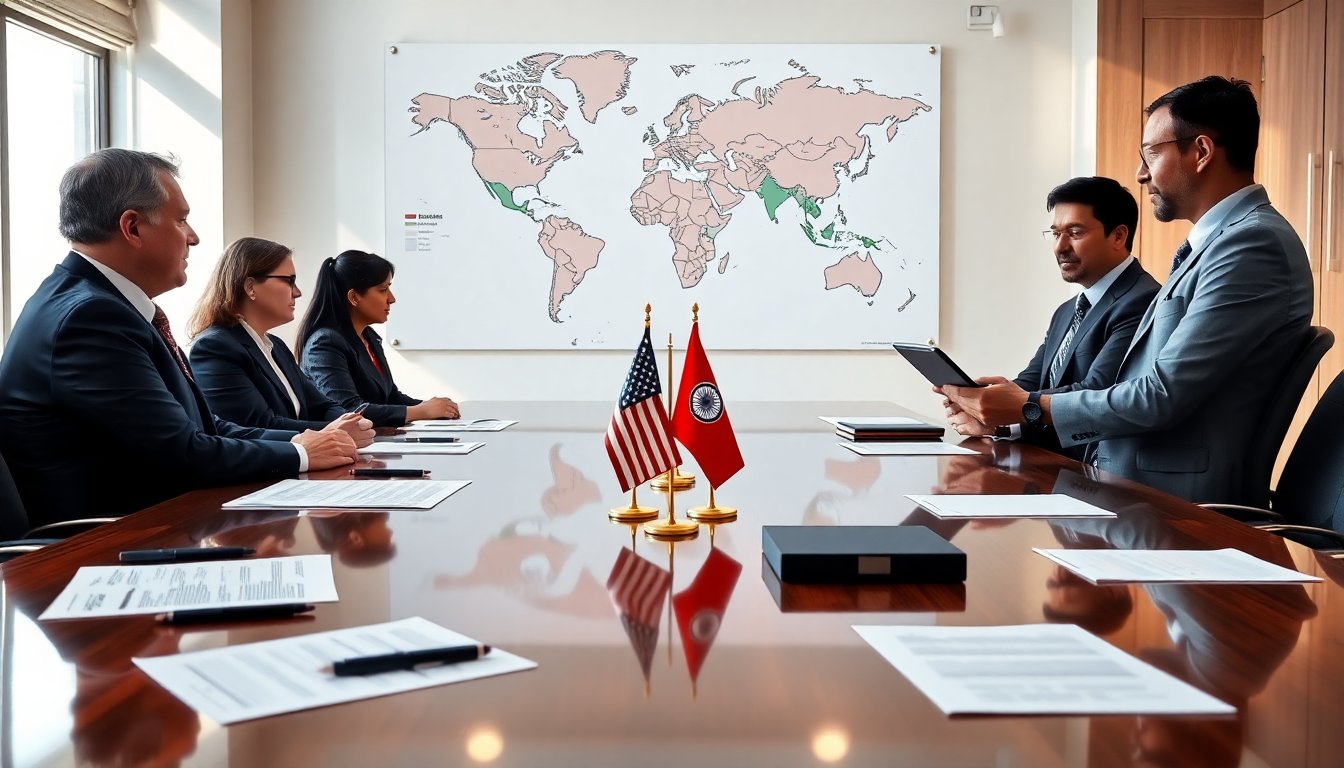
In a significant move for international trade, U.S. President Donald Trump announced a groundbreaking agreement with Indian Prime Minister Narendra Modi on February 2, 2026. This deal reduces U.S. tariffs on Indian products from a steep50 percentto a more manageable18 percent.
In return, India has agreed to stop purchasing oil from Russia, shifting its focus towards sourcing oil from the United States and potentially Venezuela. This agreement reflects a strategic pivot in energy sourcing and trade relations between the two nations.
Details of the trade agreement
U.S. President Donald Trump recently reaffirmed his commitment to strengthening bilateral relations with India. He stated, “Out of friendship and respect for Prime Minister Modi and as per his request, we have agreed on a trade deal that will lower thereciprocal tarifffrom25 percentto18 percent.” This agreement marks a notable change in U.S.-India trade dynamics, with the intention of enhancing economic cooperation between the two nations.
Implications for oil purchases
India’s reliance on oil imports is significant, meeting approximately90 percentof its energy demands. The nation has increasingly depended on affordable Russian oil, particularly since the onset of the Ukraine conflict in 2026. This dependency has allowed India to lower its However, following the recent trade agreement, India is poised to reduce its Russian oil purchases. Current imports are roughly1.2 million barrels per day, with forecasts suggesting a decline to800,000 barrelsby March.
Economic repercussions
The economic landscape in India has faced challenges, particularly after the U.S. imposed tariffs affecting market performance in 2026. However, the announcement of a new trade agreement led to a rebound in shares of major Indian corporations.Infosyssaw an increase of3.53 percent, whileWiproexperienced a notable climb of7 percent. Additionally, financial institutions such asHDFC Bankand theiShares MSCI IndiaETF reported significant gains, indicating a positive shift in investor sentiment.
Future trade relationships
Prime Minister Modi expressed appreciation for the recent trade agreement, stating, “I am delighted that Made in India products will now enjoy a reduced tariff of18 percent. A big thanks to President Trump on behalf of the1.4 billion peopleof India for this wonderful announcement.” This remark highlights the potential for increased trade volume between the two nations. Modi committed to purchasing over$500 billionworth of U.S. energy and technology products, signaling a major shift in economic collaboration.
Geopolitical context
The recent trade deal arrives amid ongoing geopolitical tensions and complex trade negotiations between major economies. This agreement simplifies trade between the U.S. and India and indicates India’s strategic intention to diversify its oil sources. Notably, this may include Venezuelan oil, especially following recent U.S. military actions against the Venezuelan government.
As the world’s third-largest oil importer, India’s change in sourcing is poised to influence the global oil market significantly. Previous U.S. tariffs have notably affected Indian markets. The new agreement aims to stabilize trade relations and promote economic growth.
Furthermore, Canadian Prime Minister Mark Carney is expected to visit India shortly, reflecting a broader interest in enhancing international trade ties. This visit follows a commitment from both countries to negotiate a Comprehensive Economic Partnership Agreement (CEPA), which could strengthen economic connections further.
The trade agreement between the U.S. and India marks a crucial moment in international trade, offering potential long-term advantages for both countries as they navigate the complexities of global economics and energy markets.