
Table of Contents
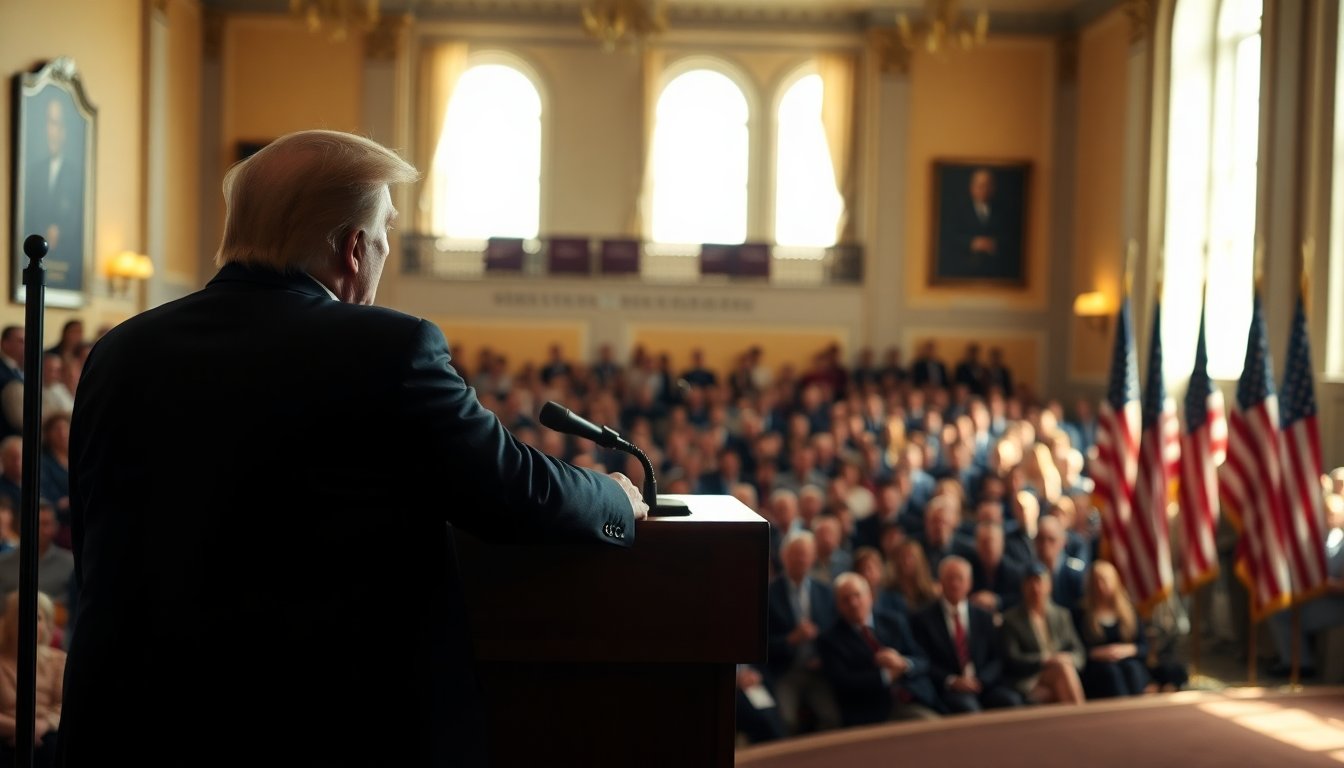
In a recent prime-time broadcast, former U.S. President Donald Trump addressed a range of economic grievances, primarily targeting his predecessor, Joe Biden. The address was characterized by Trump’s emphatic delivery, where he expressed frustration over the current economic landscape and attributed much of the nation’s financial woes to Biden’s policies.
Throughout his speech, Trump portrayed the Biden administration as the catalyst for ongoing economic difficulties, claiming that he inherited a tumultuous situation that he has been diligently working to rectify. He insisted, “I inherited a mess, and I’m fixing it,” while highlighting his administration’s achievements in curtailing illegal immigration and purportedly reducing costs for consumers.
Economic realities versus political rhetoric
Despite Trump’s assertions of economic recovery, various economic indicators present a more complex picture. Inflation rates have remained stubbornly high, hovering around three percent, while healthcare premiums have surged, exacerbating the financial strain on American families. Critics argue that Trump’s promise to restore affordability has not translated into concrete outcomes.
Polling data reveals a troubling sentiment among the public, with approximately two-thirds of Americans expressing disapproval regarding Trump’s economic management. This dissatisfaction is crucial as it influenced many voters’ decisions during the previous election cycle. Notably, unemployment figures have also shown a concerning trend; recent reports indicated a disappointing job growth rate of merely 64,000 positions added in November, contrasting sharply with Canada’s job growth during the same period.
Comparative job markets and economic impact
The economic landscape under Trump’s administration has been fraught with challenges. In stark comparison to the U.S., Canada—despite having a significantly smaller population—added 54,000 jobs in November. Experts attribute part of this disparity to the adverse effects of Trump’s trade policies, which have led to increased costs for American consumers and businesses, undermining the promised job creation.
Furthermore, data from the Center for American Progress highlights that since the announcement of Trump’s tariffs in April, the manufacturing sector has lost over 58,000 jobs. This outcome contradicts Trump’s narrative of economic resurgence and raises questions about the effectiveness of his administration’s strategies.
Federal Reserve’s role and challenges
Another focal point of Trump’s address was his ongoing contention with the Federal Reserve. The central banking system plays a crucial role in regulating the economy by setting interest rates and managing monetary supply. Trump has criticized the Fed’s leadership, particularly under Chairman Jerome Powell, calling for a shift towards more favorable monetary policies.
During his tenure, Trump made headlines when he attempted to dismiss Federal Reserve Governor Lisa Cook, escalating tensions between the White House and the Fed. This friction raises concerns regarding the central bank’s independence and its capacity to effectively manage economic stability.
The dual mandate of the Federal Reserve
The Federal Reserve operates under a dual mandate aimed at maintaining price stability and achieving full employment. Historically, the Fed has set an inflation target of around two percent, a benchmark that has proven challenging in recent times. Trump’s framing of economic recovery may overlook these critical factors, as the Fed’s decisions significantly influence financial markets and overall economic health.
As the economy grapples with persistent inflation and fluctuating employment rates, Trump’s narrative of a recovering economy may clash with the realities faced by many Americans. The disconnect between political rhetoric and economic data serves as a reminder that the path to recovery is often complex and multifaceted.
A divided economic narrative
Throughout his speech, Trump portrayed the Biden administration as the catalyst for ongoing economic difficulties, claiming that he inherited a tumultuous situation that he has been diligently working to rectify. He insisted, “I inherited a mess, and I’m fixing it,” while highlighting his administration’s achievements in curtailing illegal immigration and purportedly reducing costs for consumers.0