
Table of Contents
The United States has quietly assembled a substantial military presence in the Middle East, and President Donald Trump has publicly rejected reports that his Pentagon warned of the risks of a prolonged confrontation with Iran. The White House says it prefers diplomacy. Yet the arrival of aircraft, warships and support assets has renewed scrutiny of possible military options, potential retaliation and the limits of force.
The surge features carrier strike groups, fighter jets, surveillance platforms and additional defensive systems. Officials say the movements are meant to deter and to expand the president’s options if negotiations fail. Those same deployments, however, raise political pressure on leaders to act and heighten the risk of escalation if Tehran responds forcefully.
What the buildup looks like
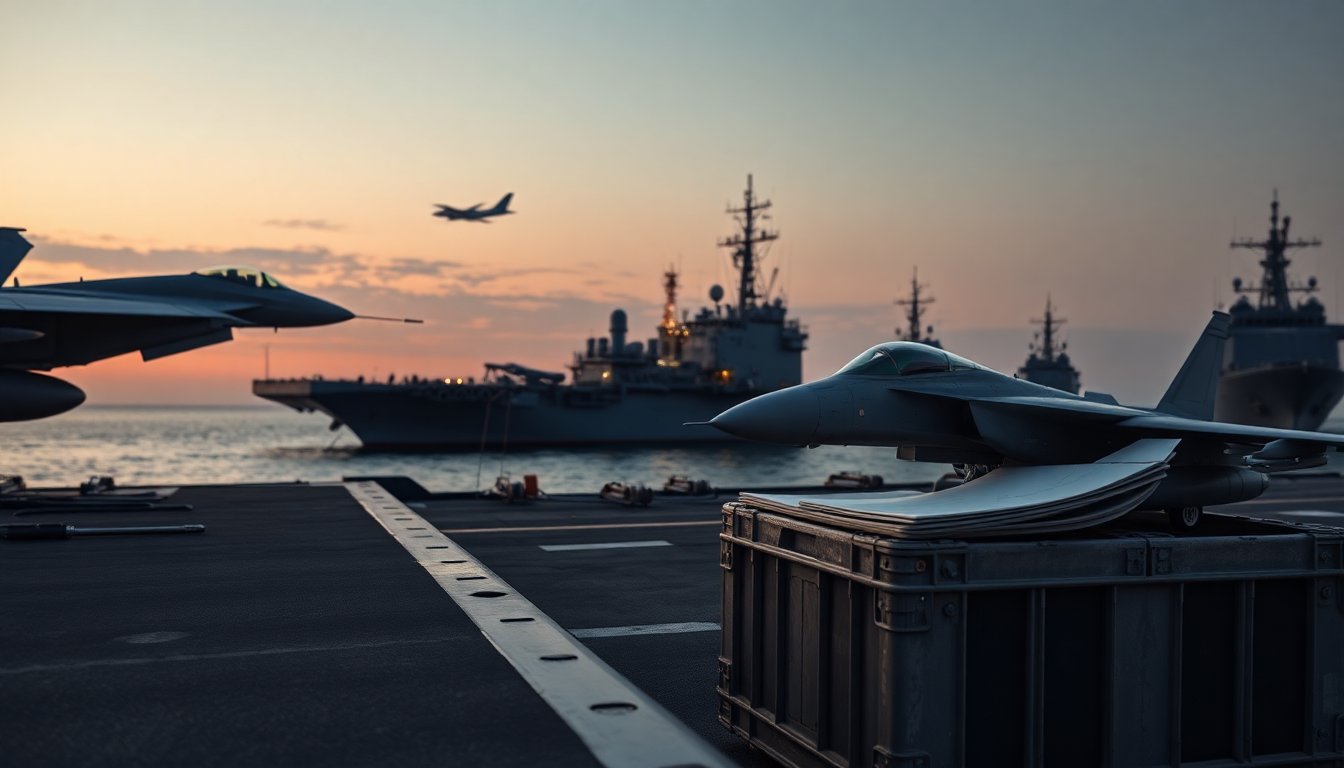
The United States has increased naval and air assets across the region. Carrier strike groups and guided-missile destroyers are on patrol. Long-range surveillance aircraft and airborne refuellers have also been repositioned. Military officials describe the posture as layered: defensive systems sit alongside capabilities for rapid strike.
The data tells us an interesting story: these deployments serve both as a signal to Tehran and as an insurance policy for Washington. In practical terms, the presence of more forces widens strategic choices while shortening timelines for any response to hostile action.
Analysts caution that concentration of forces can produce unintended consequences. More assets create more targets, complicate command-and-control, and increase the chance of miscalculation. Policymakers must weigh those operational risks against the diplomatic intent behind the buildup.
Policymakers must weigh those operational risks against the diplomatic intent behind the buildup.
The deployment is among the most concentrated U.S. force movements near Iran in decades. Two carrier strike groups, multiple guided-missile destroyers and hundreds of additional service members have been reallocated to the region. Military tracking shows dozens of fighter jets, including the F-35 and F-22, moving alongside tankers, transport aircraft and early-warning platforms to forward bases and staging areas.
Assets and purpose
The incoming forces aim to achieve three primary objectives: bolster air defenses around allied bases, provide long-range strike options and signal resolve in ongoing negotiations. Analysts say some movements are deliberately visible to exert diplomatic pressure, while other capabilities, including submarine-launched cruise missiles, remain intentionally discreet.
The data tells us an interesting story about posture and intent. Visible deployments can alter calculations without firing a shot, while concealed capabilities preserve operational flexibility.
Commanders cited force protection and deterrence as operational priorities. Planners also stressed readiness for rapid escalation or de-escalation depending on diplomatic developments.
Options on the table and their risks
Officials and outside analysts describe a range of military options, from precision strikes on infrastructure to limited operations targeting specific leaders. Each option imposes unique operational demands and carries distinct political consequences for Washington and regional partners. A focused campaign against air defenses or facilities linked to nuclear activities would require coordinated air and naval assets and the use of precision munitions. Such strikes could achieve tactical effects while limiting collateral damage, but they would still risk a robust response directed at U.S. forces and allied positions.
Planners continue to stress readiness for rapid escalation or de-escalation depending on diplomatic developments. The data tells us an interesting story: measured force can produce intended military effects while creating complex attribution and deterrence challenges. Decision-makers must weigh the short-term benefits of kinetic action against the likelihood of retaliation, the potential for wider regional conflict and the diplomatic costs.
Escalation dynamics
Military advisers warn that even limited operations could set off cascading responses across multiple domains. A conventional strike may prompt asymmetric attacks by proxy groups, cyber intrusions, or attempts to disrupt maritime traffic. Commanders note that defending forward-deployed personnel and partners would require expanded air defenses, intelligence, surveillance and reconnaissance, and missile-defense assets.
Political leaders face a trade-off between demonstrating resolve and avoiding entanglement in a broader confrontation. Legal, alliance and public-opinion considerations will shape the scale and duration of any campaign. Monitoring and attribution will be central: reliable intelligence and clear communication to allies can reduce uncertainty but cannot eliminate the risk of miscalculation.
Reliable intelligence and clear communication to allies can reduce uncertainty but cannot eliminate the risk of miscalculation. Analysts warn Tehran could respond in ways that go beyond patterns observed after previous encounters. Such responses could aim to inflict significant damage even at substantial cost to Iranian assets.
Possible modes of retaliation include concentrated salvos of ballistic missiles, coordinated attacks by armed drones and cruise missiles against bases or shipping, and asymmetric operations conducted through proxy groups. Each option carries distinct operational demands and escalation risks. The retaliation calculus therefore requires planners to weigh the immediate tactical effects of strikes against the probability of wider, potentially uncontrollable escalation.
Political signaling versus practical limits
Political signaling can shape adversary perceptions without matching military effects. States may choose robust rhetoric or limited demonstrative strikes to deter further action or to satisfy domestic constituencies. Signaling can be cheaper and less escalatory than large-scale kinetic responses.
Practical limits constrain what states can achieve. Logistics, command-and-control resilience, munitions stocks, and the vulnerability of proxy networks all set boundaries on response options. International diplomatic costs and the risk of triggering broader regional conflict also temper decision-making.
The data tells us an interesting story about how decision makers translate intent into action. Measurable indicators include missile launch frequency, maritime interdictions, proxy attack tempo, and casualty figures. In my Google experience, timely signal-to-noise separation in intelligence feeds improves forecast accuracy and shortens the decision loop.
Operational planners will monitor intelligence, surveillance, and reconnaissance streams, interdiction reports, and allied communications. Those inputs inform assessments of likely Iranian steps and the scale of proportional responses. Clear thresholds for action and transparent channels to allies reduce—but do not remove—the danger of misreading intent or accelerating escalation.
Clear thresholds for action and transparent channels to allies reduce—but do not remove—the danger of misreading intent or accelerating escalation.
Diplomacy, decision points and potential outcomes
The primary objective in Washington remains a negotiated arrangement that limits the target country’s key programs. Officials describe the current military posture as intended to create leverage for diplomacy rather than to prepare for large-scale occupation.
The force package on station is substantial by recent standards but not comparable to invasion forces used in past wars. That gap narrows operational options. It favors highly targeted strikes or actions designed to signal resolve without committing to prolonged combat.
Positioning advanced assets also alters the political and psychological calculus. Observers note that moving potent tools into a negotiation raises pressure to use them later. The presence of carriers and strike groups can thus become a driver of escalation as much as a tool of deterrence.
Logistics impose practical limits. Sustained carrier deployments require rotation, maintenance and resupply. Those constraints define a finite period for persistent pressure before capabilities must be replenished.
The data tells us an interesting story about risk trade-offs. I dati ci raccontano una storia interessante: military presence can strengthen bargaining power while increasing the chance of unintended confrontation. Clear decision rules and allied coordination can lower that risk, but they cannot eliminate it.
Potential outcomes range from a return to intensive diplomacy, anchored by clear verification measures, to episodic strikes that reset deterrence without escalation. Another possibility is a cycle of tit-for-tat actions that expands beyond initial targets. Each outcome carries distinct operational and political costs for the United States and its partners.
Key decision points will include the determination of clear red lines, the thresholds for kinetic response, and the timing of diplomatic offers tied to verification mechanisms. Those decisions will shape whether the current posture achieves its diplomatic aims or becomes a catalyst for deeper conflict.
Mediated talks continue amid military posturing
Those decisions will shape whether the current posture achieves its diplomatic aims or becomes a catalyst for deeper conflict. Negotiations in third-party venues have proceeded alongside battlefield movements. Mediators reported intermittent signals that deal-making remains possible.
High-level officials, including military commanders, have taken part in the mediated meetings to underscore both options and consequences. Participants framed their presence as a message that diplomatic pathways coexist with military readiness.
The administration has not set a single, publicly stated objective for its military posture. Officials instead referenced multiple aims, ranging from curbing nuclear advancement to deterring regional aggression. Each aim implies different thresholds for escalation and different exit routes from the standoff.
The data tells us an interesting story about the relationship between diplomatic contact frequency and on-the-ground moves. Increased talks have produced short pauses but not a sustained de-escalation. Observers caution that ambiguity in stated objectives can complicate allied coordination and opponent calculations.
Analysts say keeping diplomatic channels open while clarifying strategic aims would reduce the risk of miscalculation. Clear, measurable objectives could align military steps with negotiation timelines and make outcomes easier to evaluate.
Policy aims will determine the scale and risk of action
How policymakers define success will shape any course of action. If the aim is to compel an agreement through pressure, a buildup of forces can serve as leverage. If the objective is leadership decapitation or the lasting destruction of capabilities, operations would be larger and carry greater risk. Decision makers must weigh immediate tactical possibilities against the strategic risk that conflict could escalate and threaten service members, regional partners and global stability.
Coexistence of diplomacy and military posture
President Trump’s public denials of Pentagon pessimism and his stated preference for a deal sit alongside a military posture that preserves options. Analysts describe this dual track—force and diplomacy—as deliberate but inherently unstable. The greater the concentration of force, the higher the likelihood that military action will move from an option to reality.
Measurable objectives link timelines to outcomes
Clear, measurable objectives could align military steps with negotiation timelines and make outcomes easier to evaluate. The data tells us an interesting story about trade-offs: a narrow, time-bound mandate limits escalation but reduces the chance of comprehensive capability degradation. A broader mandate increases operational freedom but also raises the probability of unintended consequences.
Implications for assessment and oversight
Defined metrics would allow policymakers, oversight bodies and partner governments to assess progress against stated aims. Metrics can include mission timelines, attrition of specific capabilities, and indicators tied to diplomatic benchmarks. In my Google experience, framing strategies with measurable milestones clarifies accountability and informs timely adjustments.
Policy choices will therefore reflect a continuous balancing act between diplomatic goals, military feasibility and the risk of wider conflict. The next phase of negotiations and posture adjustments will test whether stated aims and operational plans remain aligned.