
Table of Contents
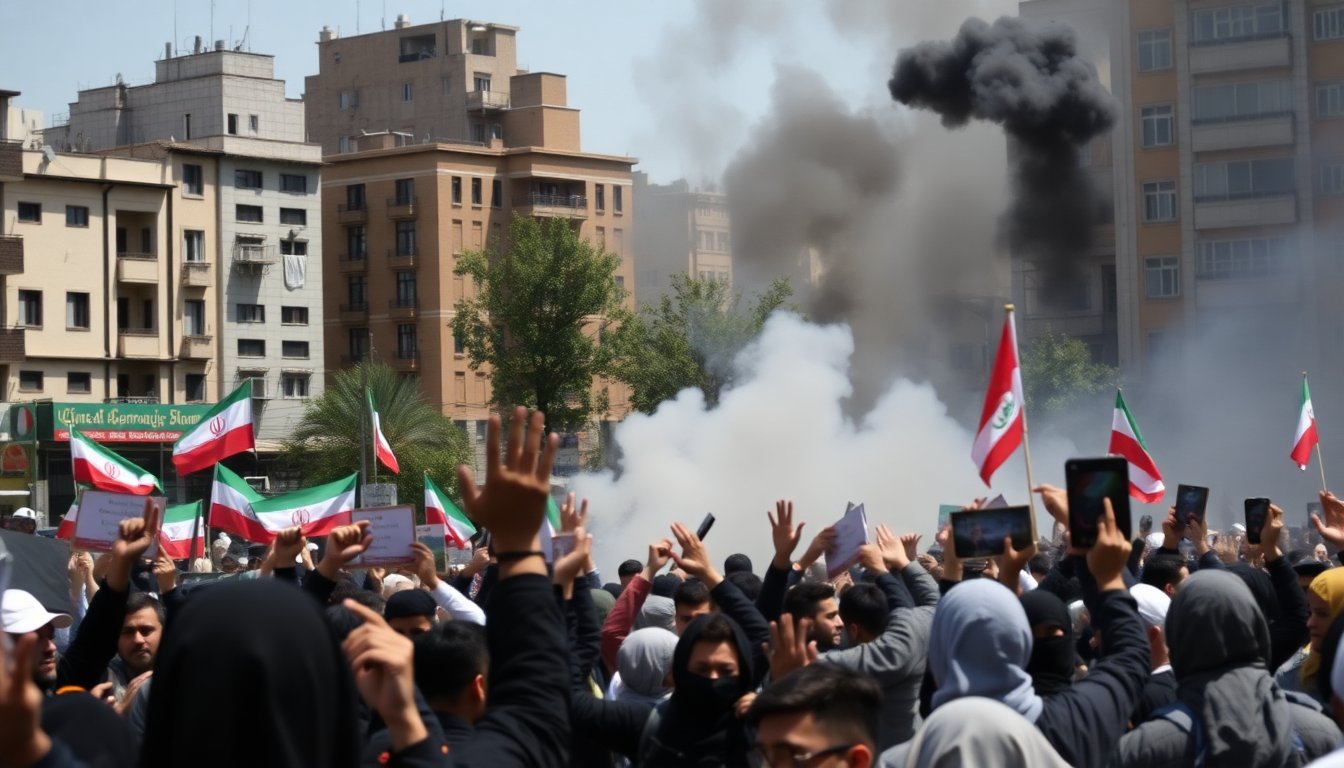
The protests in Iran have intensified, drawing significant international scrutiny and condemnation. President Donald Trump has firmly stated that the United States will not engage in negotiations with the Iranian regime, citing its violent suppression of demonstrators. Reports indicate that the death toll has reached alarming levels, prompting Trump to advise American citizens to evacuate the country immediately.
This unrest is largely fueled by economic grievances, including a severe decline in the value of the Iranian rial. As protests escalate, calls for change increase in a nation long plagued by authoritarian governance.
Escalating tensions and international responses
In a recent meeting, Trump suggested that Iran is seeking to negotiate with the U.S. following his threats regarding the government’s violent actions against protesters. However, the Iranian government has not commented on Trump’s statements. The foreign minister of Oman, a mediator between Washington and Tehran, visited Iran recently, but meaningful negotiations seem unlikely.
The Trump administration is reportedly considering various responses, including cyberattacks and potential airstrikes on Iranian targets, in reaction to the crackdown on protesters. Trump has warned, “If they do that, we will hit them at levels that they’ve never been hit before,” highlighting the U.S. readiness to respond if violence against civilians persists.
Iran’s internal dynamics
As protests continue, Iranian officials are striving to control the narrative. Foreign Minister Abbas Araghchi claimed the situation is under control, attributing unrest to foreign interference, particularly from the U.S. and Israel. He insisted that Iran remains open to diplomacy but emphasized the need for negotiations that acknowledge mutual interests rather than unilateral demands.
The Iranian government has responded with a show of force, organizing pro-government demonstrations to counteract the protests against Supreme Leader Ayatollah Ali Khamenei. State media has been broadcasting these events, presenting them as a united front against external threats while neglecting the economic issues that have fueled public discontent.
Violent repercussions and human rights concerns
The Iranian regime has labeled protesters as “enemies of God,” a designation that can lead to the death penalty. As security forces ramp up their crackdown, reports indicate that over 10,000 people have been arrested, many facing serious charges. The violence has resulted in substantial casualties, with estimates suggesting that at least 572 lives have been lost amid the protests.
Human rights organizations express alarm over the situation, noting that the Iranian government has deliberately cut off internet access to obscure the severity of the situation from the international community. This blackout has impeded independent verification of casualty figures and the extent of the protests, forcing many to rely on limited reports from within the country.
Global implications and future outlook
The international community is closely monitoring the unrest in Iran. Leaders from various nations, including the UK, Germany, and France, have condemned the violence against protesters and urged restraint from Iranian authorities. As Trump reiterates his support for the protesters, the potential for U.S. involvement raises questions about the future of U.S.-Iran relations.
Despite Trump’s warnings, analysts caution that the Iranian government is unlikely to concede easily. The history of protests in Iran indicates that while the state may suppress unrest in the short term, the underlying issues—economic hardship, political repression, and social inequality—remain unresolved, which could lead to further unrest in the future.