
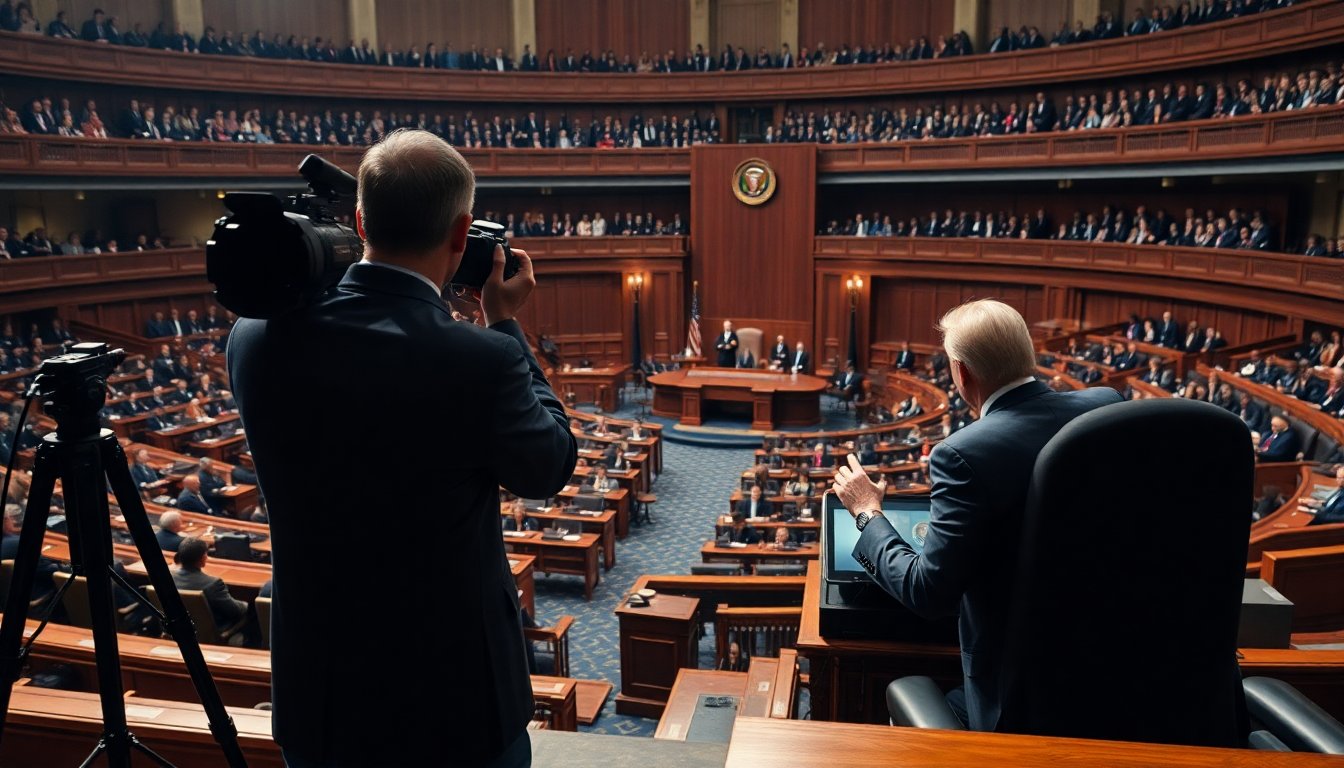
On Feb. 24, 2026, President Donald Trump delivered the longest State of the Union of his presidency to a packed joint session of Congress in Washington. With his approval rating hovering around 39% and high-stakes midterm elections approaching, the address was equal parts policy roll-out, theatrical spectacle and political campaign stop — an attempt to reshape the news cycle and rally voters.
Trump threaded together traditional policy pitches with carefully staged moments designed for television. Between proposals he paused to honor Olympic athletes, present medals and spotlight military heroes; those photo-ready interludes interrupted the policy grind and gave the cameras irresistible visuals. The effect was unmistakable: ceremonial flourish used as a counterweight to wonky debate.
Economics took center stage. The president cast the past year as a rebound — citing job growth and buoyant markets — while acknowledging that many families still feel the squeeze from rising living costs. Critics countered that while the picture on paper looks brighter, few of the claims translate into immediate relief for households wrestling with tight budgets.
On domestic politics he sharpened his attacks at Democrats and pushed for stricter voting ID rules, tying those proposals to broader themes of law, order and national survival. With Republicans clinging to a narrow House majority and tenuous Senate hopes, the strategy was plain: turn spectacle and rhetoric into turnout, and protect a slim hold on power.
Symbolism was a throughline. Inviting Team USA hockey players to the gallery, awarding the Presidential Medal of Freedom to the team’s goalie and presenting Medals of Honor linked to operations near Venezuela were all gestures with deliberate political utility — a way to fuse patriotism and policy while nudging nightly headlines in his favor.
Foreign policy mixed tough talk with a sliver of diplomacy. Trump singled out Iran, warning that Tehran’s missile and nuclear activities could threaten U.S. interests, while reiterating that negotiation remained his preferred course — albeit one backed by an unmistakable readiness to use force. That blend of deterrence-plus-offer-to-talk aims to reassure domestic supporters and send a clear signal to allies and adversaries alike. Observers will be watching troop movements, deployments and diplomatic activity closely for clues about next steps.
Reactions in the chamber and beyond were sharply divided. Republicans applauded frequently; many Democrats stayed seated or registered visible protest. Abroad, allies issued cautious responses: some welcomed a firm stance against authoritarian behavior, others worried that unilateral moves might alienate partners or complicate long-term cooperation.
Legal and oversight questions also loomed large. Critics accused the administration of overreach on several fronts, and some policies could face congressional probes or end up in court — constraints that could limit what the White House can actually do in the months ahead. Whether the blend of spectacle, policy and tough rhetoric will translate into electoral gains depends on how voters feel about pocketbook issues, national security and the contrast between promises and practical outcomes.