
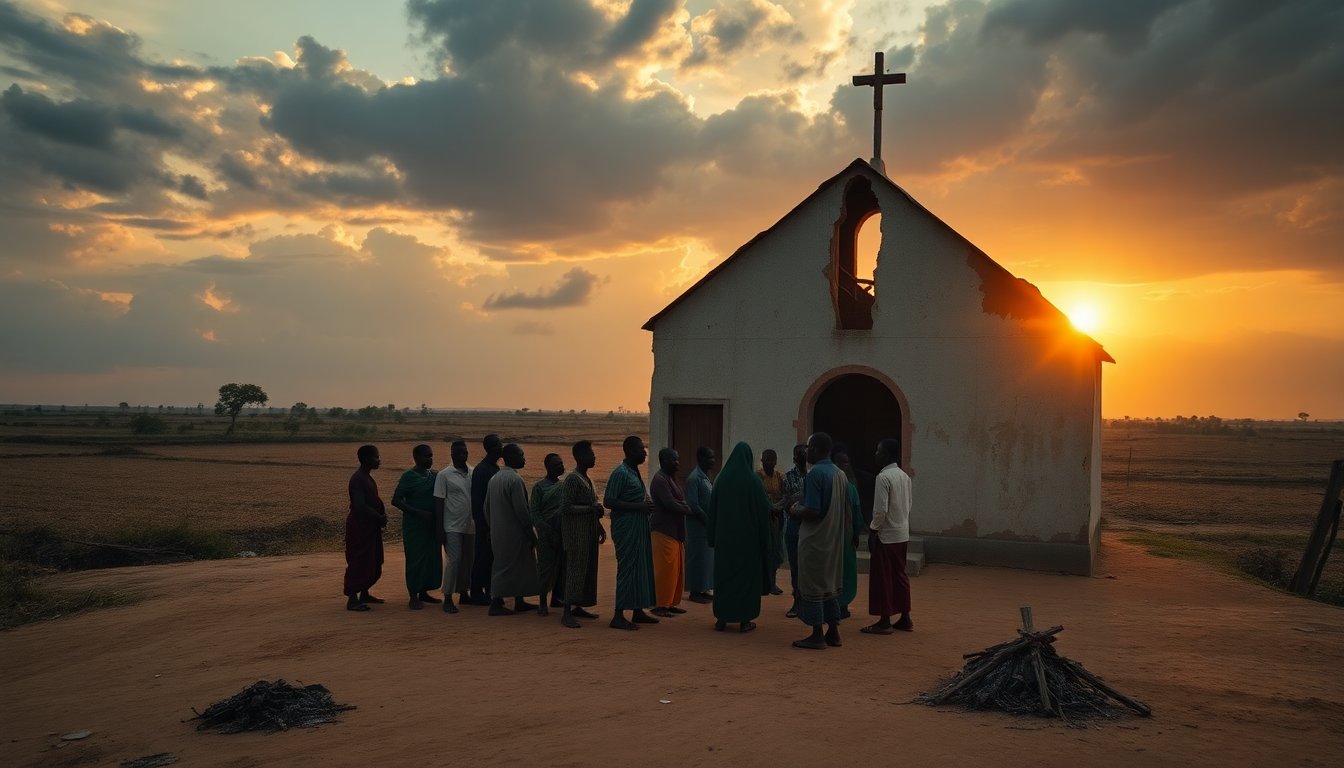
U.S. President Donald Trump recently made headlines with his statements concerning the treatment of Christians in Nigeria. He described this religious group as facing an existential threat, accusing radical Islamist factions of conducting mass killings against Christians. Trump characterized this situation as a significant humanitarian crisis and suggested the possibility of military intervention. His remarks have sparked a heated debate regarding the actual violence in Nigeria and the underlying motivations behind it.
Amnesty International, a prominent human rights organization, has responded to these assertions. They argue that the violence in Nigeria, particularly in the northern regions, should not be simplistically labeled as religious persecution. Instead, Amnesty describes the ongoing violence as part of broader conflicts driven by various factors, including political instability and economic distress.
The reality of violence in Nigeria
The situation in Nigeria presents a complex and multifaceted challenge. According to Amnesty International, violence in the region is primarily driven by jihadist groups that indiscriminately target both Muslims and Christians. Isa Sunusi, executive director of Amnesty’s Nigeria program, highlighted the indiscriminate nature of these attacks. He stated, “The jihadist groups kill both Muslims and Christians. They demolish mosques and churches. They don’t differentiate.”
Boko Haram is widely recognized as one of the most notorious extremist groups, responsible for numerous atrocities since its insurgency began in 2009. This organization was established with the aim of enforcing a strict interpretation of Islam and has led to the deaths of tens of thousands, while displacing millions more. The insurgency is characterized by brutal tactics, including kidnappings and mass killings, affecting not only Christians but also many Muslims who oppose their extremist ideology.
Understanding the conflict dynamics
While discussions around this issue often highlight the plight of Christians, it is crucial to understand that the violence in Nigeria is fundamentally a struggle for resources and political power. Reports suggest that the conflict is not merely a religious war but rather a competition over land and resources, particularly in the northern regions where agricultural and economic pressures are mounting.
Research from the International Crisis Group indicates that access to land and resources significantly contributes to violence, which can sometimes manifest in a religious context. The portrayal of a Muslim-Christian divide simplifies a conflict that is inherently more complex than it seems.
Political implications of Trump’s statements
Trump’s remarks elicited swift criticism from various stakeholders, including Nigerian officials. President Bola Ahmed Tinubu strongly refuted the description of Nigeria as a nation that promotes religious intolerance, asserting, “The characterization of Nigeria as religiously intolerant does not reflect our national reality. Nigeria opposes religious persecution and does not encourage it.” This statement underscores the Nigerian government’s commitment to tackling security challenges that impact all citizens, irrespective of their religious beliefs.
Trump’s tweets and subsequent remarks seem to reflect a reaction to media coverage, particularly from platforms like Fox News. This suggests a more reactive approach to the issue at hand. The absence of credible evidence supporting his claims raises concerns regarding the motivations behind his statements and their potential effects on U.S.-Nigeria relations.
Consequences of U.S. intervention threats
The potential implications of Trump’s threats of military action against Nigeria are significant. White House spokesperson Karoline Leavitt indicated that the U.S. may reconsider its support for Nigeria if violence against Christians persists. Such a position could jeopardize diplomatic relations and complicate ongoing efforts to stabilize the region.
Nigeria faces significant security challenges that require a nuanced perspective from the international community. The situation is complex, involving shared suffering among both Christians and Muslims, who are victims of a broader crisis.
Although the plight of Christians in Nigeria is critical, it is essential to contextualize comments made by political figures within the wider issues of instability and resource competition contributing to ongoing violence. A comprehensive approach is needed to tackle the root causes of this conflict and foster sustainable peace.


