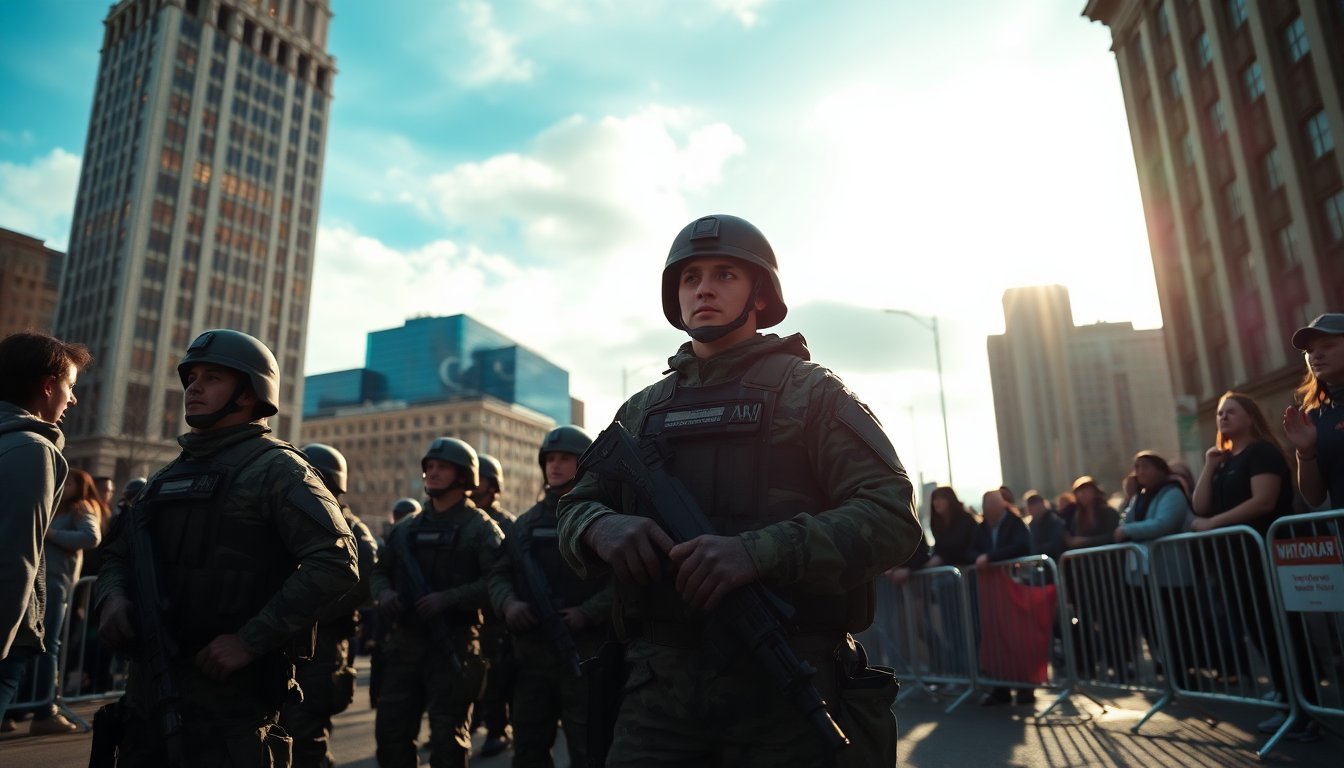
The situation regarding the deployment of the National Guard in various American cities has intensified, leading to significant legal battles. Over the weekend, governors from Oregon and Illinois responded to the Trump administration’s orders by seeking to halt military presence in their states. President Trump has characterized cities such as Portland as being under siege and in urgent need of federal intervention. This has resulted in contentious accusations from local leaders who argue against such claims.
In Portland, Trump labeled the city a war zone, claiming it faced attacks from groups like Antifa. In response to ongoing protests, he ordered the deployment of National Guard troops, prompting immediate legal challenges from Oregon’s governor. A U.S. District Judge intervened, issuing a temporary injunction against the deployment and questioning the necessity of military intervention, given that protests had remained largely peaceful.
Legal battles unfold
The legal landscape shifted as Oregon filed a lawsuit against the federal government, citing the U.S. Constitution. The argument was based on the premise that military involvement is only permissible in extreme situations, such as foreign invasions or insurrections. Judge Karin Immergut concurred, stating that the protests in Portland did not justify such a drastic response from federal forces.
In a surprising development, the Trump administration redirected troops from California to Portland following the ruling. This led Judge Immergut to issue a new order, barring any state’s National Guard from entering Oregon for 14 days, complicating the situation further.
Trump’s Chicago intervention
At the same time, Trump authorized the deployment of additional National Guard members to Chicago. This decision faced strong backlash from Governor J.B. Pritzker, who called the intervention “outrageous and un-American,” emphasizing that local authorities should manage the situation without federal military involvement. Following this order, Illinois initiated its own legal actions, claiming that the deployment was politically motivated, stemming from Trump’s opposition to local leaders.
The lawsuit argued that the American public should not face the threat of military occupation, reflecting rising tensions between state and federal authorities. Pritzker’s concerns resonated throughout Chicago, as federal agents, including those from Immigration and Customs Enforcement (ICE), employed aggressive tactics against protesters, further escalating the situation.
Protests and public response
In both Portland and Chicago, grassroots movements have gained traction, with demonstrators voicing their discontent over federal actions. Activists have accused federal agents of using violent methods against peaceful protesters and journalists. In Chicago, ICE operations included dramatic entries into residential neighborhoods, provoking outrage among community members and local officials.
Portland has experienced significant unrest, particularly near the local ICE facility. Protests gained momentum during the summer, with participants demanding the abolition of ICE and an end to federal overreach. As tensions escalated, federal officers resorted to deploying tear gas and other crowd control measures, despite local police describing the protests as relatively calm.
Community reactions
Community leaders and citizens have expressed frustration over the portrayal of their cities as chaotic war zones. Pastor Nate Hellman from Portland challenged Trump’s characterization through social media, showcasing the city’s peaceful environment and emphasizing that the real challenges lay in everyday issues like traffic congestion rather than civil unrest.
Furthermore, Oregon’s Governor Tina Kotek expressed her disbelief regarding Trump’s threats to deploy the National Guard, labeling them as absurd and unlawful. Citizens rallied behind their leaders, reinforcing the sentiment that the federal government’s narrative misrepresented the realities on the ground.
In Portland, Trump labeled the city a war zone, claiming it faced attacks from groups like Antifa. In response to ongoing protests, he ordered the deployment of National Guard troops, prompting immediate legal challenges from Oregon’s governor. A U.S. District Judge intervened, issuing a temporary injunction against the deployment and questioning the necessity of military intervention, given that protests had remained largely peaceful.0