
Table of Contents
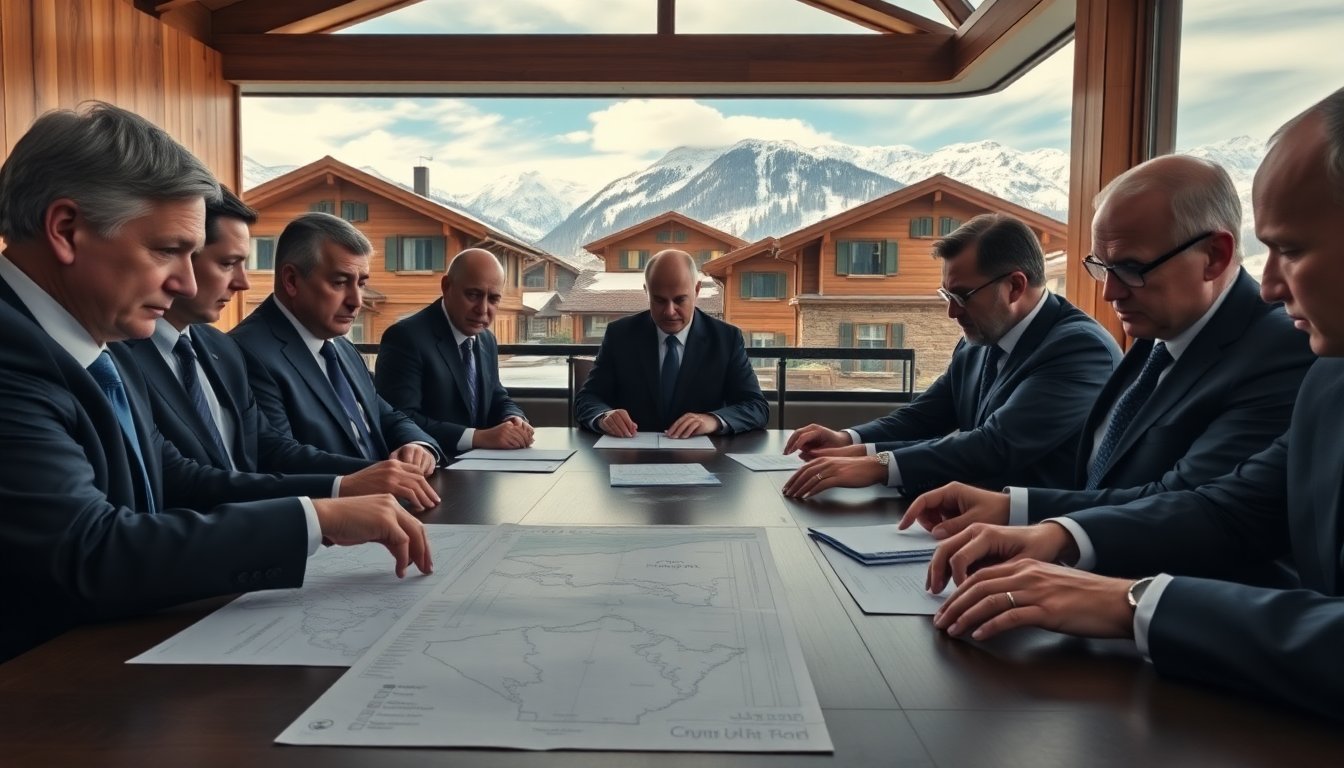
The annual World Economic Forum (WEF) in Davos has kicked off with a sense of urgency as global leaders gather to confront numerous challenges. Among the key figures in attendance is President Donald Trump, whose controversial proposal to acquire Greenland has sparked significant international debate. Following a productive dialogue with the NATO Secretary-General, Trump has scheduled a focused meeting to further discuss this acquisition during the summit.
Global leaders and the backdrop of tension
As the 2026 forum unfolds, nearly 3,000 participants, including 850 prominent CEOs and 400 political leaders, converge in Davos, marking it as one of the most significant gatherings in WEF history. This year’s theme, emphasizing A Spirit of Dialogue, seems somewhat ironic given the backdrop of Trump’s recent threats to impose tariffs on European nations opposing his Greenland initiative. Such actions have prompted European leaders to consider their responses carefully, further exacerbating the climate of international tension.
The economic implications of Trump’s Greenland proposal
Despite Trump’s insistence on national security as the core reason behind the U.S.’s interest in Greenland, analysts highlight a lack of substantial economic rationale for the acquisition. The harsh conditions and remote geography of the icy island raise questions about its viability as a profitable asset. As noted by Fortune’s energy editor, the environmental challenges present formidable barriers, prompting many to view the proposal as more of a political maneuver than a legitimate business opportunity.
The social atmosphere in Davos
Walking through the streets of Davos, one can sense a palpable mix of excitement and apprehension among attendees. One poignant moment was illustrated when a man collapsed on the icy ground outside the USA House, surrounded by paramedics. This scene resonated with the mood expressed by many international business leaders, who feel a sense of shock and anxiety, grappling with the shifting dynamics of U.S. relations. Mohamed Kande, the global chairman of PwC, articulated this sentiment by stating that the U.S. remains the preferred destination for investment, highlighting its enduring economic strength.
The role of artificial intelligence at the forum
While geopolitical discussions undoubtedly dominate the agenda, the topic of artificial intelligence (AI) is expected to feature prominently in conversations throughout the week. Numerous unofficial gatherings and parties along the Davos Promenade will serve as venues for leaders to exchange ideas about the future of AI and its implications for global industries. As companies seek to harness this technology, the conversation will undoubtedly touch on the necessity of addressing the labor shortages in blue-collar sectors, as emphasized by leaders like Ford’s CEO Jim Farley.
Broader economic concerns and the U.S. landscape
Amid these high-stakes discussions, broader economic issues are also coming to the forefront. The escalating national debt of the U.S., now estimated at a staggering $38.5 trillion, has emerged as a significant concern that threatens the American dream. Experts are urging a reevaluation of economic policies to mitigate the burdens placed on citizens by rising costs of living and limited housing options.
As markets fluctuate, with the S&P 500 futures showing a decline, the economic landscape remains precarious. The ongoing uncertainty surrounding Trump’s proposed tariffs and their potential impact on the U.S. dollar adds to the volatility, raising concerns about America’s reserve currency status.
In sum, as the 2026 World Economic Forum unfolds, the discussions around Trump’s Greenland aspirations and the resulting tensions with Europe are a microcosm of the broader geopolitical challenges that leaders must navigate. With critical conversations about AI, economic stability, and international relations, the stakes have never been higher for global leadership.