
Table of Contents
Controversy erupts over Trump’s name addition to Kennedy Center
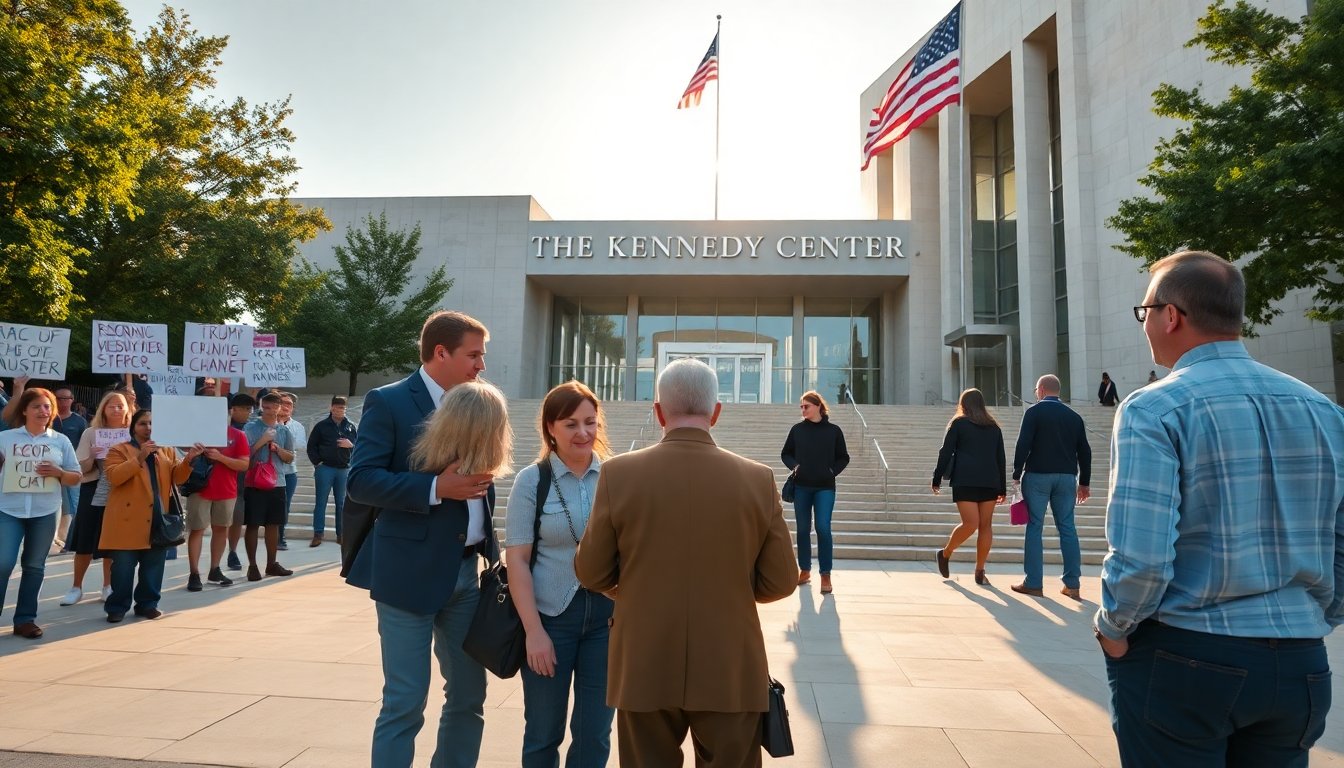
The announcement to add President Trump’s name to the Kennedy Center has sparked significant controversy and legal challenges. Representative Joyce Beatty, a Democratic congresswoman from Ohio, has initiated a lawsuit to block this name change. Beatty argues that the board has overstepped its legal authority with this decision. This legal dispute is part of a larger conversation about the intersection of politics and cultural institutions.
Legal grounds for the lawsuit
In a lawsuit filed in the U.S. District Court for the District of Columbia, Beatty argues that the recent decision by the Kennedy Center board to rename the institution as The Donald J. Trump and The John F. Kennedy Memorial Center for the Performing Arts is illegal. Her complaint asserts that only Congress has the authority to make such changes, as the center was established by legislative action in 1964 as a memorial to President John F. Kennedy.
Details of the board meeting
Beatty, who serves in an ex officio role on the board, stated that during a recent meeting where the vote occurred, she was muted while attempting to express her concerns regarding the proposed renaming. The lawsuit claims this action was intentional to suppress dissent, noting that she received a message indicating she would not be permitted to speak.
Beatty argues that since Congress established the Kennedy Center as a national memorial, any changes to its name should require congressional approval. The lawsuit highlights that the name was chosen to honor Kennedy’s legacy, underlining its importance as a cultural institution for all Americans, irrespective of political views.
Responses from the Kennedy Center and legal experts
In response to the name change, Roma Daravi, vice president of public relations at the Kennedy Center, defended the board’s decision. She described the new designation as a bipartisan effort aimed at resonating with various political perspectives. Daravi emphasized that the center is dedicated to being a cultural hub that reflects a range of viewpoints.
Legal experts are expressing concerns about the implications of a proposed name change for the Kennedy Center. Roger Colinvaux, a law professor at Catholic University, stated that the board’s actions not only lack legal authority but also breach their responsibilities by failing to comply with the statute that designates the center in honor of President Kennedy.
Historical context of the Kennedy Center
The Kennedy Center was created as a tribute to President Kennedy after his assassination in 1963. In 1964, Congress enacted a statute designating it as the sole national monument to his memory. This law includes strict regulations against adding further memorials or plaques within its public spaces. This historical context strengthens Beatty’s lawsuit, emphasizing the commitment to preserving Kennedy’s legacy in a nonpartisan manner.
Community reactions and potential consequences
The public and the Kennedy family have reacted with dismay and disbelief to recent events. Prominent family members, including Maria Shriver, have taken to social media to express their shock. They argue that attempts to rename the center are as unreasonable as renaming other iconic memorials, such as the Lincoln Memorial. Joe Kennedy, a former congressman and relative of the late president, supported this view, emphasizing the need to honor the original intent behind the center’s name.
The implications of this lawsuit extend beyond the immediate name change. It raises important questions about the integrity of cultural institutions and the influence of politics on them. Reports indicate that ticket sales at the Kennedy Center have declined since changes in leadership under Trump, putting the center’s future as a beloved cultural venue at risk.
As the lawsuit unfolds, its outcome could establish a crucial precedent on the naming rights of national monuments and the authority of cultural boards in the United States. This legal challenge highlights the importance of transparency and compliance with existing laws in the management of such significant institutions.