
Table of Contents
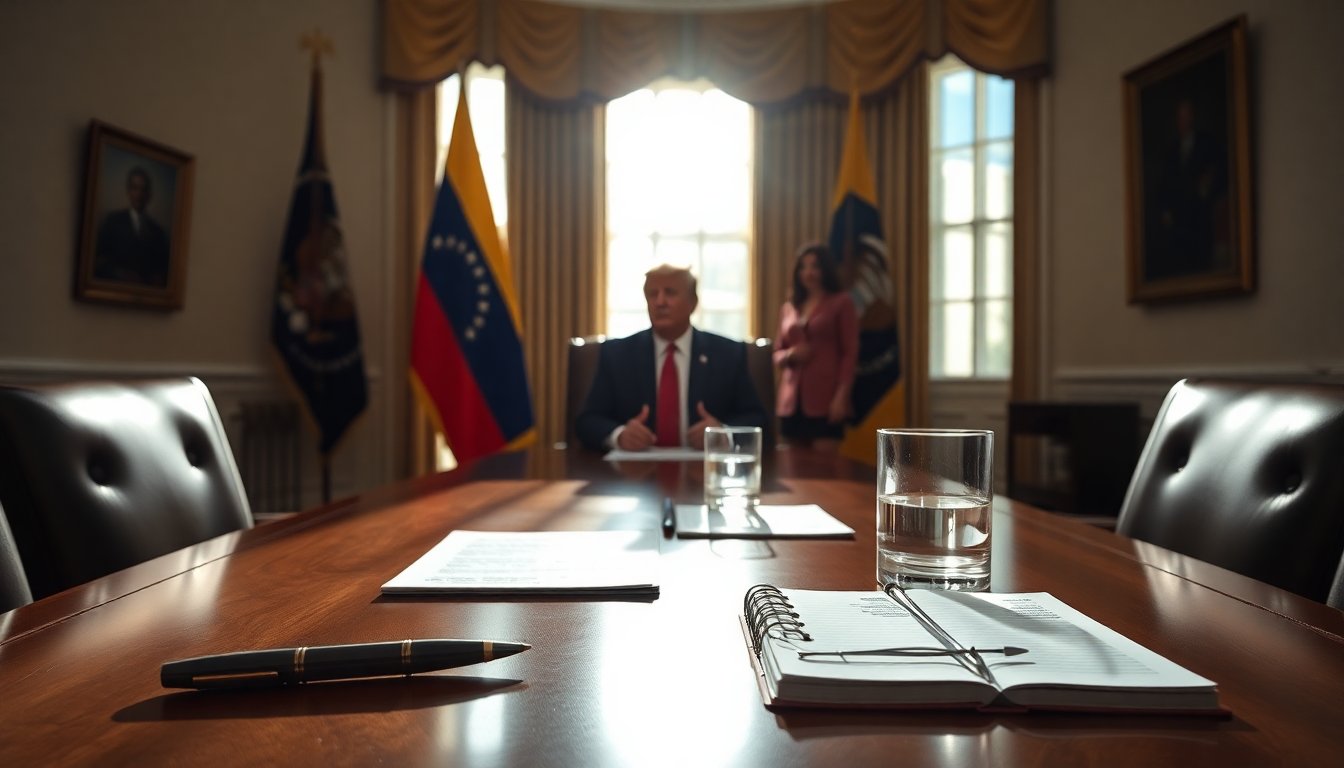
On January 15, Venezuelan opposition leader Maria Corina Machado visited the White House to meet with U.S. President Donald Trump. This meeting, marked by its unusual secrecy, came on the heels of significant political upheaval in Venezuela following the abduction of President Nicolas Maduro by U.S. forces.
This encounter was notable as it represented the first direct interaction between Trump and Machado. Typically, such meetings feature press coverage and public statements, but this session was conducted behind closed doors, suggesting a sensitive diplomatic atmosphere.
The significance of the meeting
During their lunch discussion, Machado aimed to strengthen her political stance and garner support for Venezuela’s opposition movement. Although the meeting was not open to the press, Machado emerged from the White House with a sense of optimism, despite the lack of a formal announcement regarding the outcomes of their conversation.
Presenting the Nobel Peace Prize
One of the highlights of Machado’s visit was her presentation of the Nobel Peace Prize medal to President Trump. She expressed that the medal symbolizes a shared commitment to democracy and freedom for the Venezuelan people. Machado recounted a historical anecdote involving Simon Bolivar and General Lafayette, underscoring the long-standing ties between the United States and Venezuela in their mutual fight against tyranny.
Despite her intentions, the Nobel Committee has clarified that the prize cannot be shared or transferred, emphasizing that Machado remains the rightful recipient. This recognition was awarded to her for her relentless advocacy for democratic values in Venezuela, a testament to her courage in the face of oppression.
Political implications and ongoing challenges
The backdrop of Machado’s visit includes an ongoing struggle for power within Venezuela, where Maduro’s government has faced accusations of human rights abuses and suppression of dissent. As of January 11, human rights organizations reported over 800 political prisoners in the country, highlighting the dire state of democracy.
Machado’s role in the opposition
Machado has been a prominent figure in the Venezuelan opposition, previously serving as a member of the National Assembly before her removal by Maduro’s government. She was seen as a key candidate for the upcoming presidential elections, receiving overwhelming support during the opposition primaries.
However, her political aspirations were thwarted when she was disqualified from running for office, leading to former diplomat Edmundo Gonzalez stepping in as the opposition’s candidate. Despite these setbacks, Machado remains a symbol of hope for many Venezuelans and continues to advocate for a democratic transition.
Trump’s support for Delcy Rodriguez
While Machado seeks to position herself as a legitimate leader of the opposition, President Trump has publicly backed Delcy Rodriguez, Maduro’s former vice president, who is currently acting as the interim leader. Trump referred to Rodriguez as a cooperative and effective partner, suggesting a preference for stability over a complete overhaul of Venezuela’s leadership.
This dynamic complicates Machado’s efforts, as Trump has indicated that she lacks sufficient support within Venezuela to effectively replace Maduro or Rodriguez. The U.S. administration’s focus on maintaining relations with Rodriguez raises questions about the future of Machado’s role in the political landscape.
Conclusion
Maria Corina Machado’s visit to the White House symbolizes the intricate dance of diplomacy involving Venezuela’s political future and U.S. influence. The meeting, although private, has implications for how the international community views the ongoing struggle for democracy in Venezuela. As Machado continues to fight for her country’s democratic rights, the support of foreign leaders like Trump will be crucial in shaping the path ahead for Venezuelans.