
Table of Contents
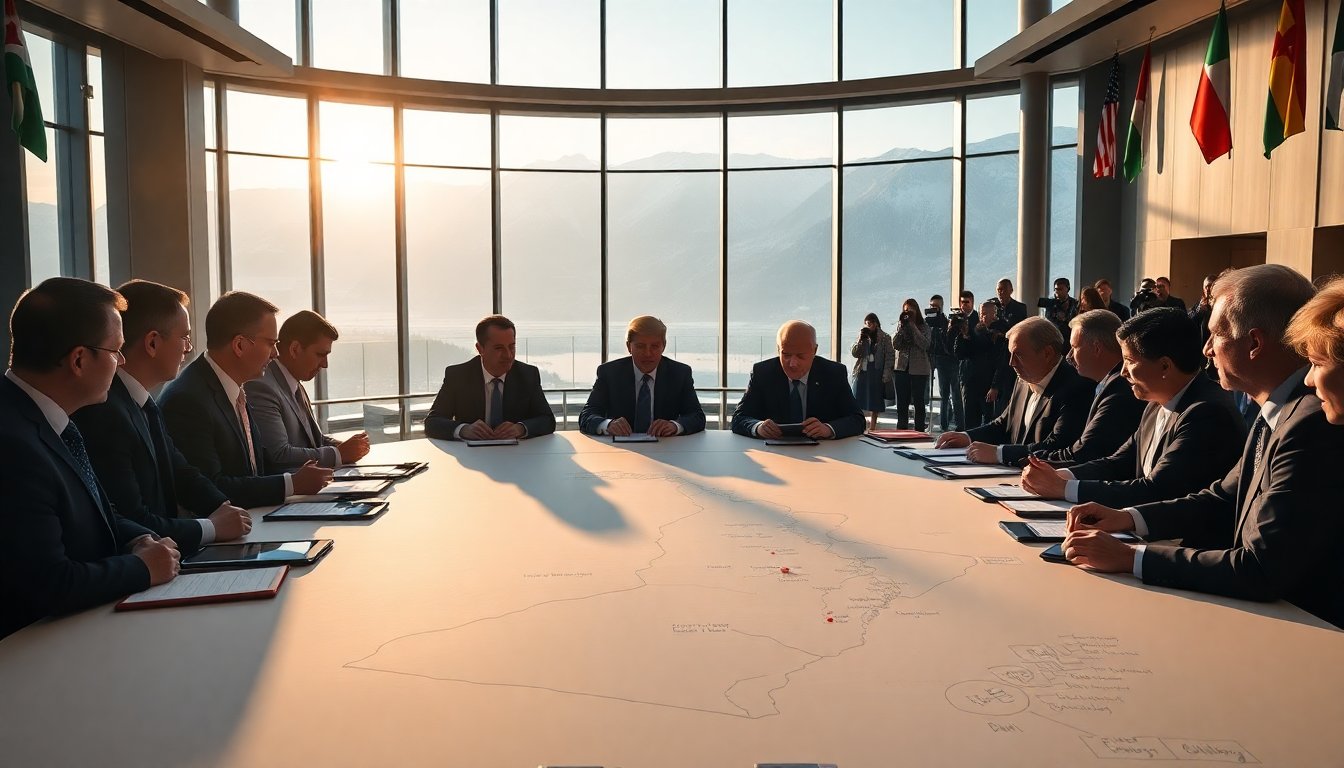
In a significant diplomatic move, U.S. President Donald Trump has introduced the Board of Peace during the annual World Economic Forum in Davos, Switzerland. This initiative aims to address the urgent need for reconstruction in Gaza and has drawn interest from numerous countries eager to engage in the peace process.
Approximately 35 countries have expressed their willingness to join the board, garnering global attention. Nations from the Middle East, including Israel, Turkey, Egypt, Saudi Arabia, and Qatar, have accepted Trump’s invitation. However, several European allies and Canada have shown reluctance regarding both the initiative and the associated financial commitments.
Membership and financial implications
To secure a permanent position on the Board of Peace, countries are required to contribute a minimum of $1 billion to support reconstruction efforts in Gaza, according to preliminary drafts. Other member nations will serve on a rotating basis for terms lasting three years. A White House representative revealed that around 50 nations were invited, though many have yet to respond.
Countries on board and their responses
Notable nations that have publicly committed include the United Arab Emirates, Albania, Armenia, Azerbaijan, Belarus, Hungary, Kazakhstan, Morocco, and Vietnam. In contrast, France has declined the invitation, citing that the board’s charter does not align with established United Nations resolutions regarding the Gaza conflict, with some elements conflicting with UN principles.
Additionally, Slovenia’s Prime Minister Robert Golob expressed concerns, labeling the board as a potential interference in the global order. Meanwhile, Russian President Vladimir Putin indicated that Russia is contemplating an invitation, suggesting the possibility of contributing $1 billion from frozen Russian assets in the U.S. to the board.
Strategic goals and ongoing conflicts
The launch ceremony coincided with ongoing military strikes in Gaza, underscoring the precarious nature of the situation. Trump’s vision for the board extends beyond Gaza, aiming to tackle conflicts worldwide. However, the ambiguity surrounding its future objectives has left some nations cautious about joining.
Concerns from Israeli leadership
Israeli officials have expressed trepidation regarding the board’s formation. Bezalel Smotrich, Israel’s far-right finance minister, criticized the initiative as detrimental to Israeli interests and called for its dissolution. He further asserted that Israel should assume responsibility for Gaza’s future, advocating a military administration if necessary.
Israeli Prime Minister Benjamin Netanyahu, while acknowledging disagreements with the U.S. over the board’s structure, maintained that these issues would not damage bilateral relations. He insisted that foreign troops, particularly from Turkey or Qatar, should not be deployed in Gaza.
The path ahead
In the coming days, the U.S. is expected to release a formal list of the countries participating in this initiative, likely during the World Economic Forum. The board will oversee an executive committee responsible for implementing the next stages of the Gaza peace plan, which includes establishing an international security force and disarming Hamas.
Despite the ambitious goals of the Board of Peace, the situation in Gaza remains dire. The World Food Program has intensified efforts to assist the population, yet challenges persist, with significant portions of the population facing food insecurity.
Approximately 35 countries have expressed their willingness to join the board, garnering global attention. Nations from the Middle East, including Israel, Turkey, Egypt, Saudi Arabia, and Qatar, have accepted Trump’s invitation. However, several European allies and Canada have shown reluctance regarding both the initiative and the associated financial commitments.0