
Table of Contents
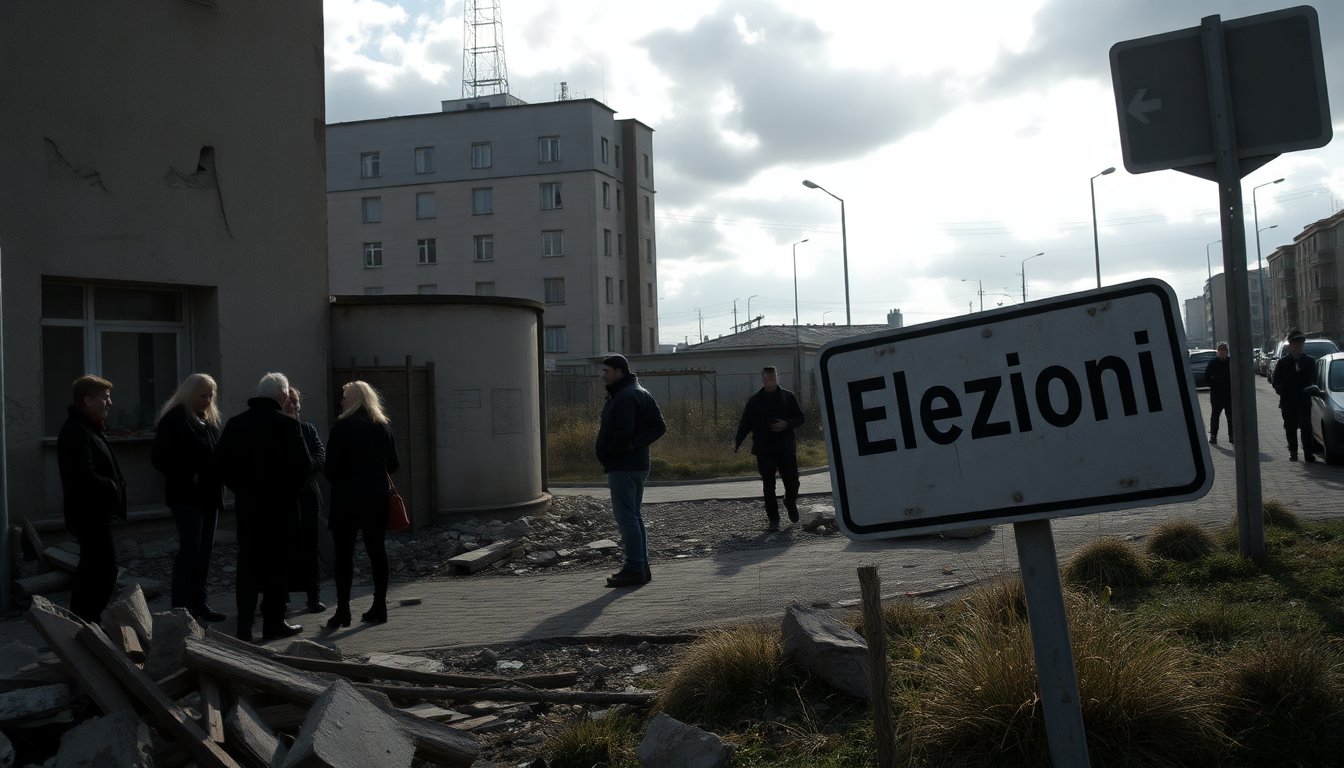
In a recent interview, former President Donald Trump made a statement regarding Ukraine’s political landscape amid its ongoing conflict with Russia. He suggested that Ukraine should proceed with elections, arguing that the absence of democratic processes could undermine the nation’s framework. This comment has sparked significant debate about the viability and consequences of conducting elections in a war-torn country.
Trump emphasized the urgency of the situation, indicating that without elections, Ukraine risks becoming increasingly undemocratic. He stated, “It’s an important time to hold an election,” noting that the current martial law, imposed by President Volodymyr Zelensky, should not impede the democratic process. Under Ukrainian law, elections are suspended during martial law, a measure taken in response to the ongoing aggression from Russia, which began with its invasion.
Trump’s perspective on Ukrainian elections
During his conversation with Politico’s Dasha Burns, Trump expressed his belief that the Ukrainian people deserve the opportunity to choose their leaders, despite the tumultuous circumstances. He remarked, “Maybe Zelensky would win. I don’t know who would win. But they haven’t had an election in a long time.” This statement underscores his concern that without regular electoral processes, the essence of democracy could erode.
Trump acknowledged the challenges faced by Ukraine during the war, stating that the size and strength of Russia give it the upper hand. He commended the bravery of Ukrainian forces but suggested that the balance of power might ultimately tip in favor of the aggressor. This perspective raises critical questions about the feasibility of conducting elections while engaged in active combat, and whether such elections could be considered legitimate.
The implications of wartime elections
Holding elections during wartime poses significant risks and challenges. Critics of Trump’s stance argue that ongoing hostilities could compromise the integrity of the electoral process. There is concern that the electoral environment may not be conducive to free and fair elections, as security issues, voter displacement, and military dynamics could distort outcomes.
Moreover, Zelensky’s administration has faced scrutiny due to recent corruption allegations that have emerged amid the war. These revelations complicate the situation, suggesting that the current government may not be in the best position to oversee fair elections. Political analysts note that the corruption scandals could undermine public trust in the electoral process, making it increasingly difficult for any election held under such circumstances to be seen as legitimate.
Challenges to peace negotiations
Trump’s comments also arise at a time when his administration is attempting to facilitate peace negotiations aimed at resolving the conflict in Ukraine. He expressed disappointment that Zelensky had not yet engaged with the latest peace framework proposed by U.S. and Ukrainian negotiators. “It would be nice if he would read it,” Trump remarked, emphasizing the urgency of addressing the ongoing humanitarian crisis and the need for a resolution.
However, critics argue that Trump’s peace plan, viewed as favoring Russian interests, could set a dangerous precedent. The proposed terms have been criticized for potentially compromising Ukraine’s sovereignty and territorial integrity. Political commentators note that while Trump seeks a quick diplomatic win, the implications of his proposals could lead to further destabilization in the region.
The broader impact on democracy
As the debate around holding elections during wartime continues, it is essential to consider the broader implications for democracy in Ukraine. The essence of democratic governance relies on the populace’s ability to make informed choices free from coercion or manipulation. Conducting elections under the shadow of war raises significant ethical and practical concerns about whether such a process can truly reflect the will of the people.
Trump’s advocacy for elections in Ukraine amidst ongoing conflict opens a complex dialogue about the nature of democracy and governance during crises. While the desire for a democratic process is commendable, the realities on the ground suggest that the path forward is fraught with challenges that must be carefully navigated to preserve the integrity of Ukraine’s political future.