
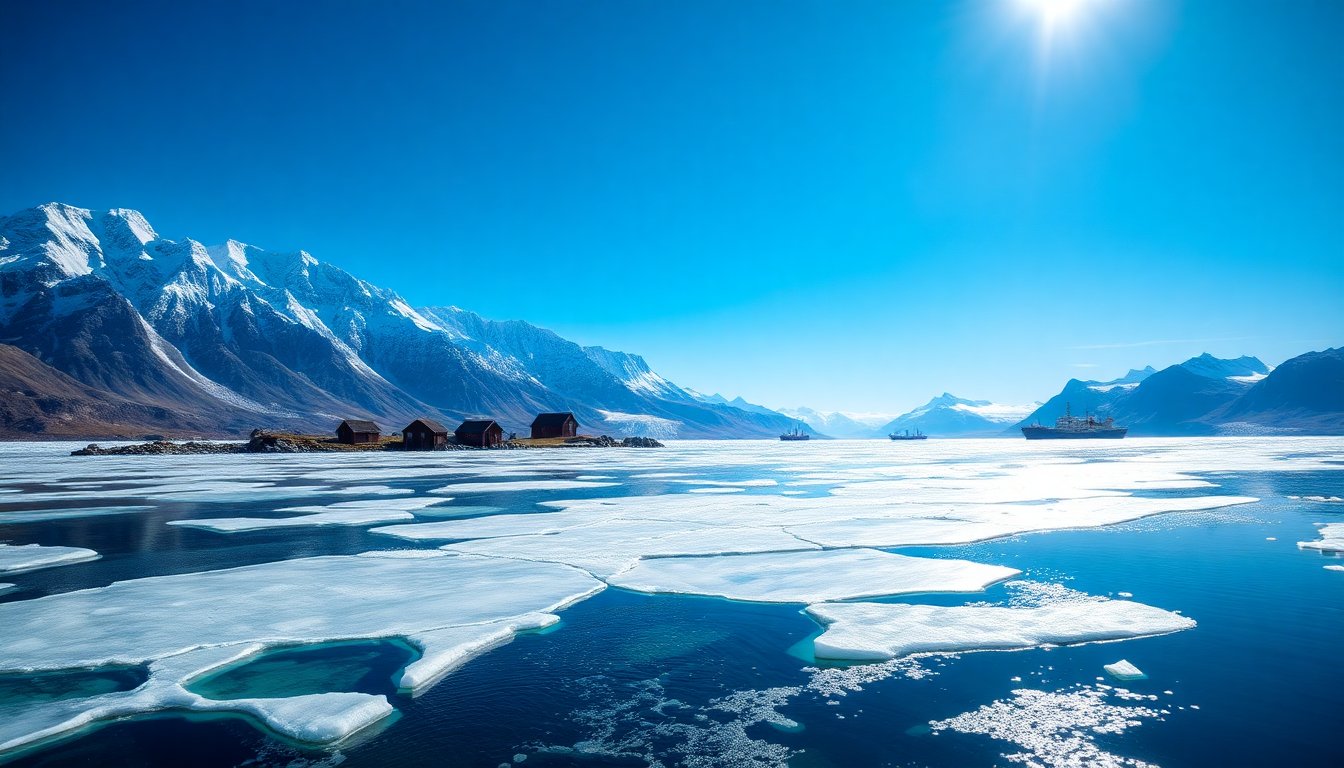
Greenland’s geopolitical significance under scrutiny
Greenland has recently become a significant topic in international politics, particularly during former President Donald Trump’s administration. His interest in this vast Arctic territory, which operates autonomously as part of Denmark, highlights its growing importance in the context of national security. This article explores the motivations behind Trump’s aspirations for Greenland and examines the wider geopolitical implications.
The strategic significance of Greenland
Greenland’s geographical location between North America and Europe makes it a vital asset for military strategy and surveillance. The assertion that Greenland is vital for U.S. national security is supported by historical context; during the Cold War, it was a key outpost for monitoring potential threats from the Soviet Union. The Pituffik Space Base in Greenland is essential for early-warning systems that detect incoming threats.
Potential threats from global rivals
The presence of Russian and Chinese naval forces in Arctic waters has prompted significant attention. Former President Trump emphasized the importance of maintaining control over Greenland as critical for protecting American interests. He stated, “Greenland is covered with Russian and Chinese ships all over the place,” underscoring the urgency of responding to these geopolitical changes. The U.S. military’s presence in the region aims not only to assert dominance but also to counter the ambitions of these rival powers in the Arctic.
Trump’s approach to acquiring Greenland
The idea of acquiring Greenland has been a topic of discussion since 2019, when former President Donald Trump proposed purchasing the territory from Denmark. Despite Denmark’s clear assertion that Greenland is not for sale, discussions continue within the U.S. administration. White House Press Secretary Karoline Leavitt stated that acquiring Greenland remains a priority, highlighting its strategic significance in countering global adversaries.
The implications of military intervention
Trump’s strategy raises significant concerns regarding the potential use of military force to achieve his objectives. Leavitt’s assertion that employing the U.S. military is “always an option” has alarmed international observers. Critics contend that such rhetoric risks destabilizing relations with NATO allies and could trigger a broader conflict. The idea of invading a territory regarded as a NATO ally is perceived as a perilous escalation that may lead to extensive repercussions.
International reactions and consequences
The possibility of U.S. military involvement in Greenland has raised significant concerns among European leaders. They have voiced strong objections to the ambitions of the Trump administration. U.K. Prime Minister Keir Starmer and French President Emmanuel Macron have both emphasized that the future of Greenland should be decided by its residents, alongside the Danish government. Danish Prime Minister Mette Frederiksen has made it clear that Greenland’s status is not subject to negotiation, underlining the island’s autonomy.
The potential consequences of any aggressive actions taken by the United States could lead to a profound shift in NATO’s dynamics. A military intervention by the U.S. may jeopardize existing alliances and compel other nations to reassess their defense strategies. The stability of the Arctic region depends significantly on international cooperation, and a unilateral approach could undermine longstanding partnerships.
Emerging economic partnerships
In the midst of these political tensions, discussions surrounding the economic potential of Greenland have gained traction. The island is abundant in natural resources, including oil, gas, and minerals, which hold increasing significance in the current geopolitical environment. Should Greenland pursue independence from Denmark, it could facilitate a closer economic relationship with the United States, potentially leading to a compact of free association that emphasizes mutual economic support and security cooperation.
Greenland’s strategic importance in global affairs
The dialogue surrounding Greenland’s role in global geopolitics continues to evolve. Its strategic significance is increasingly acknowledged not only by the United States but also by other global powers. President Trump’s interest in acquiring Greenland has sparked important discussions regarding national security, international relations, and the future of Arctic governance. As developments unfold, the international community remains attentive, seeking a resolution that honors Greenland’s sovereignty while navigating the intricate geopolitical landscape.


