
Table of Contents
In a bold move that has raised eyebrows, President Donald Trump has reaffirmed his intention to impose tariffs on eight European nations. This decision is linked to his controversial agenda surrounding Greenland, a vast Arctic territory that has become a focal point of international tension. Danish and European officials have expressed outrage, uniting in their opposition to U.S. pressure. As the diplomatic landscape shifts, concerns over national sovereignty and international relations are becoming increasingly pronounced.
The tariff threats and European response
The announcement of a 10% tariff on imports from Denmark, Norway, Sweden, France, Germany, the United Kingdom, the Netherlands, and Finland has provoked significant backlash. These tariffs are scheduled to rise to 25% in June if an agreement for the “Complete and Total purchase of Greenland” is not finalized. This assertive approach highlights the administration’s determination to maintain U.S. dominance in Arctic affairs, emphasizing that Greenland’s strategic significance is critical for national security.
European leaders stand firm
In response to recent threats from the United States, European leaders are taking a unified stand against what they describe as a dangerous precedent. Danish Foreign Minister Lars Lokke Rasmussen highlighted the importance of collaboration within the European Union and NATO to address the situation through diplomatic means. He asserted that the idea of trading land is unacceptable in today’s world, advocating for constructive dialogue rather than a confrontational approach.
Domestic reactions and Greenland’s voice
In response to recent remarks from former President Donald Trump, the people of Greenland are actively expressing their stance. Demonstrations have emerged across the territory, with citizens proudly displaying their national flags and advocating for self-governance. Protesters have been heard chanting phrases such as “Greenland is not for sale” and “We shape our future,” which underscore their commitment to autonomy amid external pressures. These grassroots movements illustrate a robust sense of identity and a firm resistance to foreign claims over their land.
U.S. senators reaffirm support for Denmark and Greenland
In response to rising tensions, a bipartisan group of U.S. senators has traveled to Copenhagen to reassure Denmark and Greenland of their unwavering support. Senator Chris Coons highlighted the necessity of maintaining trust and respect among allies. He expressed a desire to de-escalate the current situation, noting that recent comments regarding Greenland are generating anxiety within the kingdom. The senator emphasized that the United States values its partnership with Denmark and NATO, advocating for peaceful resolutions rather than escalating threats.
The strategic implications of Greenland
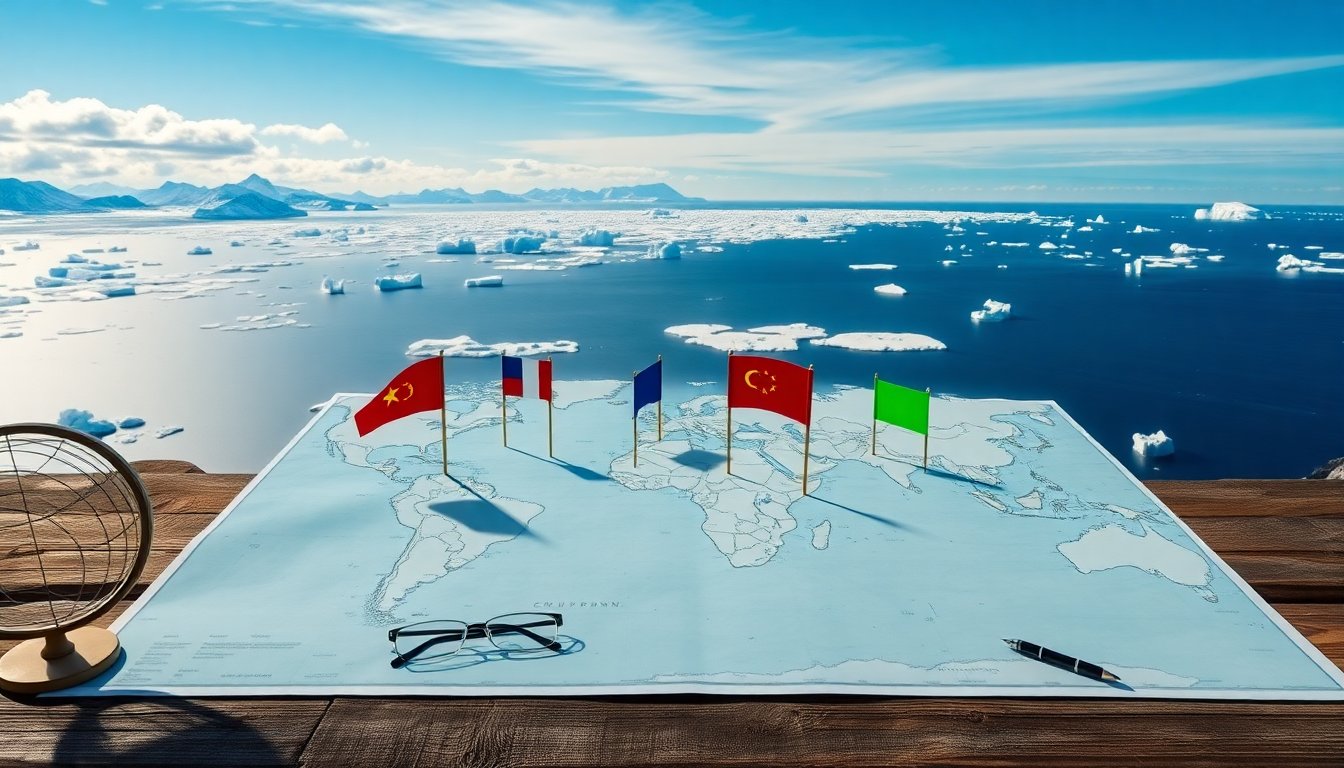
The strategic significance of Greenland is increasingly recognized as climate change reshapes the Arctic landscape. The melting ice is revealing new trade routes and exposing previously untapped resources. This development has attracted the attention of global powers, notably China and Russia. These interests have been cited by former President Donald Trump as a rationale for U.S. aspirations in the region. However, critics contend that there is no immediate threat to Greenland, questioning the validity of Trump’s assertions concerning international security.
The geopolitical chessboard
The geopolitical implications of former President Donald Trump’s ambitions regarding Greenland are significant. Both Russia and China have expressed interest in the territory, complicating U.S. foreign policy. Trump’s claim that the U.S. must assert control over Greenland for security reasons has sparked skepticism domestically and internationally, raising ethical questions about the legitimacy of such actions.
As developments continue, concerns over potential conflict linger. While the Trump administration has not discounted military options, Danish military officials maintain that they do not anticipate any NATO member attacking another. Ongoing discussions about Greenland have highlighted deeper tensions within NATO and the European Union. Some member states, including Hungary, argue that the issue should be addressed through direct negotiations rather than involving broader alliances.
The ongoing tensions over Greenland illustrate significant geopolitical dynamics. The resistance from European nations and the assertiveness of Greenland’s citizens highlight the complexities of international relations. As the situation unfolds, it will be crucial to observe how diplomatic channels navigate these challenges. Industry experts confirm that these developments could reshape alliances and influence future negotiations in the Arctic region. Observers are keen to see how this situation evolves, possibly setting a precedent for other territorial disputes around the globe.