
Table of Contents
In a recent series of announcements, former President Donald Trump has reignited his interest in acquiring Greenland by threatening to impose escalating tariffs on European nations opposing his plans. This dispute highlights Trump’s ambitions and the strategic importance of Greenland to the United States and its NATO allies.
On his social media platform, Trump stated that the U.S. has subsidized Denmark and other EU countries by not imposing tariffs. He suggested that it is now time for these nations to reciprocate. Beginning February 1, he announced, countries such as Denmark, Norway, Sweden, France, Germany, the United Kingdom, the Netherlands, and Finland would incur a 10 percent tariff on their exports to the U.S., escalating to 25 percent by June 1, unless a deal for Greenland’s purchase is reached.
The facts
Trump’s desire to acquire Greenland is not a new phenomenon; multiple U.S. administrations have pursued this interest. Notable figures like Secretary of State William H. Seward attempted negotiations after the U.S. acquired Alaska from Russia in 1867. Additionally, President Harry S. Truman made a secret offer of $100 million for Greenland in 1946, which Denmark ultimately rejected.
Greenland’s geopolitical significance
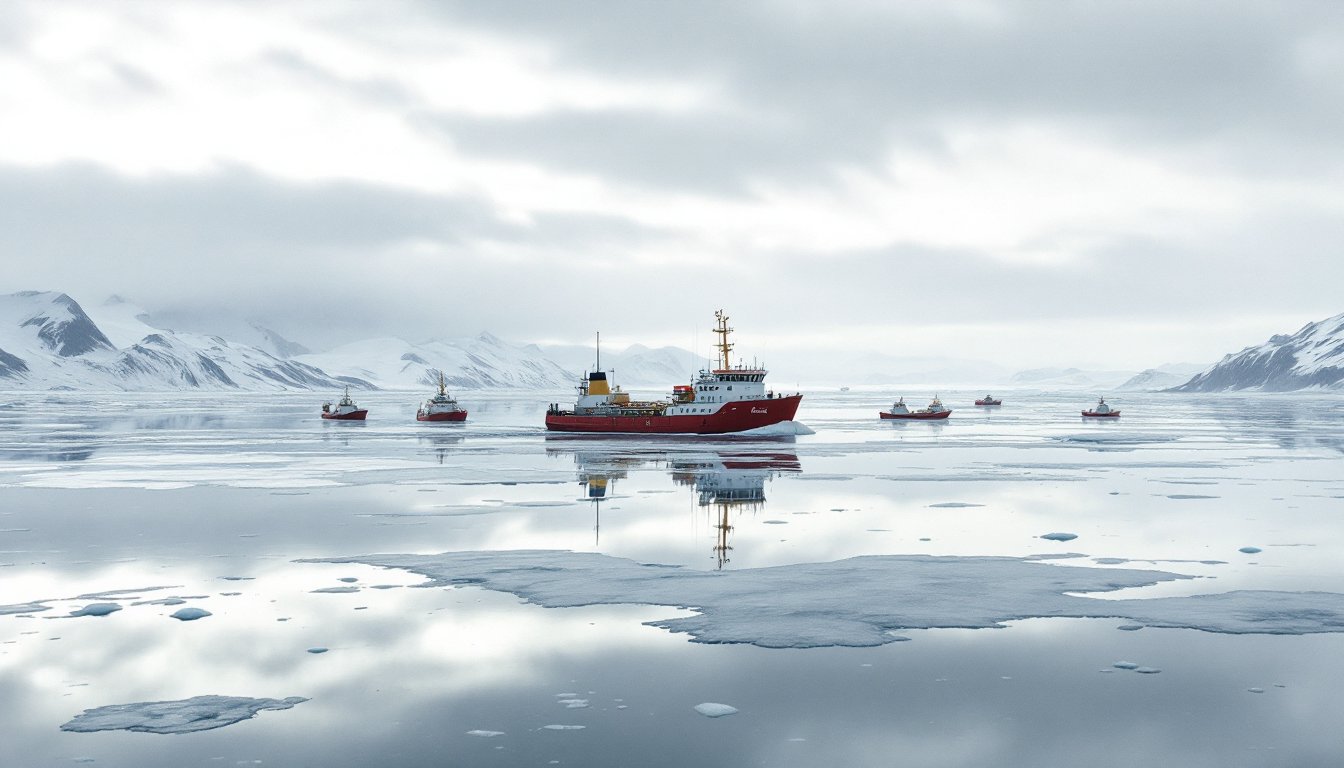
Geographically, Greenland is strategically located between the Arctic and North Atlantic Oceans, making it vital for U.S. military operations. With a population of approximately 56,000, primarily Indigenous Inuit, Greenland’s capital, Nuuk, is closer to New York City than Copenhagen. This unique positioning allows it to serve as a crucial hub for military activities and early missile warning systems, especially as Arctic ice continues to melt due to climate change.
The island is rich in minerals and resources deemed critical by the European Union, although large-scale extraction faces opposition from many Inuit residents. As global powers like the U.S., Canada, China, and Russia vie for access to these untapped resources, Greenland’s significance increases.
European responses to Trump’s tariff threats
The reaction from European leaders has been swift. An emergency meeting of the 27 EU member states was convened to address Trump’s tariff threats. UK Prime Minister Keir Starmer emphasized that Greenland is an integral part of Denmark and that its future should be determined by the Greenlanders and the Danish government. He criticized the imposition of tariffs on allies as fundamentally wrong.
Solidarity among European leaders
European Commission President Ursula von der Leyen echoed this sentiment, stating that the EU stands firmly with Denmark and Greenland, advocating for dialogue over discord. She warned that tariffs could jeopardize transatlantic relations and lead to a detrimental cycle of conflict. Similarly, Kaja Kallas, the EU foreign policy chief, highlighted that divisions among allies would benefit adversaries like China and Russia, underscoring the need for unity.
In an interview, Dutch Foreign Minister David van Weel described Trump’s actions as blackmail, arguing that such tactics do not promote NATO solidarity or benefit Greenland. The overarching sentiment among European leaders is that cooperation and mutual respect are essential for addressing the complex geopolitical landscape.
The implications of Trump’s strategy
Trump’s approach to Greenland reflects a broader strategy to secure U.S. interests in the Arctic, particularly in light of perceived threats from Russia and China. He expressed concerns about these nations potentially establishing a foothold in Greenland, suggesting that the U.S. must act decisively to prevent this scenario. However, Danish officials countered Trump’s narrative, asserting that there is currently no significant Chinese military presence in the region.
Retired Admiral Rob Bauer, former chair of NATO’s Military Committee, emphasized the importance of maintaining a stable Arctic. He indicated that while tensions related to Arctic resources and navigation routes may rise, the responsibility for Greenland lies with Denmark. NATO’s continued cooperation is seen as crucial for ensuring regional security.
On his social media platform, Trump stated that the U.S. has subsidized Denmark and other EU countries by not imposing tariffs. He suggested that it is now time for these nations to reciprocate. Beginning February 1, he announced, countries such as Denmark, Norway, Sweden, France, Germany, the United Kingdom, the Netherlands, and Finland would incur a 10 percent tariff on their exports to the U.S., escalating to 25 percent by June 1, unless a deal for Greenland’s purchase is reached.0