
Table of Contents
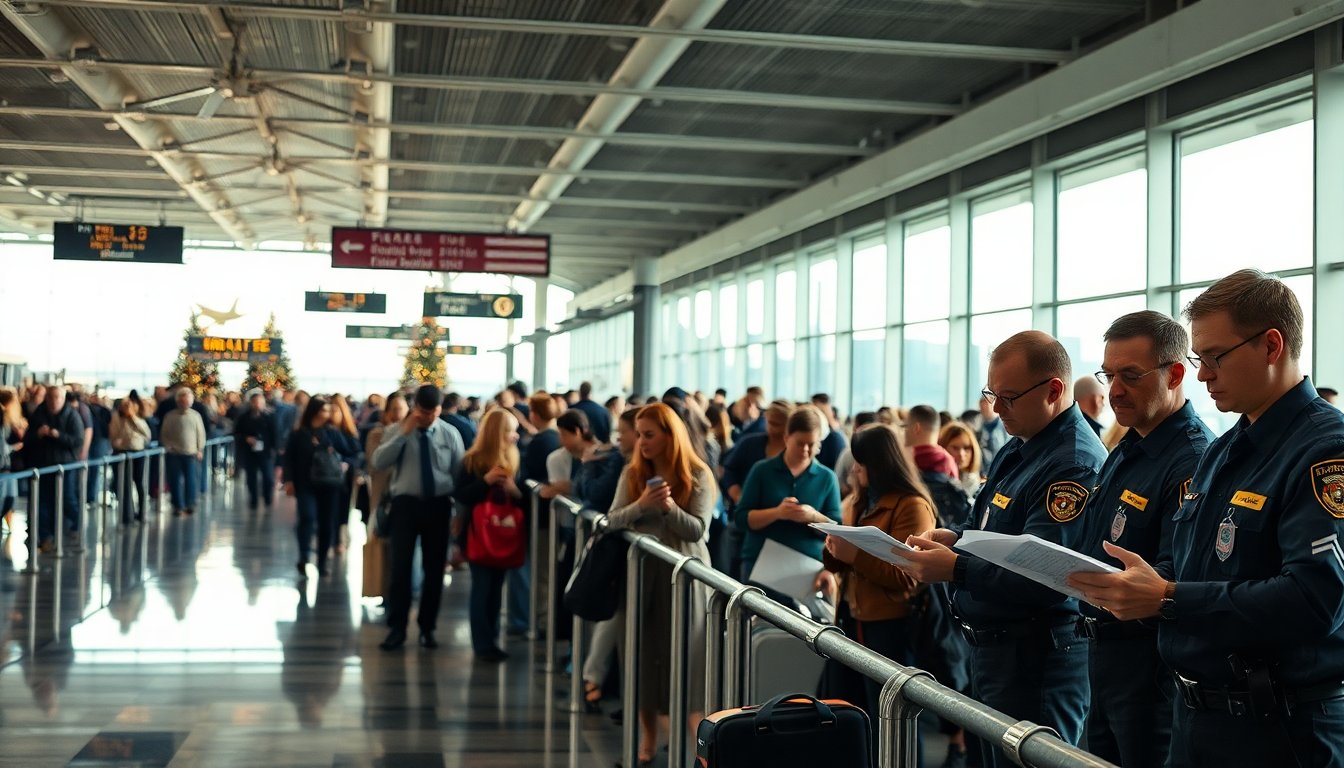
As the holiday season approaches, nearly 18 million Americans rely on the Transportation Security Administration (TSA) to ensure their safety during flights. However, many remain unaware that a significant portion of TSA operations is diverted by union obligations, wasting both time and taxpayer resources rather than prioritizing security.
The Trump administration is set to implement changes that will refocus the agency’s efforts. Beginning in January, the TSA’s workforce, which exceeds 47,000 officers, will no longer be bound by the collective bargaining rules established during the Biden administration.
Restructuring TSA’s approach to security
Recently, the Department of Homeland Security announced a return to the TSA’s original employment structure, eliminating the collective-bargaining agreement that has caused significant distractions. Secretary Kristi Noem outlined this decision in a memo from September, stating that collective bargaining is “not compatible” with maintaining the agility necessary to protect the traveling public from evolving threats.
This understanding of the TSA’s needs was evident when the agency was created in the early 2000s. At that time, bipartisan support in Congress recognized the need for flexibility within the TSA, similar to other national security agencies like the military and the FBI, which do not operate under collective bargaining agreements.
Impact of collective bargaining on TSA operations
While President Barack Obama allowed limited unionization at the TSA, it was under President Joe Biden that collective bargaining expanded significantly, leading to increased distractions and costs. For instance, the limited bargaining process in 2016 alone consumed over 17,000 hours of management time.
Negotiating contracts incurs substantial expenses; in 2019, the TSA allocated nearly $400,000 for negotiators. Additionally, the current agreement permits employees to dedicate their work hours to union duties rather than focusing on aviation security. In, over $7.2 million was spent on employees whose roles revolved solely around union matters, a practice known as “official time.”
Moreover, since 2012, the union has initiated approximately 1,200 arbitration cases, costing taxpayers around $850,000 in legal fees alone. These cases often extend over a year, with some lasting as long as 19 months, consuming thousands of management hours.
Consequences of union distractions on safety
In her correspondence, Secretary Noem expressed serious concerns shared by TSA leaders, including career security directors who reported spending increasingly less time on critical security tasks due to arbitration issues. Alarmingly, a recent assessment indicated that after the implementation of the new collective bargaining agreement, unscheduled absences among TSA officers rose by almost 25%.
This surge in absenteeism has hampered the TSA’s operational efficiency. Major airports, such as those in Atlanta and Phoenix, have struggled to maintain adequate staffing levels for security teams. For example, in Phoenix, around 10% of the workforce failed to report for duty on average last December.
In contrast, when collective bargaining was not in effect, unexpected absences dropped by more than 50%. These findings led Secretary Noem to assert that the leave provisions of the latest collective-bargaining agreement “undermine mission readiness.”
Wider implications across federal agencies
The Trump administration is set to implement changes that will refocus the agency’s efforts. Beginning in January, the TSA’s workforce, which exceeds 47,000 officers, will no longer be bound by the collective bargaining rules established during the Biden administration.0
The Trump administration is set to implement changes that will refocus the agency’s efforts. Beginning in January, the TSA’s workforce, which exceeds 47,000 officers, will no longer be bound by the collective bargaining rules established during the Biden administration.1
Looking forward with a focus on security
The Trump administration is set to implement changes that will refocus the agency’s efforts. Beginning in January, the TSA’s workforce, which exceeds 47,000 officers, will no longer be bound by the collective bargaining rules established during the Biden administration.2
The Trump administration is set to implement changes that will refocus the agency’s efforts. Beginning in January, the TSA’s workforce, which exceeds 47,000 officers, will no longer be bound by the collective bargaining rules established during the Biden administration.3