
Table of Contents
The political landscape in Uganda is facing significant upheaval as President Yoweri Museveni marks another victory in the recent presidential election. Official results indicate that Museveni secured 71.65 percent of the votes, solidifying his position for a seventh consecutive term. However, this election has been marred by allegations of fraud, an internet blackout, and widespread unrest, particularly among the youth.
Election results and opposition response
In the final vote tally, Museveni’s main rival, Robert Kyagulanyi Ssentamu, known as Bobi Wine, garnered 24.72 percent of the votes. The musician-turned-politician has strongly rejected the results, criticizing the electoral process as fundamentally flawed. Wine has mobilized his supporters, calling for peaceful protests to contest what he deems a fraudulent election.
Concerns over electoral integrity
Reports indicate that the electoral process in Uganda was marred by a series of irregularities. Issues included ballot stuffing, delays at polling stations, and the arrests of opposition supporters. Wine reported that many of his polling agents were detained prior to the elections, significantly hampering his ability to monitor the voting process effectively. He claims that this systematic harassment has created an environment where the electoral outcome cannot be trusted.
Additionally, the government’s decision to implement a nationwide internet shutdown just days before the election has drawn significant criticism. This blackout, intended to prevent the spread of misinformation, has instead raised concerns about the lack of transparency and the citizens’ ability to report irregularities during the voting.
Security measures and public response
During the elections, security forces were heavily deployed, especially in urban areas. This military presence was notably visible near the residence of opposition figure Bobi Wine in Kampala. Authorities asserted that such measures were necessary for his safety. Critics, however, contend that this reflects an oppressive regime attempting to suppress dissent and manipulate the narrative.
Unrest and public demonstrations
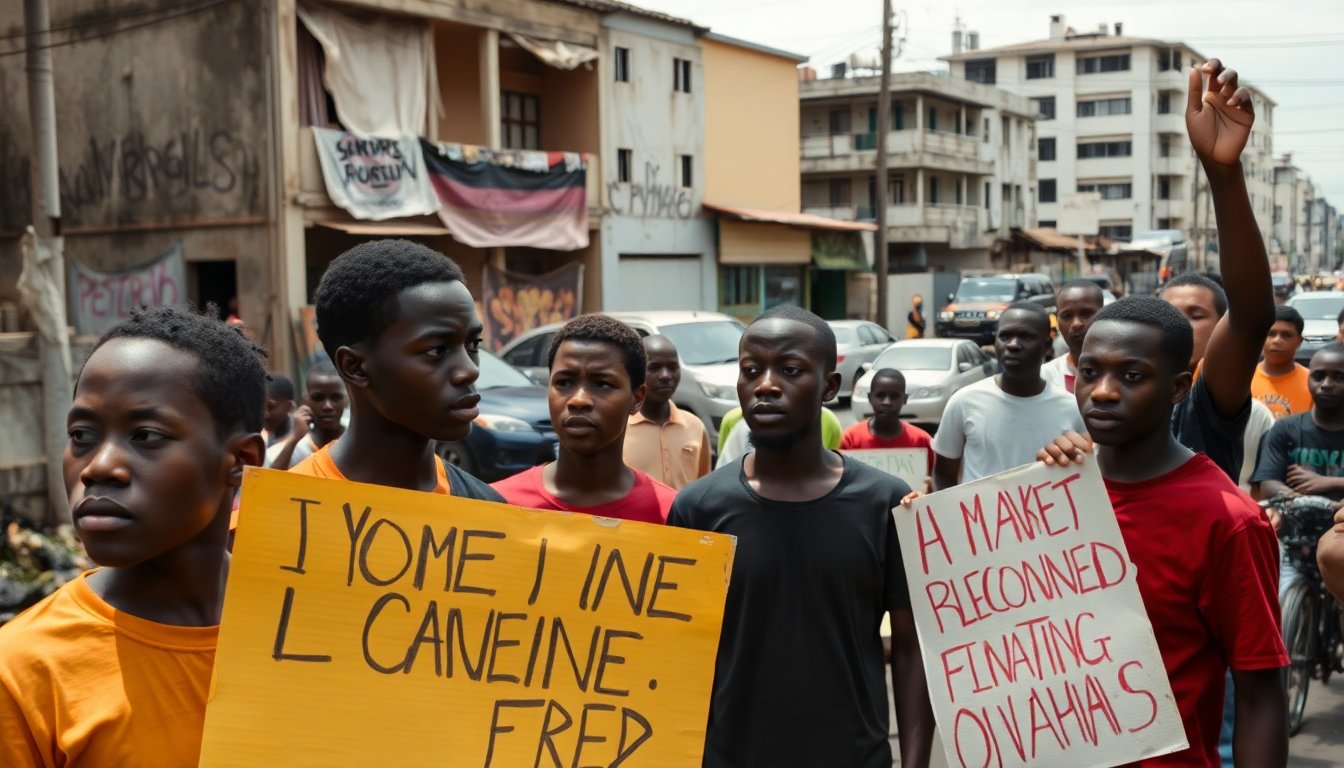
Following the election results, protests broke out across the capital. Activists took to the streets, lighting bonfires and clashing with security forces, who responded by firing warning shots to disperse the crowds. The U.S. Embassy issued a security alert, urging its citizens to exercise caution amid the escalating tensions. Reports of injuries and fatalities resulting from violent confrontations have emerged, further exacerbating the crisis.
As President Yoweri Museveni approaches what many describe as an unprecedented fifth decade in power, the implications for Uganda’s future remain uncertain. His reliance on military support, particularly from his son, Muhoozi Kainerugaba, highlights the increasingly authoritarian nature of his administration.
Looking ahead: A divided Uganda
The outcome of the recent election raises serious questions about the future of democracy in Uganda. A significant portion of the electorate, especially the youth, has rallied behind the call for change led by opposition figure Bobi Wine. This movement reflects a desire for political reform, contrasting sharply with Museveni’s long-standing rule. The divide between the aspirations of a younger generation and the established political order signals a potential shift in Uganda’s political dynamics.
As both local and international observers scrutinize the electoral process, the necessity for reform and the demand for accountability have become increasingly urgent. The call for a transparent and fair electoral process resonates not only within Uganda but throughout the East African region, where similar governance patterns are emerging.
The recent elections in Uganda have reaffirmed President Yoweri Museveni’s grip on power while igniting a renewed discourse on democratic principles. Citizens increasingly emphasize their right to participate freely in the electoral process. The ongoing struggle for a fair political landscape continues, fostering hope that future elections will reflect the will of the people rather than the interests of the few.