
Table of Contents
In a significant development, a second day of trilateral negotiations aimed at mediating the ongoing conflict between Russia and Ukraine took place in Abu Dhabi. The meeting included representatives from Washington, Moscow, and Kyiv, marking a crucial step in the year-long efforts by the Trump administration to establish lasting peace.
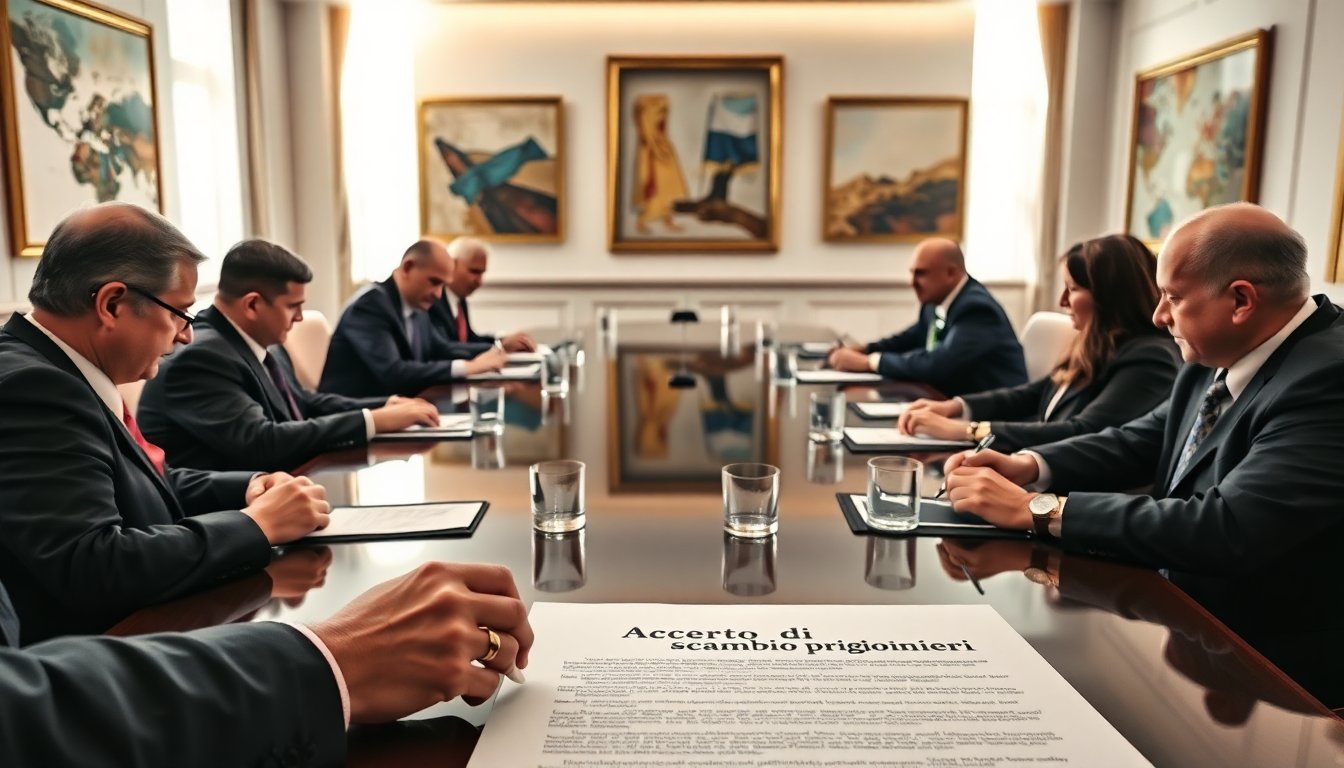
Following the discussions, U.S. special envoy Steve Witkoff announced a landmark agreement for the exchange of a total of 314 prisoners between the two nations. This exchange, the first in five months, may signal a thaw in relations. Witkoff expressed optimism, stating that the talks had been detailed and productive, with further discussions planned in the near future.
Details of the prisoner swap
Ukrainian President Volodymyr Zelensky confirmed that the swap enabled 157 Ukrainians to return home. Reports indicate that among those released were 150 soldiers and seven civilians, underscoring the human impact of these negotiations. Notably, Kyrylo Budanov, head of Ukraine’s presidential office, revealed that the exchange included 15 individuals sentenced to life imprisonment in Russia, along with several defenders from the besieged city of Mariupol.
Reactions from Ukrainian officials
Budanov described the talks as “constructive,” expressing gratitude towards the U.S. and the United Arab Emirates for their mediation roles. The atmosphere during the negotiations was reportedly positive, with both sides engaging in extensive discussions aimed at resolving outstanding issues.
In a subsequent press briefing, Rustem Umerov, Secretary of Ukraine’s National Security and Defense Council, indicated that the delegations addressed various topics, including strategies for implementing and overseeing a potential ceasefire. Umerov also mentioned that trilateral discussions are set to continue in the upcoming weeks, emphasizing a commitment to further dialogue.
Broader implications of the talks
The discussions have extended beyond prisoner exchanges, addressing significant issues such as economic matters, Ukraine’s territorial integrity, and establishing mechanisms for a ceasefire. An unnamed source shared insights with Russia’s state news agency TASS, indicating that Russia seeks to include formal international recognition of its sovereignty over the disputed Donbas region, which includes the eastern territories of Donetsk and Luhansk.
Security considerations and international responses
A Western source in Abu Dhabi suggested that security guarantees for Ukraine could involve the establishment of a multi-national rapid response force, rather than a traditional peacekeeping mission. This suggestion arose in response to Russia’s consistent objections to peacekeeper deployments by Ukraine’s allies.
Earlier in January, a summit in Paris saw Ukraine’s “Coalition of the Willing” allies sign a declaration aimed at providing security guarantees to Ukraine, which included plans for a ceasefire monitoring mechanism. Both the U.K. and France pledged support for Ukraine in the event of a peace agreement. However, Russia has firmly opposed any introduction of peacekeeping forces into the region.
Importantly, Moscow’s recent demands for international recognition of its claim over the Donbas region had not been previously reported. During a press conference, President Zelensky firmly rejected any notion of conceding territory, reaffirming Ukraine’s stance on sovereignty. He stated, “Even if some were to recognize our territories as Russian, it would change nothing. Our territories are ours, even though they are currently under temporary occupation.” This statement highlights Ukraine’s unwavering commitment to reclaiming its land.