
Table of Contents
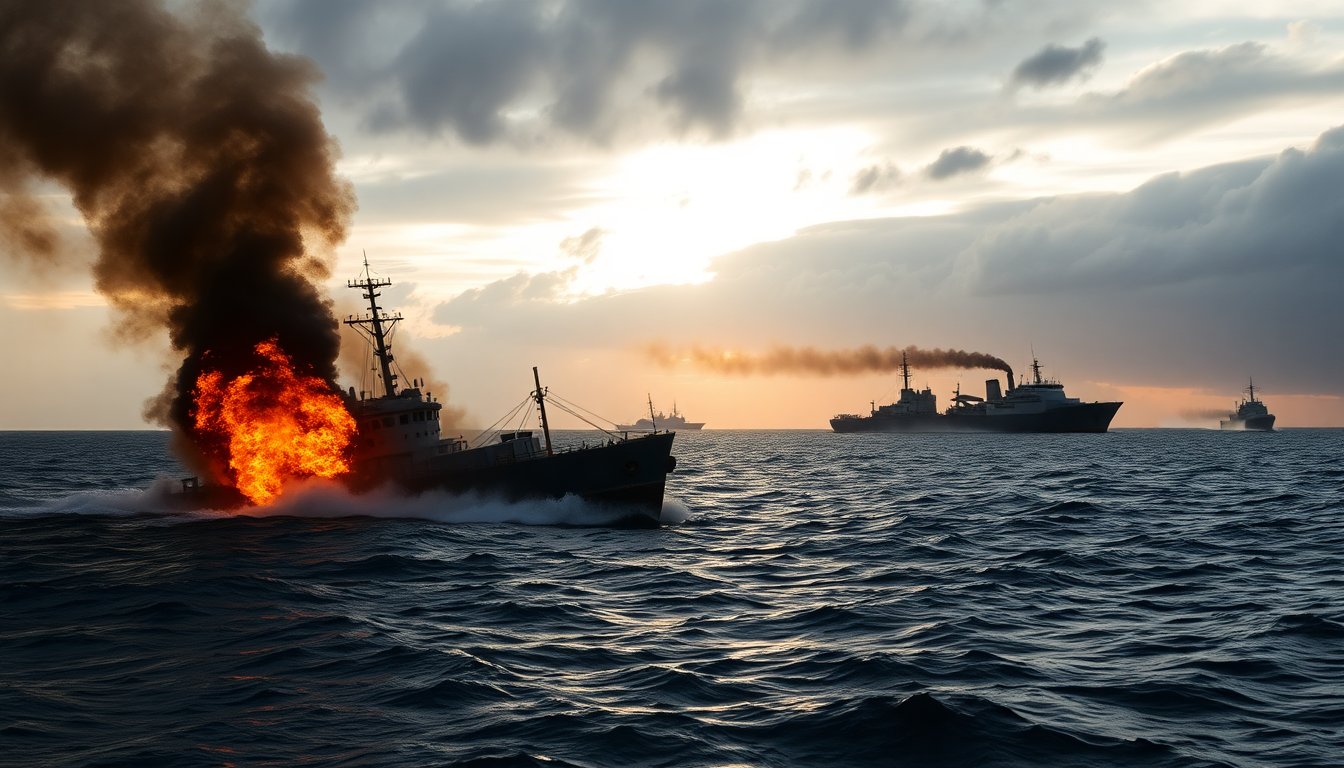
The conflict between Ukraine and Russia has intensified, marked by Ukraine’s recent attacks on Russian oil tankers in the Black Sea. On November 28, naval drones struck two vessels, the Kairos and the Virat, while they were transporting oil that had been sanctioned by the European Union and the United Kingdom. This development reflects a significant military escalation by Ukraine and raises important questions regarding maritime safety and sovereignty in the region.
The Kairos was approximately 28 nautical miles from the Turkish shoreline, while the Virat was around 38 miles offshore at the time of the attacks. Both tankers were flagged under Gambia and were carrying oil priced above the Western price cap, making them targets of the ongoing sanctions against Russia’s oil trade.
Details of the attacks
Following the initial strike, a large fire broke out on the Kairos, but the crew remained unharmed. The next day, the Virat was also attacked by a drone. Unofficial reports from Ukraine’s Security Service indicate that these operations employed upgraded naval drones known as Sea Baby, which allegedly disabled vessels valued at approximately $70 million in oil. This strategy aims to disrupt Russia’s ability to evade international sanctions.
Impact on regional relations
The ramifications of these drone strikes extended beyond immediate military concerns. Infrastructure at the Novorossiysk port, managed by the Caspian Pipeline Consortium, a key route for Kazakhstan’s oil exports, was also affected, leading to serious operational disruptions. In response, Kazakhstan issued a formal complaint, raising concerns that such actions could harm diplomatic relations with Ukraine. Ukraine, however, insisted that its efforts were aimed solely at reducing Russia’s military capabilities, not at targeting Kazakhstan.
Turkish officials voiced their alarm regarding the attacks, emphasizing the serious risks they pose to navigation safety and the environment. This situation has heightened tensions in the Black Sea, an area already fraught with peril due to the ongoing conflict.
Wider implications of the conflict
In a related incident off the coast of Senegal, another tanker, the Mersin, owned by a Turkish company, issued a distress signal, sparking speculation about a potential drone attack. Reports indicated four explosions aboard the vessel, though no direct connection to Ukraine has been confirmed. This incident highlights the increasing volatility surrounding maritime operations linked to Russian oil transport.
Kremlin spokesperson Dmitry Peskov condemned the assaults on the Turkish-flagged tankers, describing them as “an outrageous incident” that violates Turkish sovereignty and threatens the security of the ships involved. This statement underscores the heightened sensitivity surrounding naval operations in the region.
International responses and peace negotiations
The ongoing conflict presents a complex situation. Ukraine has previously targeted Russian vessels in the Black Sea, but this recent escalation represents a significant shift in tactics. Diplomatic efforts continue, including discussions involving U.S. representatives aimed at achieving a peace agreement, yet tensions remain high. The international community is closely monitoring these developments, particularly as military and political strategies continue to evolve.
As these events progress, the implications for maritime security, international relations, and regional stability become ever more significant. The maritime aspect of the conflict may alter the strategies of both Ukraine and Russia, potentially leading to further confrontations on the high seas.