
Table of Contents
Ukraine’s skeleton captain disqualified over memorial helmet at milano‑cortina 2026
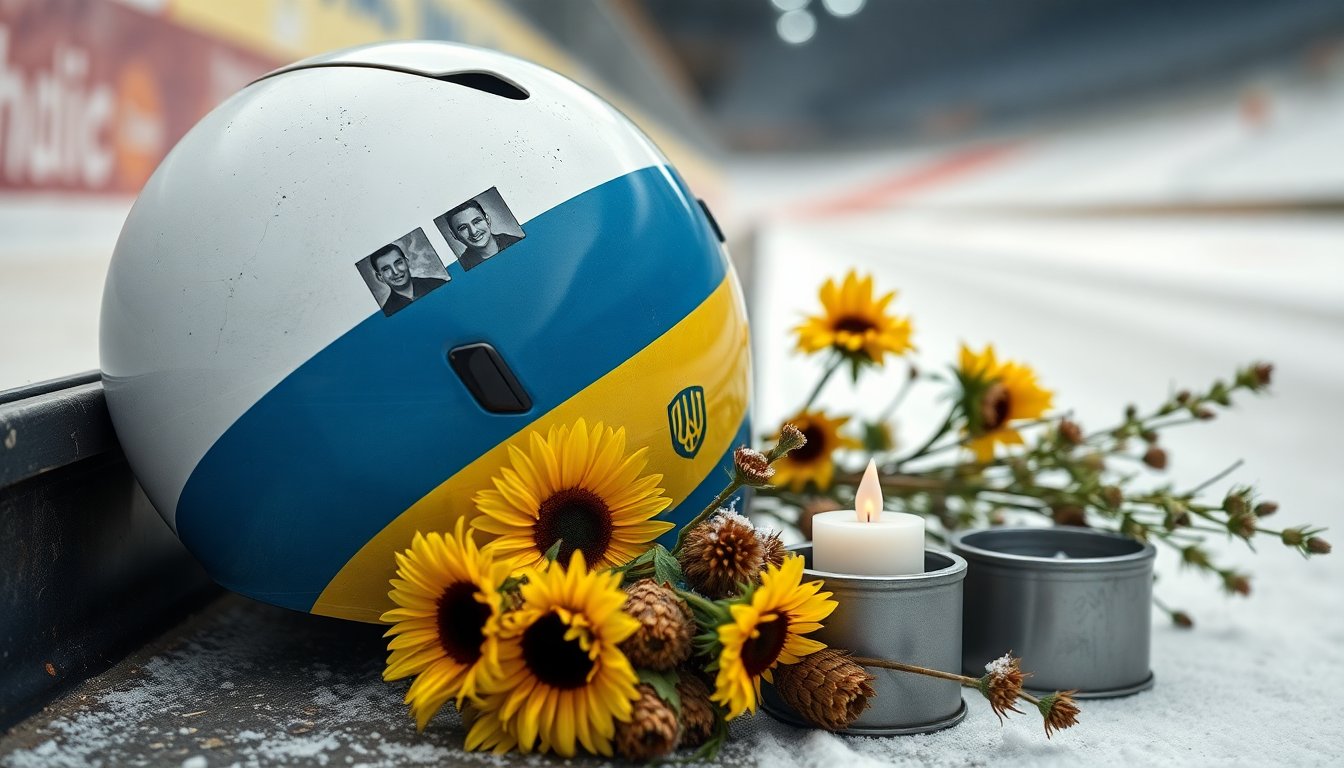
Vladyslav Heraskevych, captain of Ukraine’s skeleton team, was removed from the start list at the Milano‑Cortina 2026 Winter Games. The International Bobsleigh and Skeleton Federation (IBSF) and the International Olympic Committee (IOC) ruled that his planned helmet, decorated with portraits of Ukrainian athletes killed after Russia’s invasion, violated the Games’ rules on political expression.
Let’s tell the truth: the decision turned a personal act of remembrance into an international dispute. The removal sparked strong political reactions in Kyiv and led to reports of legal action challenging the ruling.
The dispute raises immediate questions about the limits of memorial symbols at major sporting events. Are memorials inherently political, or can they be treated as personal tribute? The IOC and IBSF cited uniformity and neutrality rules. Heraskevych’s camp says the helmet was a human tribute to fallen compatriots.
The story has broad implications for athletes who wish to combine sport with public memory. For now, Heraskevych remains off the start list as federations and legal representatives determine next steps.
What happened: helmet, meetings and the jury decision
Let’s tell the truth: for now, Heraskevych remains off the start list as federations and legal representatives determine next steps. The sequence of events that followed clarified how officials treated the helmet and how authorities interpreted Olympic expression rules.
The timeline is precise. Heraskevych posted about the IOC ruling on February 10. A meeting involving federation and Games officials took place on February 11. The International Bobsleigh and Skeleton Federation (IBSF) published its jury decision on February 12. Those public markers framed subsequent statements by Ukraine’s president and foreign minister and a legal filing to the Ad Hoc Division of the Court of Arbitration for Sport (CAS).
The statements and the filing illustrate two overlapping disputes. One concerns the helmet’s symbolism. The other concerns how the IOC’s rules on political expression apply in practice. Officials, athletes and governments have used the listed milestones to argue competing interpretations.
Legal teams have now sought emergency review at the CAS ad hoc division in Milan. The filing aims to restore Heraskevych to the start list or otherwise secure a formal ruling on the helmet’s permissibility during competition. The CAS process is expected to determine whether the IBSF and the IOC correctly applied their regulations.
The emperor has no clothes, and I’m telling you: the case exposes a wider tension between rules intended to keep sport neutral and the realities of competition during wartime. Expect the next developments to hinge on CAS scheduling and any expedited procedures the court accepts.
Let’s tell the truth: Ukraine’s skeleton captain arrived at the Winter Games wearing a helmet bearing the names and faces of athletes killed in the conflict. He said the design was meant to show “the price Ukraine pays daily.”
The athlete used the helmet during an official training run. The IOC later informed him that the helmet could not be used in competition because it conflicted with the organization’s rules on athlete expression. Following a meeting described by officials as conciliatory on February 11, the IBSF jury ruled on February 12 that the helmet breached the Olympic Charter and the Guidelines on Athlete Expression. The athlete was removed from the start list.
Reactions from Kyiv and the sporting world
The decision has already provoked comment from political and sporting quarters. Kyiv officials framed the gesture as a commemoration of lives lost. Representatives of the sporting bodies cited adherence to the Charter and the rules governing athlete conduct and messaging.
The sequence of events leaves the case poised for further legal review. Expect next steps to hinge on any appeals and on the scheduling of proceedings at the Court of Arbitration for Sport.
Let’s tell the truth: reaction in Ukraine was immediate and intense. President Volodymyr Zelensky publicly backed Heraskevych, saying that remembering athletes slain in the war cannot be treated as an inconvenient or political act. Zelensky accused the International Olympic Committee of siding with the aggressor and later awarded Heraskevych the Order of Freedom for civic courage and patriotism.
The foreign minister called the IOC’s decision a “moment of shame,” saying the committee damaged its own reputation. The National Olympic Committee of Ukraine framed the athlete’s stance as a moral victory, arguing that when an athlete stands for truth and memory, the nation stands with him. Heraskevych described his removal as the price of dignity, saying he did not seek confrontation and that his helmet was a respectful memorial rather than a provocation.
Ioc rationale and proposed compromises
The IOC said it held several meetings with the athlete, including direct talks involving IOC President Kirsty Coventry. The committee framed the dispute as one of timing and placement, not content. It argued that messages displayed during competition create a different context than messages shown in training or in the mixed zone.
The IOC proposed a compromise that would allow the helmet’s display outside competitive runs. The offer, the committee said, would have permitted the athlete to wear the helmet in training and to present it to media after racing. The athlete declined those accommodations and insisted on competing while wearing the helmet, the IOC added.
Let’s tell the truth: the core tension here is between an athlete’s desire to memorialize and the sport’s rules about what belongs inside competition. The IOC presented its compromise as an attempt to balance those interests without disrupting the event.
Legal challenge and implications for athlete expression
The athlete has pursued legal and arbitration options after the IOC’s decision. Those challenges seek to test whether sports authorities may restrict visible personal messages during competition. The proceedings will probe the limits of rule enforcement in elite sport and the scope of protected expression for competitors.
Legal specialists say the case could affect future disputes where athletes use equipment or clothing to convey political, personal or commemorative messages. If arbitration bodies or courts side with sporting authorities, the ruling may reinforce tighter control of in-competition displays. If the athlete prevails, sports federations could face pressure to allow broader forms of visible expression.
The case raises practical questions about enforcement: how to distinguish acceptable personal tribute from impermissible messaging, and who decides that line during an event. The emperor has no clothes, and I’m telling you: sports regulators will now face sustained scrutiny over where they draw those boundaries.
Expect legal arguments to focus on proportionality, consistency of rule application, and the availability of less-restrictive means to achieve event neutrality. The outcome will have implications for athletes, federations and broadcasters monitoring uniformity and fairness during competition.
The case moves next to the Ad Hoc Division (AHD) of the Court of Arbitration for Sport (CAS), where the athlete seeks either reinstatement or a supervised run while the dispute is decided. The appeal challenges the International Bobsleigh and Skeleton Federation’s sanction as disproportionate and notes that the helmet had been permitted during training and caused minimal disruption.
Let’s tell the truth: the ruling touches on a larger legal tension within the Olympic framework. At issue is how Rule 40.2 — which recognises athletes’ freedom of expression within Olympic values — is reconciled with Rule 50.2, which prohibits demonstrations and political propaganda at Olympic venues. The adjudicators will need to interpret those provisions against established precedent and the specific facts of the incident.
The outcome could set a practical standard for future cases involving apparel or gestures that straddle sport and expression. Federations will watch for guidance on proportionality and consistency in discipline. Broadcasters and rights holders will look for clarity on what is permissible on air.
The emperor has no clothes, and I’m telling you: sports law rarely offers tidy answers when regulation collides with political speech. The AHD’s ruling will be measured against the Olympic Charter, prior CAS decisions and the evidence about intent and disruption. Expect reasoning that weighs context, precedent and the potential for unequal enforcement.
Next steps: the AHD will schedule hearings and consider interim measures. The decision will be closely observed by athletes and federations seeking guidance on how expression is treated under Olympic rules and disciplinary frameworks.
Let’s tell the truth: the AHD must determine whether the athlete’s helmet amounted to a permissible act of remembrance under the Charter, and whether the withdrawal of accreditation was a necessary and proportionate restriction.
The panel must apply the Charter’s tests quickly because the Games impose a strict fast-turnaround requirement. Decisions under 24 hours during the Games mean the AHD can annul a disqualification on procedural or substantive grounds. Even so, annulment may not restore an athlete’s lost opportunity to compete for medals that same morning.
What this means for future cases
The emperor has no clothes, and I’m telling you: this case will serve as a practical template for future disputes. Athletes and federations will watch whether the AHD prioritises the right to express remembrance or the integrity of competition rules.
Expect pressure for clearer rule drafting and faster provisional measures. Federations may face calls to specify what forms of expression are permitted on equipment, and to set transparent disciplinary procedures that protect both fairness and fundamental rights.
Procedural issues will matter as much as substance. The AHD’s handling of evidence, timing and remedies will shape whether annulled disqualifications lead to reinstatement in future events or only to declaratory victories with little practical redress.
So that athletes are not left in limbo, national bodies may push for pre-competition guidance and expedited internal review processes. The sporting legal landscape is likely to see more appeals framed around proportionality and immediate provisional relief.
The upcoming AHD ruling will provide an early test of how the Charter balances expression and competitive fairness during the Games, and it will influence policy and disciplinary practice across sports.
Let’s tell the truth: the dispute pits universal commitments to human rights against the IOC’s longstanding view of apolitical competition spaces. The matter now hinges on legal interpretation rather than moral consensus.
The CAS proceedings will determine whether certain commemorative gestures fall inside the permissible range of athlete expression, and whether targeted enforcement practice can be justified by the Charter. The ruling could shape disciplinary policy across federations and broadcasters and influence how global sporting institutions manage cases where geopolitical conflict intersects athletes’ lives.