
Table of Contents
Recent claims made by Russia’s foreign minister, Sergey Lavrov, have stirred significant controversy, alleging that Ukraine executed a drone attack against President Vladimir Putin‘s residence in the Novgorod region. The assertion lacks evidence, and there are currently no independent confirmations validating the occurrence of such an incident.
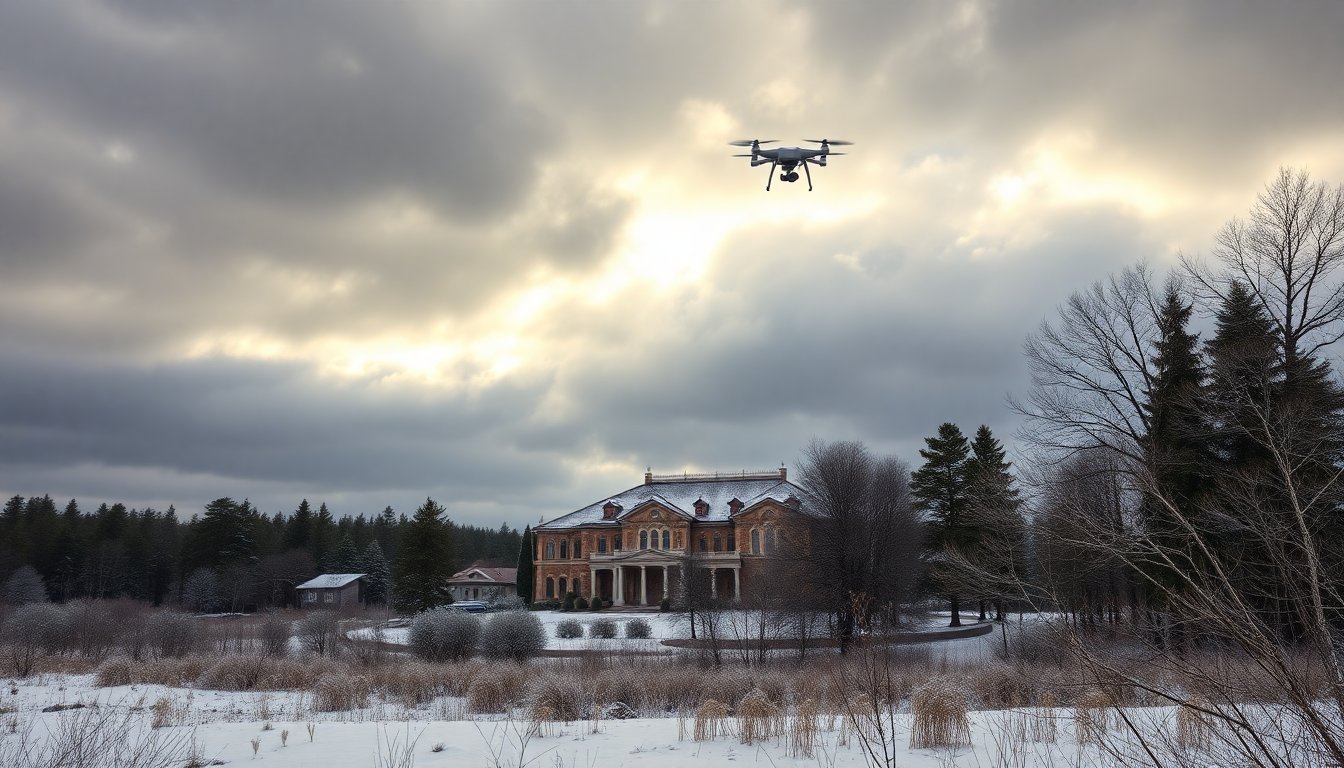
Lavrov informed journalists in Moscow that during the night of December 28 to 29, the so-called ‘Kiev regime’ orchestrated a terrorist assault utilizing 91 long-range unmanned aerial vehicles against Putin’s estate. Despite the dramatic claim, he noted that no casualties or damages were reported. Russia’s Defense Ministry stated that its air-defense systems successfully intercepted all 91 drones, attributing 41 interceptions to the Novgorod region, 49 to the Bryansk region, and one to the Smolensk region.
The facts
In light of these allegations, Lavrov articulated that Russia’s response would be decisive. He emphasized, “Such reckless actions will not go unanswered,” indicating that the Russian Armed Forces have already identified their targets and the timing of retaliatory strikes. Furthermore, he hinted at a potential reassessment of Russia’s stance in ongoing peace negotiations.
Reactions
According to Lavrov, while Russia does not intend to withdraw from discussions with the United States, the character of the Ukrainian regime has necessitated a revision of Russia’s negotiating stance. He characterized the current Ukrainian leadership as having adopted a policy of state terrorism.
Presidential adviser Yuri Ushakov revealed that during a phone conversation on December 29, President Putin briefed U.S. President Donald Trump on the alleged drone attack. Ushakov noted that Trump reacted with disbelief, expressing that he could not fathom the notion of such extreme actions being taken by Ukraine.
Ukraine’s rebuttal
In stark contrast to Russia’s assertions, Ukrainian President Volodymyr Zelensky termed Lavrov’s statements as fabrications intended to justify further military actions against Ukraine. Zelensky suggested that these claims are designed to create a pretext for renewed attacks on Kyiv.
Addressing journalists, Zelensky argued that the Kremlin has a history of utilizing falsehoods to disrupt diplomatic efforts between Washington and Kyiv. He stated, “This alleged ‘residence strike’ is a complete fabrication that seeks to justify additional aggressions against Ukraine and to obstruct peace initiatives.” He further asserted that Ukraine conducts operations only against legitimate military targets within Russian territory, primarily in retaliation for Russian strikes.
Meanwhile, Ukraine’s foreign minister, Andrii Sybiha, echoed Zelensky’s sentiments, framing the Russian narrative as a deliberate fabrication aimed at undermining peace processes. He underscored that Ukraine’s military actions are responses to Russian aggression, not acts of unwarranted offense.
U.S. perspectives
In response to the unfolding situation, President Trump addressed the matter during a press briefing at the White House, just before a meeting with an Israeli delegation. He acknowledged learning about the alleged attack from Putin, expressing his discontent with the situation. Trump stated, “I don’t like it. It’s not good.” He emphasized the delicacy of the current geopolitical climate, indicating that while Ukraine may need to take offensive measures against Russian forces, attacking Putin’s residence was not appropriate.
Trump concluded by expressing his frustration, stating, “I was very angry about it,” highlighting the sensitive nature of diplomatic relations during this turbulent period. As the situation develops, the international community continues to monitor tensions between Russia and Ukraine, with significant implications for regional stability and peace negotiations.