
Table of Contents
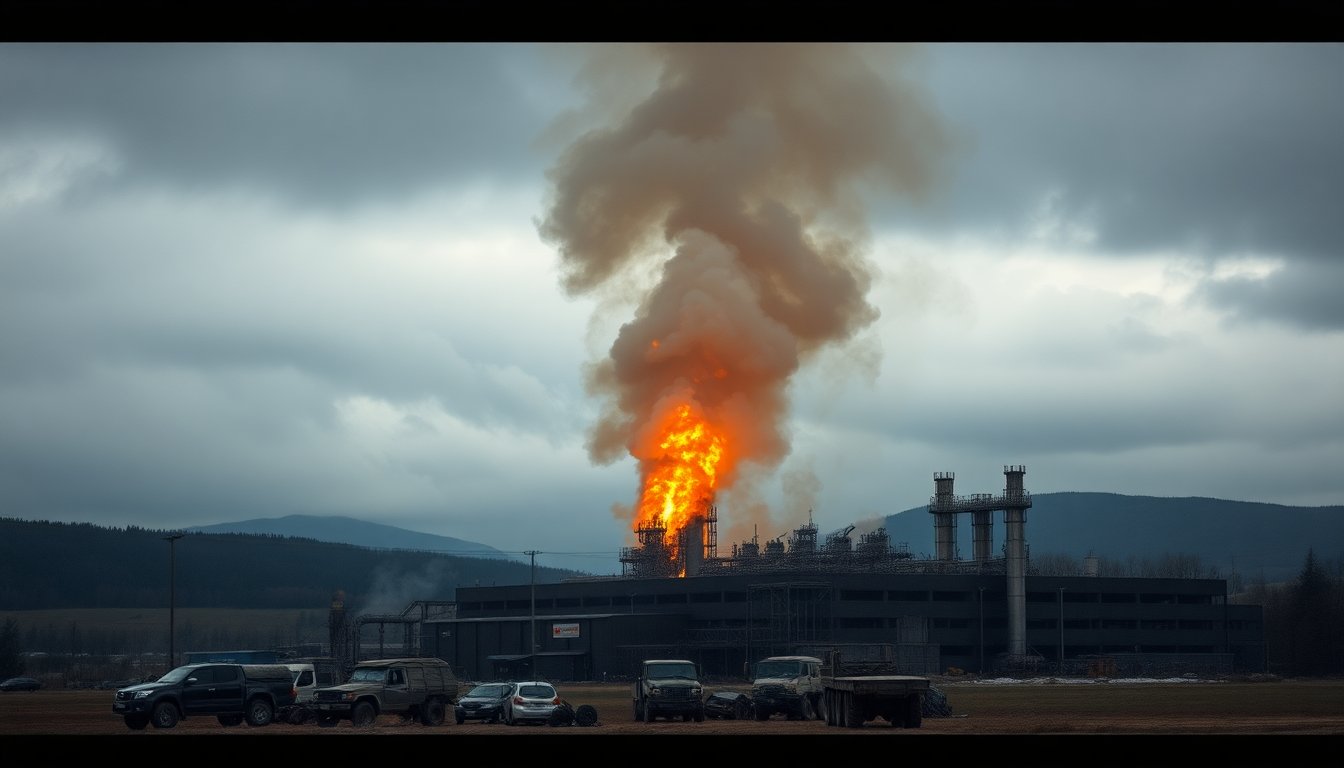
Amid escalating tensions in the ongoing conflict between Ukraine and Russia, the Ukrainian armed forces have claimed responsibility for a significant strike on a Russian oil refinery located in the Ryazan region, not far from Moscow. This military action took place shortly after a devastating assault by Russian forces on Ukraine’s capital, Kyiv, which tragically resulted in the loss of at least six lives and left numerous others injured.
The Ukrainian military, in a statement shared on social media, emphasized that this attack was part of a broader strategy designed to diminish Russia’s capacity to conduct missile and aerial bombardments. The recent Russian offensive was characterized by the deployment of approximately 430 drones and 18 missiles, including both ballistic and aeroballistic types, which President Volodymyr Zelenskyy denounced as a malicious attack.
Escalation of military actions
As the conflict enters its fourth year, both nations have engaged in a series of retaliatory strikes targeting energy infrastructures, particularly as they brace for another grueling winter of warfare. This latest Ukrainian strike on the Ryazan refinery illustrates the lengths to which both sides are willing to go to undermine each other’s military capabilities. Following the Russian bombardment of Kyiv, which targeted residential areas and civilian infrastructure, the need for Ukraine to respond decisively became paramount.
Impact on energy infrastructure
Last week, Ukraine’s state-run electricity transmission operator, Ukrenergo, reported extensive power outages across various regions as repair crews worked diligently to restore the energy grid damaged by previous Russian attacks. The ongoing conflict has had a profound impact on the energy sector, further complicating the situation as winter approaches.
Recent developments on the battlefield
In a related development, Ryazan’s Governor, Pavel Malkov, announced that Russian air defenses successfully intercepted 25 Ukrainian drones overnight. Although debris from the interception caused a fire at a local facility, there were no reported casualties, indicating the tense but precarious nature of the conflict. Reports from the Russian news agency RIA also confirmed that the situation at the Russian-controlled Zaporizhzhia nuclear power plant remains stable, despite an external power line being disabled.
Challenges faced by Ukrainian forces
On the front lines, Ukrainian troops are currently engaged in fierce confrontations in the southern Zaporizhia region, where they have faced intense resistance from Russian forces. In recent days, Ukrainian forces have had to withdraw from five villages amidst escalating hostilities. During a visit to the frontline, President Zelenskyy reiterated Ukraine’s commitment to protecting its sovereignty, stating, ‘The Russians are doing everything possible to make life unbearable for Ukraine.’
As the situation evolves, the Ukrainian military continues to adapt and respond to the challenges posed by Russian aggression. The recent attacks on energy facilities and the ongoing battles in regions such as Zaporizhia and Dnipropetrovsk highlight the dire circumstances faced by Ukrainian forces as they strive to defend their territory.
Moreover, the Ukrainian government is taking steps to address internal issues, including a significant restructuring of the energy sector in the wake of recent corruption scandals. President Zelenskyy announced plans to overhaul state-run energy companies, aiming to enhance operational transparency and efficiency amidst the ongoing conflict. This restructuring is crucial to ensure that the energy sector can withstand the pressures exerted by the war.
The broader implications of the conflict
As the conflict continues unabated, the ramifications extend beyond Ukraine and Russia, affecting geopolitical dynamics in Europe and the broader international community. The war has raised critical questions about energy security, military alliances, and the stability of the region. High-ranking officials, including the European Union’s representative, have highlighted the existential threat posed by Russia’s aggression, calling for a unified response to restore stability.
In conclusion, the situation in Ukraine remains fluid and complex. With ongoing military engagements and strategic responses to external threats, the conflict is far from resolution. The Ukrainian military’s recent actions, including the strike on the Ryazan oil refinery, underscore the determination to counter Russian advances while navigating the intricate challenges of warfare.