
Table of Contents
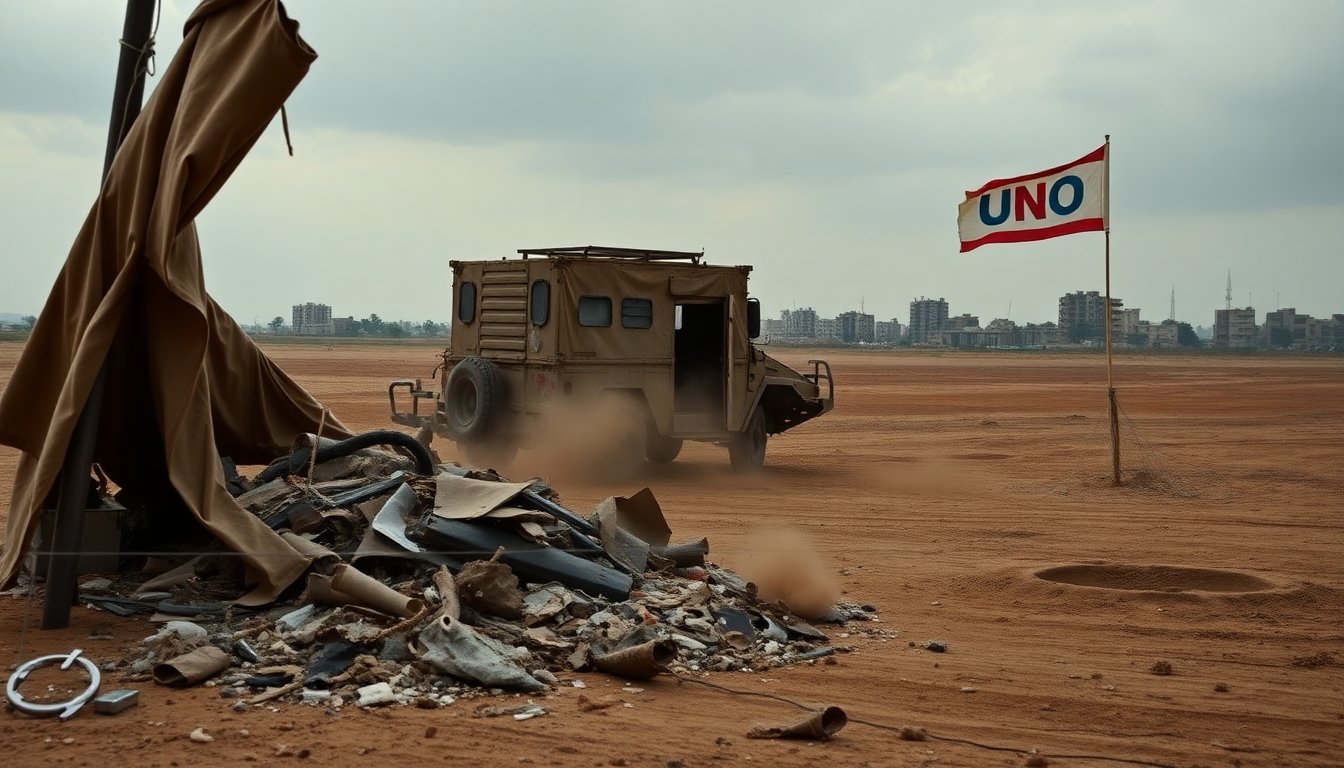
In a tragic incident, a drone strike targeted a United Nations peacekeeping facility in Sudan, resulting in the deaths of six peacekeepers. The attack occurred in the city of Kadugli and has drawn condemnation from global leaders, including UN Secretary-General Antonio Guterres. This loss of life highlights the increasingly dangerous conditions faced by peacekeeping forces in a nation plagued by conflict.
The strike also injured eight other peacekeepers, specifically personnel from Bangladesh serving with the UN Interim Security Force for Abyei (UNISFA). Such incidents raise significant concerns about the safety of international peacekeeping missions and the risks involved for those deployed in conflict zones.
The facts
Escalating violence and humanitarian crisis
The situation in Sudan is worsening as clashes continue between the Sudanese Armed Forces (SAF) and the paramilitary Rapid Support Forces (RSF). Aid agencies report that millions are trapped in the violence, resulting in a catastrophic humanitarian crisis. Recent drone strikes have also led to the deaths of innocent civilians, including children, further compounding these dire conditions.
The facts
On December 4, a series of drone strikes tragically targeted a children’s nursery and a hospital in Kalogi. This incident resulted in over a hundred fatalities, including 63 children. Following this horrific event, UN officials expressed outrage. Tedros Adhanom Ghebreyesus, Director-General of the World Health Organization (WHO), highlighted the urgent need for medical support for survivors.
The consequences
The drone strikes have raised significant concerns regarding the safety of civilians in conflict zones. Aid organizations are struggling to provide necessary assistance amid escalating violence. The international community is urged to respond promptly to address the humanitarian crisis in Sudan.
Survivors have been evacuated to nearby medical facilities, prompting urgent calls for blood donations to meet the overwhelming medical needs. The ongoing violence not only affects those injured but also places a dangerous burden on healthcare workers and first responders, who face attacks while providing aid.
The facts
In response to these events, the Secretary-General has called for an immediate end to hostilities and urged all parties involved to engage in dialogue aimed at achieving a lasting ceasefire. According to official sources, the United Nations has expressed its readiness to support any genuine efforts to restore peace and stability in Sudan, a nation that has faced prolonged conflict.
Reactions
The international community has echoed these calls for peace, emphasizing the need for a collaborative approach to address the ongoing crisis. Humanitarian organizations are mobilizing resources to assist those affected by the violence, while local leaders are advocating for dialogue and reconciliation to prevent further escalation.
The humanitarian crisis continues to escalate, affecting over 30 million individuals in need of aid. Since violence intensified in April, more than nine million people have been displaced. The UN’s human rights chief, Volker Türk, has expressed deep concerns about the potential for further atrocities if violence persists, highlighting the urgent need for safe passage for those escaping the conflict.
The facts
As violence surges, organizations such as the World Food Programme (WFP) have called for increased international focus to avert further atrocities. The looming famine in regions like South Kordofan exacerbates the crisis, necessitating immediate diplomatic efforts to address the dire situation. Millions are at risk of starvation, and the need for aid is critical.
The consequences
The ongoing conflict has prompted widespread suffering, with humanitarian organizations struggling to meet the basic needs of the affected populations. Without prompt intervention, the situation could deteriorate further, leading to irreversible consequences for millions. International cooperation is essential to stabilize the region and provide necessary support.
The international community must act decisively to stop the flow of arms that sustain the conflict. According to official sources, leveraging influence over the warring factions is essential for restoring peace. The UN is closely monitoring the situation. All stakeholders must prioritize humanitarian needs and work towards a comprehensive, inclusive political solution.