
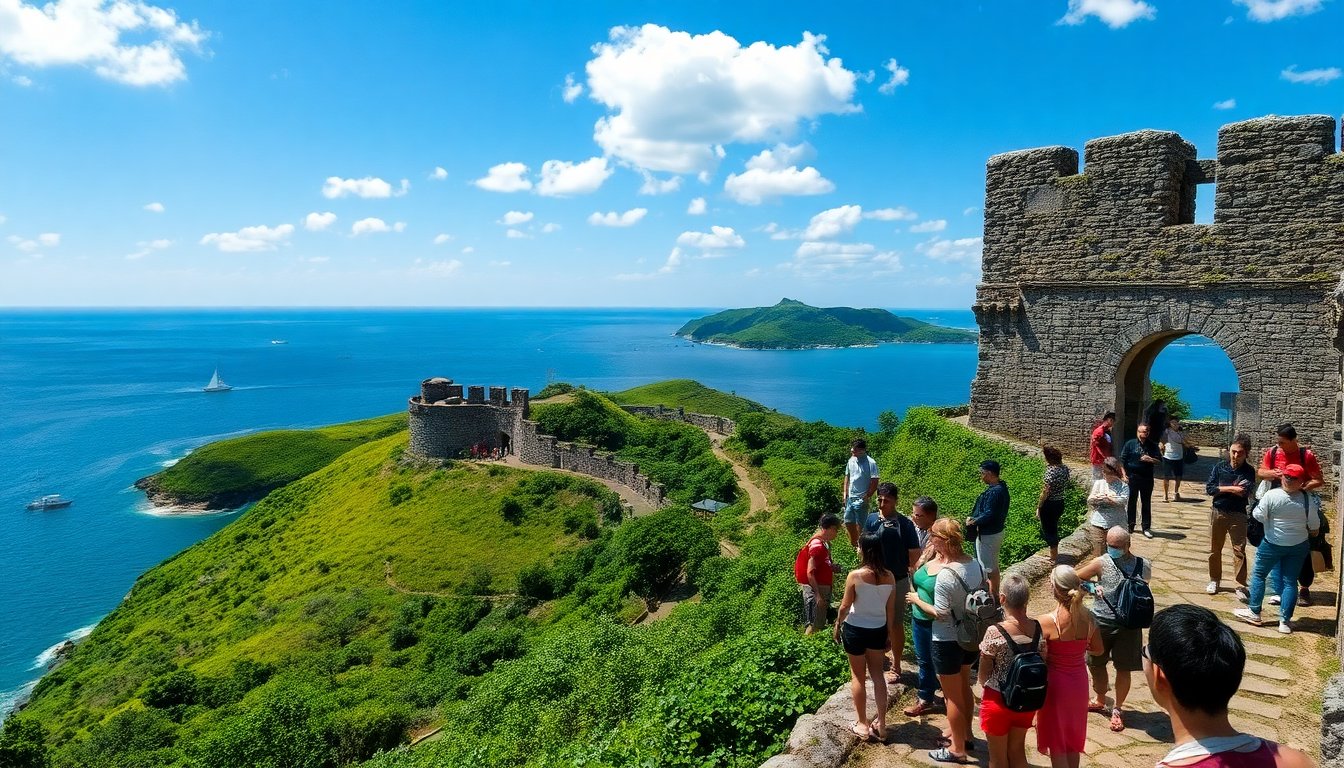
The Kinmen Islands, located just a short ferry ride from mainland China, serve as a strategic outpost for Taiwan. Often described as the frontline of democracy, these islands contrast sharply with the regional tensions. Despite their proximity to a potentially hostile force, the atmosphere is surprisingly relaxed, with a thriving tourism sector that coexists with historical remnants of past conflicts.
Tourists, particularly from mainland China, frequently visit Kinmen, arriving from the city of Xiamen. The islands are rich in historical significance, showcasing various war sites that narrate the turbulent past of the region. Positioned over 300 kilometers from Taipei, Kinmen has experienced significant conflicts since the Chinese Civil War in 1949, when it became a refuge for the retreating forces of the Republic of China.
The historical significance of Kinmen Islands
Kinmen’s historical narrative is deeply intertwined with past military conflicts. The islands once hosted as many as 100,000 troops, who used them as a buffer against the advancing Communist forces. The scars of war are evident, with remnants such as anti-tank stakes and concrete bunkers scattered across the landscape. Jerry Wu, a local taxi driver and tour guide, draws parallels between the conditions faced here during the 1949 battles and the infamous Normandy landings during World War II.
Enduring calm amidst conflict
Despite the looming presence of mainland China, many residents exhibit a sense of calm. Jerry Wu, who is also a reservist, states, “People in Kinmen have experienced far greater tensions in the past.” While some locals express concerns about potential threats, many believe that the situation is exaggerated. Lin Ming-li, a 71-year-old market vendor, notes, “The closer people live to each other, the closer they become. We often say that Xiamen and Kinmen are one big family.”
This familial sentiment is further supported by the islands’ reliance on the mainland for essential resources like drinking water. Plans to enhance connectivity through infrastructure projects, including bridges and electrical lines, underscore a desire for increased interdependence, contrasting with the military tensions that persist.
Geopolitical tensions surrounding Taiwan
The geopolitical landscape surrounding Taiwan has become increasingly complex, particularly with recent military posturing from China. U.S. intelligence has indicated that Chinese President Xi Jinping has ordered his military to prepare for a potential invasion of Taiwan by 2027. This development has raised alarms in Taiwan, where the United States has historically been a steadfast military ally.
However, the unpredictability of U.S. foreign policy under President Donald Trump has left many Taiwanese citizens feeling uneasy. Reports suggest that Trump has halted a significant arms transfer to Taiwan, leading to fears that the island’s status may be leveraged in trade negotiations with China.
The military buildup and regional implications
China’s military capabilities have noticeably expanded, with frequent patrols by ships and aircraft around the sensitive Taiwan Strait. Analysts have raised concerns about these military exercises, suggesting they resemble rehearsals for an amphibious invasion. Philip Shetler-Jones from the Royal United Services Institute in London warns that while China may exhibit capabilities aimed at a potential assault, logistical challenges remain significant.
Despite these tensions, many analysts believe that the prospect of immediate conflict is low. Ronan Fu from Academia Sinica in Taipei emphasizes that domestic issues within China, alongside significant economic risks of an invasion, could delay any aggressive military actions. Nevertheless, Taiwan’s government is taking precautionary measures, including extending mandatory military service, enhancing defense budgets, and developing advanced missile defense systems.
Preparing for uncertainties
In light of growing threats, Taiwan is actively preparing its citizens for potential conflict. Training programs for reservists, similar to those witnessed in Taipei, focus on maintaining essential military skills. Young individuals, including couples, are increasingly participating in these courses, recognizing the seriousness of the situation.
Tourists, particularly from mainland China, frequently visit Kinmen, arriving from the city of Xiamen. The islands are rich in historical significance, showcasing various war sites that narrate the turbulent past of the region. Positioned over 300 kilometers from Taipei, Kinmen has experienced significant conflicts since the Chinese Civil War in 1949, when it became a refuge for the retreating forces of the Republic of China.0
Tourists, particularly from mainland China, frequently visit Kinmen, arriving from the city of Xiamen. The islands are rich in historical significance, showcasing various war sites that narrate the turbulent past of the region. Positioned over 300 kilometers from Taipei, Kinmen has experienced significant conflicts since the Chinese Civil War in 1949, when it became a refuge for the retreating forces of the Republic of China.1


