
Table of Contents
Recent developments have highlighted increasing tensions between state and federal law enforcement in the United States. In Minnesota, ongoing federal immigration operations have raised significant concerns about potential clashes between local authorities and federal agents. This situation resonates with historical precedents where similar tensions escalated into broader conflicts.
Current tensions in Minnesota
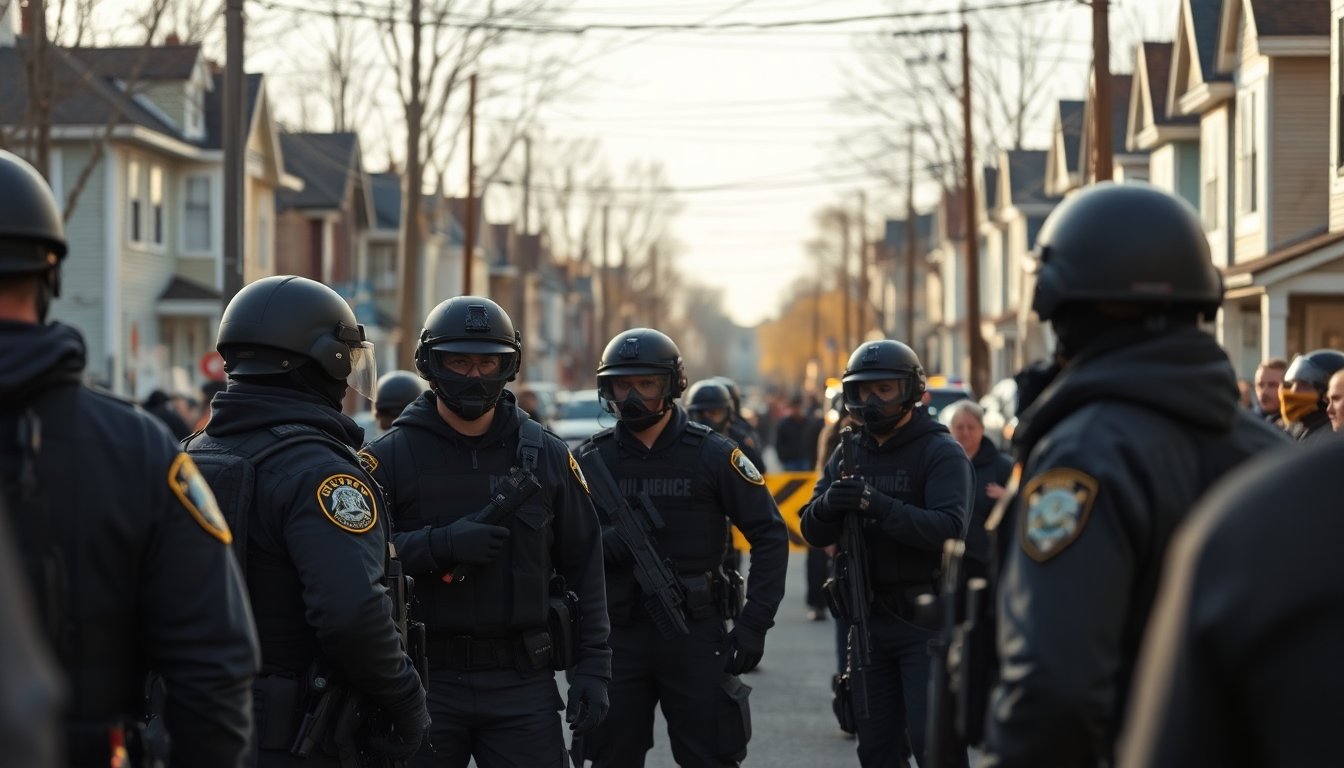
The federal raids targeting immigration in Minnesota have created a volatile environment. In response, Governor Tim Walz has mobilized the state’s National Guard. The Pentagon has also placed troops on alert for potential deployment. A simulation conducted by the University of Pennsylvania in 2026 indicates that such conflicts between state and federal entities could escalate into serious violence, underscoring the precarious nature of the current situation.
Historical context of federal intervention
This situation is not unprecedented; federal forces have previously clashed with state officials. One significant example occurred during the Cold War when President Kennedy deployed both the National Guard and federal troops to address civil disturbances. This intervention marked a pivotal change in the federal government’s strategy for managing civil unrest. Military involvement became increasingly accepted as a response to maintain public safety and uphold constitutional rights.
The implications of federal actions
As tensions escalate, the implications of federal actions become increasingly significant. The Trump administration’s approach to immigration enforcement relies heavily on agents from the Department of Homeland Security, a departure from historical practices. Traditionally, U.S. marshals, trained in constitutional law, were deployed in such situations. In contrast, agents from Customs and Border Protection and Immigration and Customs Enforcement are often viewed as less prepared to engage with the public in ways that uphold civil rights.
Concerns about militarization
Critics argue that the militarization of immigration enforcement fosters an atmosphere of fear and intimidation, rather than promoting law and order. The lack of clear justification for deploying federal forces in states led by political opponents raises serious ethical concerns. Historically, federal intervention was justified by state inaction or aggression against citizens exercising their rights, a context seemingly absent in the current situation.
Looking ahead: potential outcomes
The future trajectory of these tensions remains uncertain. Experts warn that continued divergence between state and federal authorities could heighten the risk of civil unrest. A simulation conducted by the University of Pennsylvania highlights the potential for these conflicts to escalate into broader armed confrontations, emphasizing the urgent need for dialogue and de-escalation efforts to avert such outcomes.
The implications
As the situation develops, observers are closely monitoring the federal response and the actions of state leaders. The stakes are high, and the implications of inaction or missteps could reverberate far beyond Minnesota, potentially influencing the national landscape and the future of federal-state relations.
The reconstruction
The interplay between state and federal powers is at a critical juncture. Recent events in Minnesota emphasize the delicate balance that must be maintained to uphold the rule of law while respecting citizens’ rights. History has shown that the consequences of escalation can be dire, necessitating careful consideration and proactive measures.
Key players
State leaders, federal officials, and law enforcement agencies are all significant players in this evolving situation. Their actions and decisions will shape the dynamic between state and federal governance, influencing public perception and the effectiveness of law enforcement.
What happens next
As developments unfold, the focus will remain on fostering cooperation rather than conflict. The importance of dialogue and de-escalation efforts cannot be overstated, as the potential for broader armed confrontations looms. Observers will be watching closely for signals of progress or tension in the ongoing interactions between state and federal entities.