
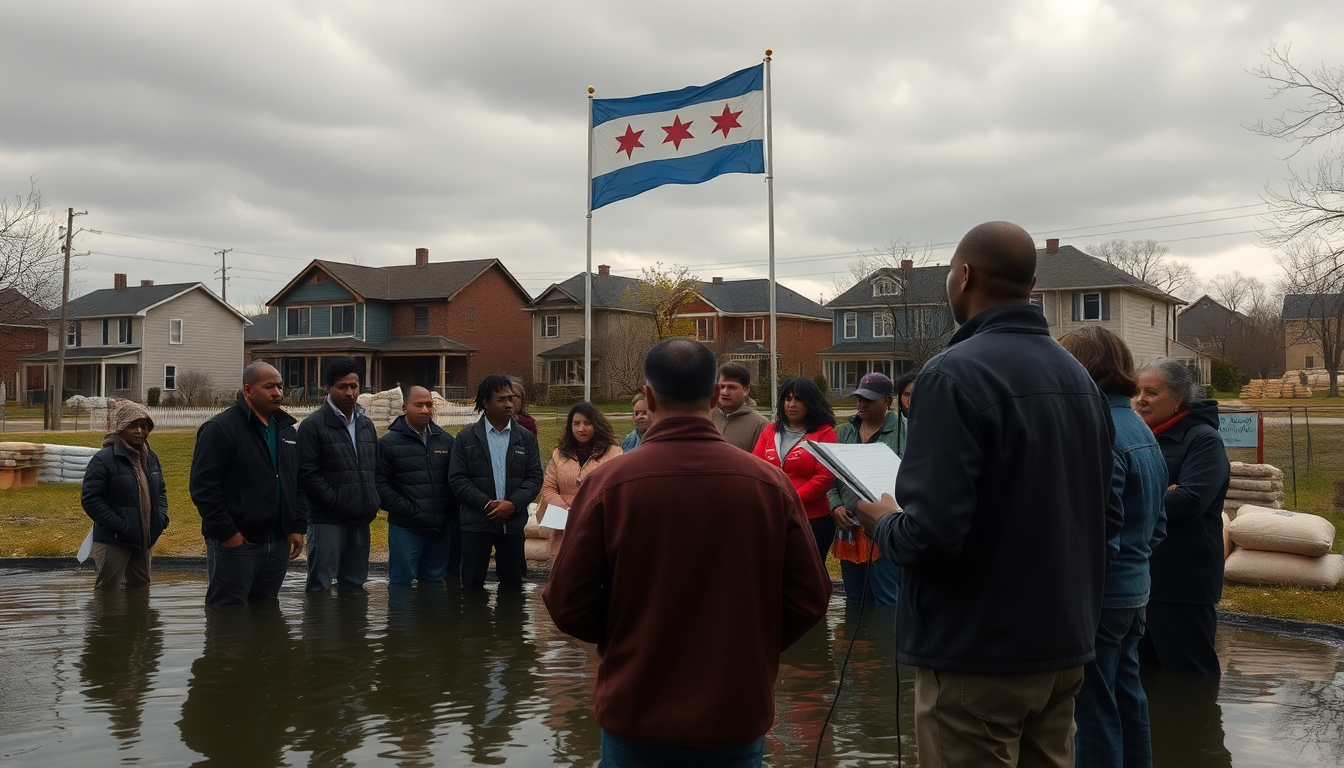
Following the recent severe flooding that hit parts of Chicago and northwest Indiana, Mayor Brandon Johnson took to the podium to discuss the city’s response and the aid available for those affected. With reports showing that some areas received over five inches of rain, leading to widespread flooding and disruption, the Mayor aimed to clarify how residents can apply for assistance, especially undocumented individuals.
Inclusive Aid Policies for All Residents
In his address, Mayor Johnson emphasized that applicants seeking assistance for flood damage do not need to disclose their immigration status. This is crucial for the undocumented community in Chicago, a city renowned for its sanctuary policies. “We want to ensure that those in the hardest-hit communities understand that the full force of government will remain constant until families achieve full restoration,” he stated, reinforcing the city’s commitment to supporting all residents, regardless of their status.
During the press conference, the Mayor reassured everyone that their documentation status would remain confidential throughout the application process. This approach aligns with the Welcoming City Ordinance, which safeguards the rights of undocumented individuals. Johnson stressed, “Your status will be protected as the Welcoming City Ordinance permits,” encouraging residents to seek help without fear of negative consequences.
Addressing Climate Change and Infrastructure Resilience
Beyond discussing aid for flood victims, Mayor Johnson also touched on the wider implications of climate change facing the city. He pointed out that Chicago is experiencing a rise in extreme weather events, including more frequent flooding. To tackle these challenges, the Mayor highlighted the urgent need for improved infrastructure and increased green spaces. “We need to build more climate-resilient infrastructure, plant more trees to absorb water, and modernize our systems to reflect this new reality,” he noted, stressing the importance of proactive measures to prevent future disasters.
His comments underscore a growing awareness of the necessity for structural changes to adapt to climate challenges. As he pointed out, working-class communities often bear the brunt of severe weather, highlighting the need for a focused approach to environmental resilience.
The Road Ahead for Chicago Residents
As the city navigates the aftermath of the flooding, Mayor Johnson’s commitment to inclusivity in disaster recovery is a key component of Chicago’s response strategy. Making sure that all residents feel safe applying for aid is vital for the recovery process. The city aims to create a supportive environment where individuals can access the resources they need to rebuild their lives.
Furthermore, the emphasis on tackling climate change and enhancing infrastructure indicates a long-term vision for a more resilient Chicago. The collaborative efforts of the city government, community organizations, and residents will be essential as they unite to overcome the challenges posed by both flooding and climate change. Are we ready to embrace this shift and work together for a sustainable future? Only time will tell.


