
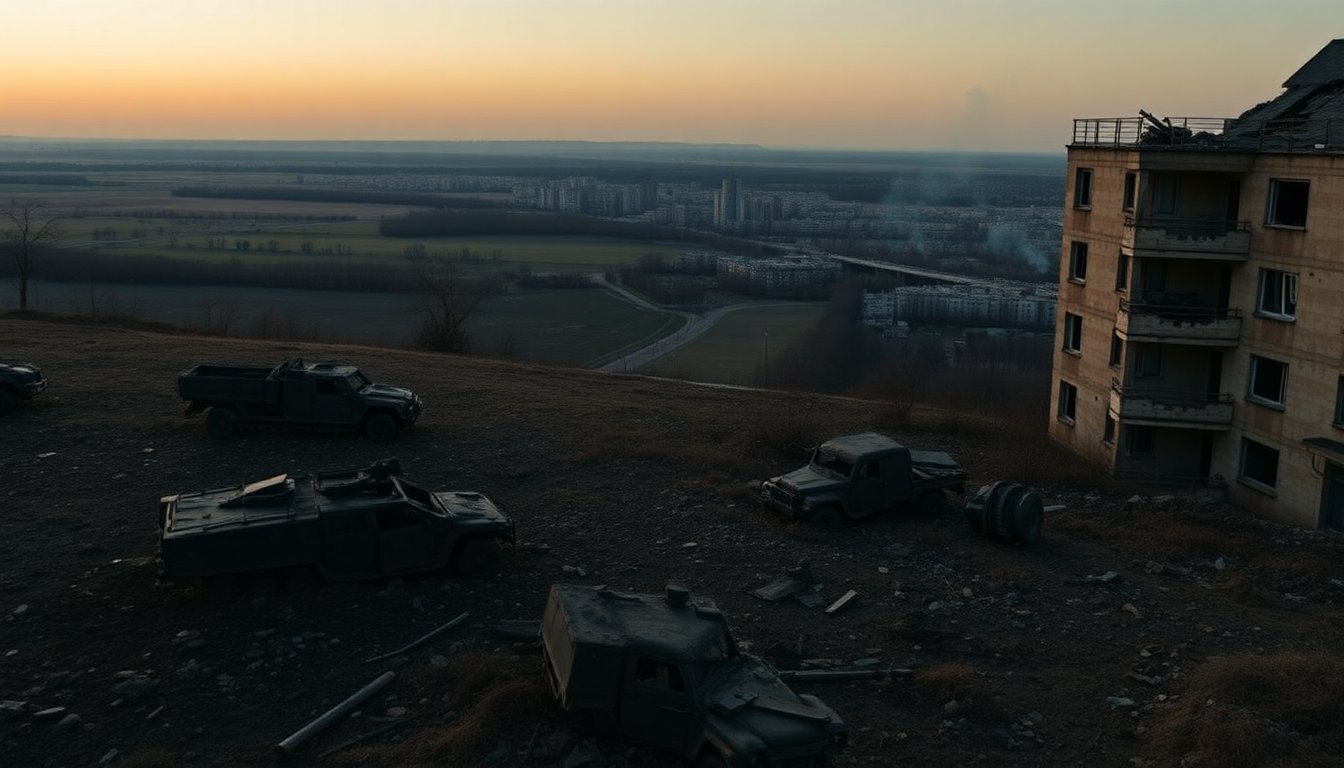
The ongoing conflict in Ukraine has unveiled a grim narrative surrounding Russia’s military involvement. Despite the Kremlin’s assertions of victory and progress, the reality paints a far bleaker picture. Recent analyses indicate that by the end of, Russia could see its military casualties reach a staggering 1.2 million, a figure that surpasses losses incurred by any major nation in conflicts since World War II.
This shocking statistic encompasses a range of military casualties, including those who are deceased, missing, or injured. Notably, it is estimated that the number of fatalities alone could lie between 275,000 and 325,000. These figures, corroborated by various independent investigations, challenge the narrative of an invincible Russian military force.
The magnitude of casualties
According to the Center for Strategic and International Studies (CSIS), the total number of combat casualties on both sides—Russian and Ukrainian—could approach two million. While the focus often centers on the number of dead, the inclusion of injured personnel complicates the understanding of the overall impact of the conflict. Wounded soldiers frequently return to active duty, creating a disparity in how losses are reported and perceived.
Counting the missing
Identifying the number of missing soldiers remains a complex issue, particularly for the Russian military, where official data is scarce. Often, individuals initially reported as missing are later confirmed dead. For instance, an analysis of records from Russia’s 1st Guards Tank Army revealed that nearly half of those listed as missing were eventually recognized as fatalities. As the conflict has evolved, the reliability of such data has come under scrutiny.
In stark contrast, the situation for Ukrainian casualties is more transparent, with a dedicated database—UALosses—maintained by volunteers providing detailed records. This database currently lists approximately 85,000 named casualties, reflecting a more systematic approach to tracking losses compared to Russian efforts.
Sources of information and accuracy
When examining the CSIS report, it is essential to scrutinize the sources of the numbers presented. The report claims to rely on various estimates, including those from the UK Ministry of Defence and data from Russian news outlets like Mediazona. However, the specifics on how these estimates were derived remain vague, particularly regarding the wounded. Unlike those who have fallen in battle, the injured often do not appear in public records, leading to a lack of clarity.
Discrepancies in reporting
The CSIS findings suggest a disproportionate casualty ratio of around 2.5:1 or 2:1 favoring Russian forces compared to Ukraine. However, assessing the accuracy of these figures is complicated. For example, the UALosses database lists 177,000 individuals, with around 87,000 confirmed dead, which raises questions about the credibility of the mortality estimates presented by CSIS.
Moreover, the statistics regarding officer casualties show surprising parity, with 6,534 for Ukrainian forces compared to 6,168 for Russia. This similarity contradicts the broader casualty ratios suggested, indicating potential miscalculations in the assessments of overall losses.
The implications of these losses
The implications of Russia’s staggering losses are profound, not only for the military but for the country’s economic stability and geopolitical standing. As Russia struggles to maintain momentum on the battlefield, the costs of attrition warfare become evident. The average advance of Russian troops has been painfully slow, with gains measured in mere meters per day, reminiscent of some of history’s most grueling campaigns.
Furthermore, the war’s toll on Russia’s economy is evident, with declining manufacturing and a slowing growth rate. The absence of globally competitive technology firms further exacerbates the situation, marking a decline in Russia’s status as a major power. As the conflict drags on, the question remains whether Russia can sustain its current trajectory or if the accumulated losses will force a reevaluation of its military ambitions in Ukraine.


