
Table of Contents
“`html
On a recent date, a serious incident unfolded in Benin as a small faction of soldiers declared a coup against the government, claiming the ousting of President Patrice Talon. However, this attempt was swiftly countered by loyalist forces, ensuring that the country’s political framework remained intact. This event not only raises questions about military loyalty but also underscores the ongoing instability in West Africa.
Details of the coup attempt
Reports indicate that approximately 14 individuals, primarily active military personnel, were arrested following the coup attempt. The group, which identified itself as the Military Committee for Refoundation, appeared on state television announcing the dissolution of the government and declaring Lieutenant Colonel Pascal Tigri as the new leader. Their bold proclamation, which included promises of a new era for the Beninese people, was short-lived as the situation was rapidly brought under control by government forces.
Government response and military actions
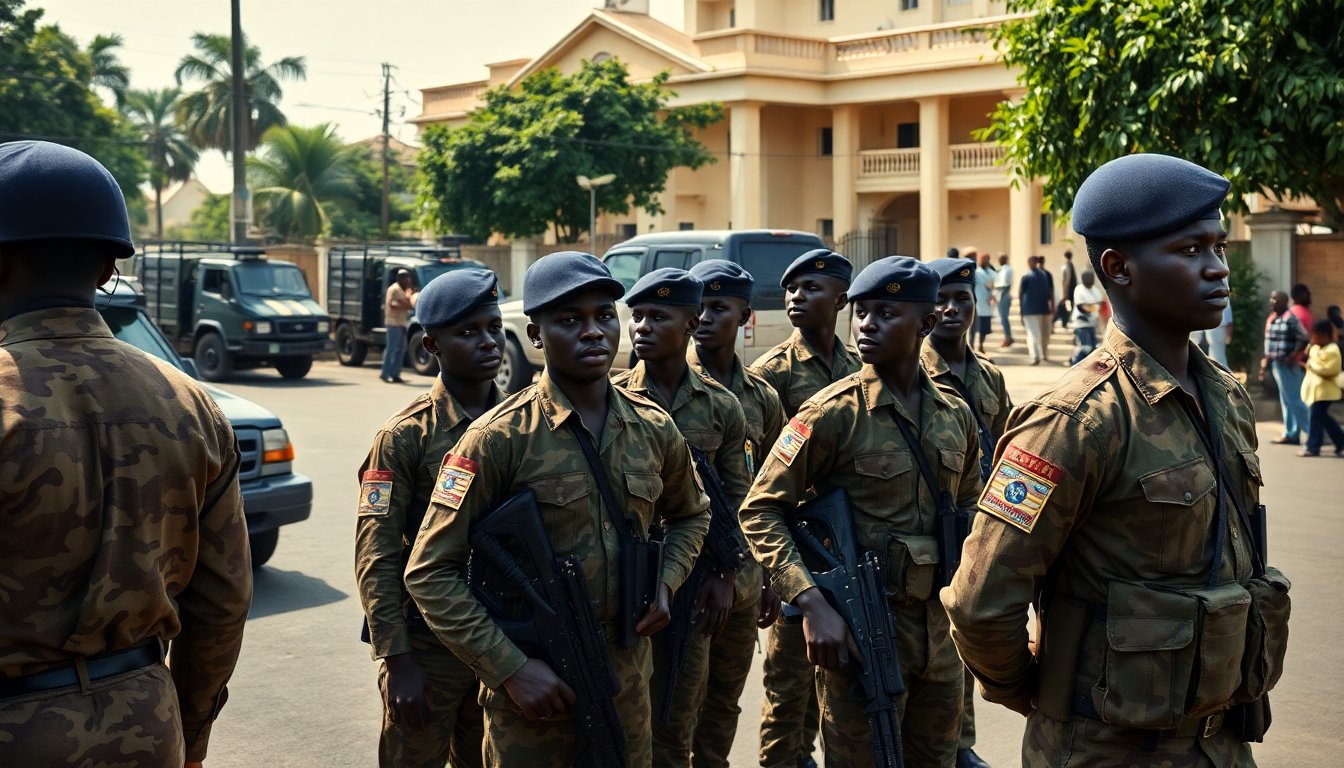
The Beninese Interior Minister, Alassane Seidou, confirmed that the coup was thwarted, stating that loyal forces acted decisively to secure the nation against this insurrection. Witnesses reported hearing gunfire in the capital, Cotonou, as troops took positions around key state institutions, including the presidential residence and national broadcasting services. Despite the unrest, the military reported that normalcy was returning swiftly, with no significant disruptions affecting civilian life.
Political implications and historical context
This coup attempt unfolds against a backdrop of political tension in West Africa, where several nations have recently experienced military uprisings. Since gaining independence from France in 1960, Benin has seen its share of political turbulence, yet has enjoyed relative stability since 1991. President Talon, in power since 2016, has overseen economic growth but faces accusations of authoritarian rule. As he prepares to leave office in the near future, the political landscape is fraught with uncertainty.
International reactions and future outlook
The fallout from the coup attempt has garnered attention from international bodies, including the African Union and ECOWAS, both of which condemned the military’s actions as unconstitutional. They expressed support for restoring order and maintaining democratic governance in Benin. As the government stabilizes, the focus will shift to upcoming elections and the legitimacy of the political process moving forward.
With the presidential term recently extended from five to seven years, the implications for political candidates become critical. Former Finance Minister Romuald Wadagni is seen as a frontrunner for succession, while opposition figures have faced significant challenges in achieving electoral credibility. The recent coup attempt is likely to intensify scrutiny on the electoral landscape and the political maneuvering that follows.
In summary, the failed coup in Benin is a stark reminder of the delicate balance of power within the nation and the ongoing challenges it faces. As the military reasserts control, the focus must remain on ensuring that democratic principles are upheld and that the voices of the Beninese people are heard in the political arena.
“`