
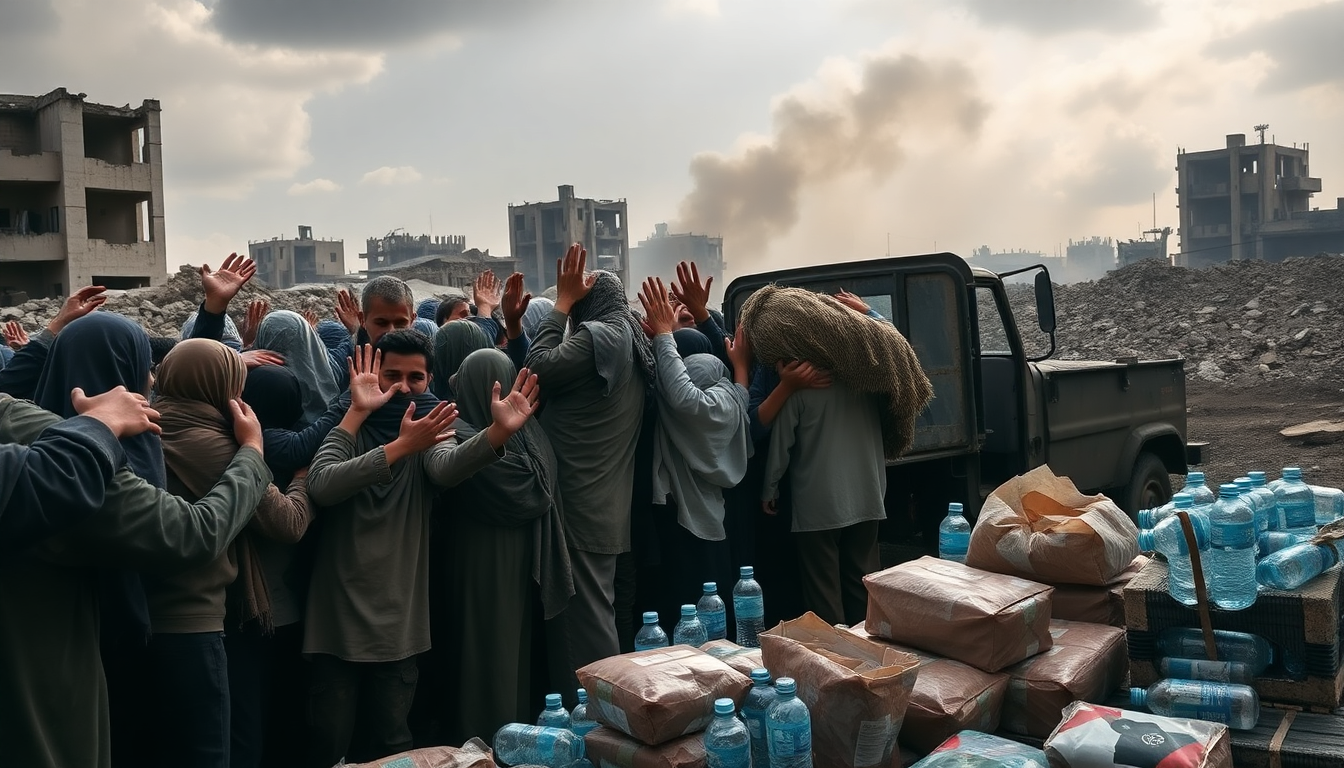
The situation in Gaza has reached a critical crossroads. As military actions continue unabated, the humanitarian crisis is deepening. Just imagine—recent reports indicate that at least 116 Palestinians lost their lives in a single day. This only worsens the already dire circumstances faced by a population caught in the crossfire. With access to essential supplies severely restricted, residents are increasingly desperate, often risking their lives just to obtain the basic necessities of life.
The Escalation of Violence and Its Impact
The ongoing military operations in Gaza have resulted in staggering casualties. Medical sources report that those seeking food at humanitarian aid sites have been directly targeted. The heartbreaking death of a 35-day-old infant from starvation highlights the urgent need for humanitarian assistance. Muhammad Abu Salmiya, the director of al-Shifa Hospital, has pointed out the overwhelming number of patients suffering from malnutrition, with 17,000 children in immediate need of help. Can you imagine being a parent in such a situation?
Witness accounts paint a chilling picture of gunfire directed at those simply trying to access aid. Mohammed al-Khalidi describes a scene where military vehicles approached and opened fire indiscriminately, resulting in numerous fatalities. The Gaza Humanitarian Foundation (GHF), which operates aid distribution points, has faced severe criticism. Some have even labeled these sites as ‘death traps’ where innocent lives are lost while trying to secure food. How can such a situation be allowed to persist?
The Israeli military claims responsibility for the ongoing bombardments, which have led to significant civilian casualties. According to the Health Ministry, the death toll attributed to military operations has approached 900 since the GHF began its aid distribution. This raises serious concerns about the safety of humanitarian efforts in the region.
The Humanitarian Crisis: A Call for Urgent Action
The situation in Gaza is dire. The International Federation of Red Cross and Red Crescent Societies has issued a stark warning about an acute risk of famine among the population. Basic supplies are becoming increasingly scarce, and the skyrocketing prices of essential goods make it nearly impossible for the 2.3 million residents to meet their daily nutritional needs. Jagan Chapagain, the organization’s secretary-general, made a powerful point: individuals shouldn’t have to risk their lives just to obtain basic humanitarian assistance.
Despite the overwhelming need for aid, reports indicate that no humanitarian deliveries have occurred for over 140 days, leading to a critical shortage of food and medical supplies. Jan Egeland, head of the Norwegian Refugee Council, firmly rejected any notion of improved aid distribution, stating that the reality on the ground contradicts claims of progress. What does it take for the world to take notice?
The United Nations Relief and Works Agency (UNRWA) has expressed its readiness to assist, claiming sufficient food supplies are waiting at the border crossing in Egypt. However, access remains blocked due to ongoing military actions and political complexities. The agency has called for the lifting of the siege to facilitate essential aid delivery, highlighting the urgent need for international intervention. Isn’t it time for the global community to step up?
Future Outlook and Recommendations
As the humanitarian crisis unfolds, the need for a coordinated international response is more pressing than ever. The continuous cycle of violence and blockade has created a precarious situation where basic human rights are compromised. Immediate action is vital to alleviate the suffering of the Palestinian people in Gaza. We need to ensure that humanitarian corridors are opened and that aid reaches those in desperate need.
Moreover, it’s essential for the international community to hold accountable those responsible for targeting civilians and humanitarian workers. The protection of innocent lives must be prioritized in any military strategy, and mechanisms must be established to ensure the safe delivery of aid. As conditions worsen, the global community must not turn a blind eye. Instead, we must act decisively to foster peace and stability in the region. Can we afford to remain passive?
In conclusion, the ongoing violence in Gaza demands our urgent attention and action. The humanitarian crisis serves as a stark reminder of the consequences of prolonged conflict, and it is imperative that we take steps now to prevent further loss of life and suffering. Will we stand by, or will we take a stand for humanity?


