
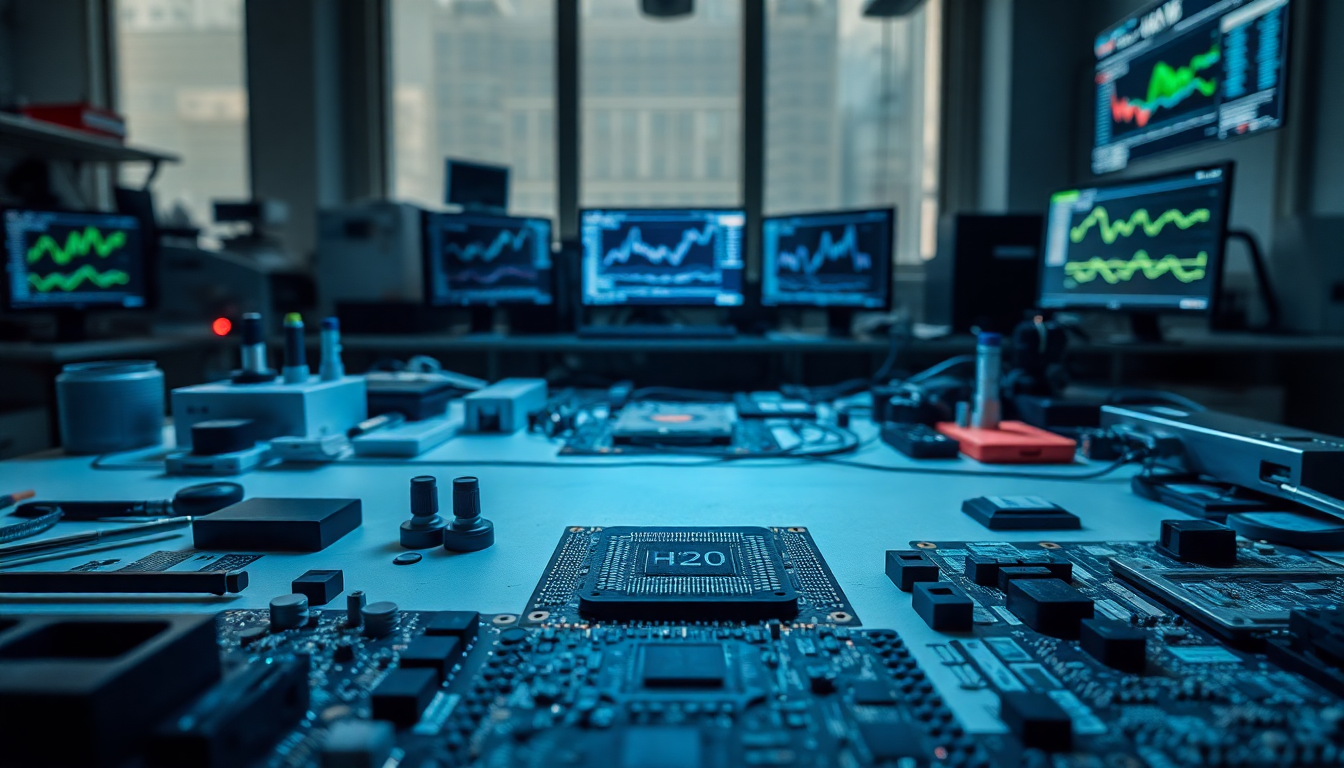
The recent announcement of Nvidia’s H20 chip has sparked a lot of buzz about what it could mean for the semiconductor market in China. As the country navigates a maze of trade restrictions, this chip’s debut feels like a game changer for foreign tech companies trying to hold onto their slice of one of the world’s biggest consumer markets. With Huawei rising to prominence, the landscape is definitely shifting, reflecting the larger trends in technology and geopolitics.
Nvidia’s Strategic Move in China
At the China International Supply Chain Expo, Nvidia’s CEO Jensen Huang laid out his vision for introducing more advanced chips, highlighting the H20 as a key component. While this chip is designed to comply with U.S. trade restrictions, it doesn’t quite stack up against Nvidia’s more powerful offerings like the H200. This strategic shift shows that Nvidia is keen to adapt to the tough regulatory environment while also tapping into the booming Chinese market.
Even with limitations on selling its most advanced chips, such as the A800 and H800, Nvidia is determined to leverage its brand and technology to engage with Chinese businesses. The company understands just how crucial China is as a major market and recognizes the significant growth potential—if they can navigate the regulatory hurdles effectively.
The Rise of Huawei and Domestic Alternatives
With Nvidia’s cutting-edge chips facing roadblocks, Huawei has stepped up its game, pushing its own semiconductor solutions. The Chinese tech giant is positioning itself as a strong alternative, encouraging local companies to adopt its products. This shift not only highlights Huawei’s resilience but also emphasizes China’s broader strategy to boost its technological self-sufficiency amid external pressures.
Huang didn’t hold back in praising Huawei, calling it an “incredible technology company.” This acknowledgment underscores the competitive environment that foreign firms are now contending with. The narrative around Huawei is just one piece of a larger trend where domestic companies are gaining favor, especially in light of geopolitical tensions and trade barriers.
The Future of Chip Imports in China
As the semiconductor scene keeps evolving, the dynamics of chip imports in China will be shaped by a variety of factors. Analysts predict that the changing regulatory landscape, combined with the rise of domestic competitors like Huawei, will redefine the market. The increasing focus on local production and self-reliance in technology suggests that foreign firms will need to rethink their strategies to thrive in this market.
Looking forward, the relationship between foreign tech companies and local players will be vital. Nvidia’s introduction of the H20 chip might just be the start of a new era in China’s tech industry, where adaptability and innovation will be key in determining who captures the market share and influence.


