
Table of Contents
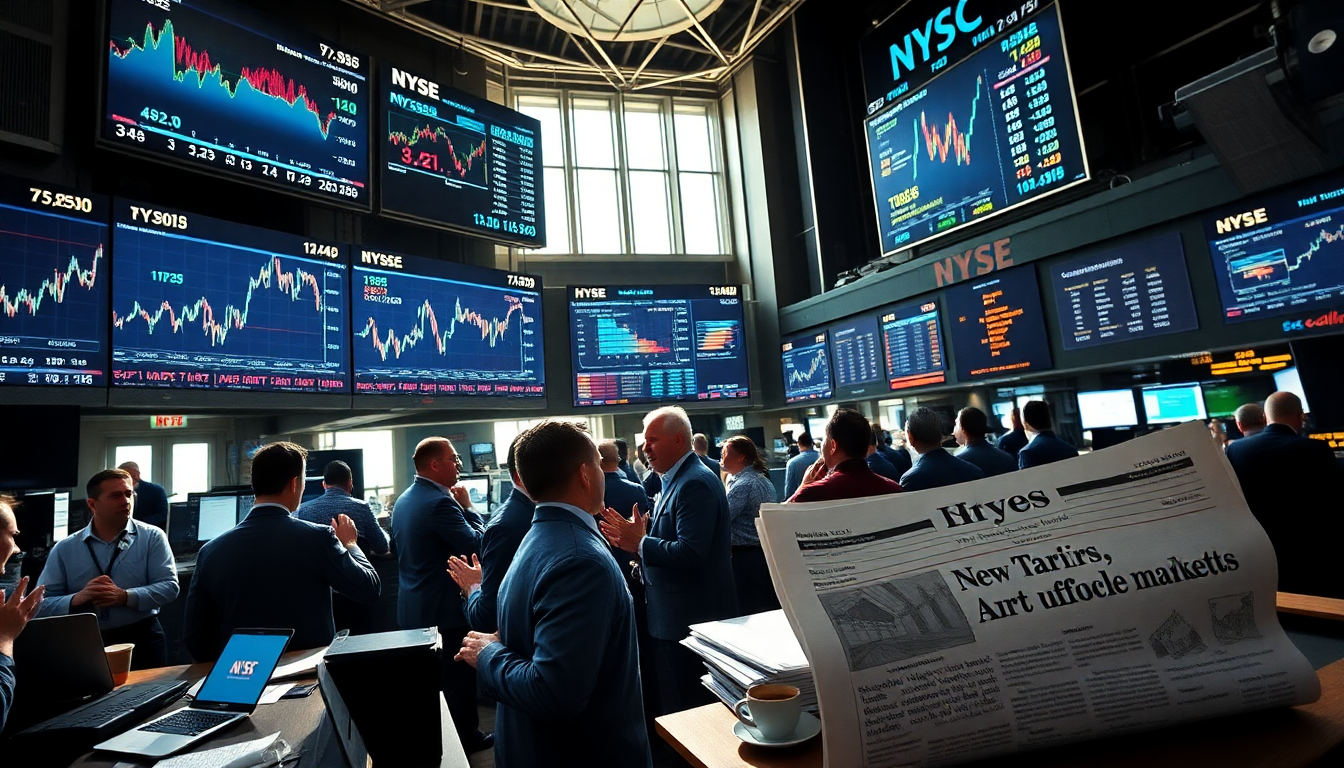
The financial landscape is always changing, and recent events have certainly added some twists and turns to the decision-making processes for investors. Just take a look at Wall Street: as stock markets opened, major indices like the S&P 500, Dow Jones Industrial Average, and Nasdaq composite all took a hit. This dip mainly stems from a disappointing hiring report that has shifted expectations around interest rate cuts. To make matters more complicated, news about tariffs has introduced an extra layer of uncertainty into an already shaky environment. What does this mean for you as an investor?
Market Overview: A Closer Look at Declining Indices
As of 10:00 AM EST, the S&P 500, Dow Jones, and Nasdaq were all down by roughly 1.7% to 2.5%. This unexpected slowdown in hiring has led many investors to rethink their economic forecasts, with a growing number now anticipating a possible interest rate cut in September. This change in sentiment is echoed in broader market trends, as the Toronto Stock Exchange also saw a decline of nearly 1.5%. Interestingly, the Canadian dollar managed to strengthen against the U.S. dollar, hinting that while some markets struggle, others might discover opportunities amidst the chaos. Are you keeping an eye on such shifts?
To complicate the situation further, President Donald Trump has announced new tariffs set to take effect on August 7, impacting a wide range of countries. These import duties, which could soar up to 41%, have caused global shares to retract sharply. The White House has also specified that tariffs on Canadian products will rise to 35%, adding to the uncertainty surrounding international trade relationships. How will these tariffs affect your investment strategy?
Global Responses: Market Reactions in Europe and Asia
The implications of these tariffs are being felt far and wide, with European markets showing significant declines. Germany’s DAX dropped by 1.8%, while the UK’s FTSE 100 and France’s CAC 40 saw losses of 0.6% and 2.1%, respectively. Over in Asia, trends mirrored this downturn, with South Korea’s Kospi plummeting by 3.9% due to a dip in shares from industry giant Samsung Electronics. Japan’s Nikkei 225 also faced a decline, and Chinese markets are left in limbo, uncertain about trade negotiations with the U.S. What does this global reaction tell us about the interconnectedness of our economies?
Experts highlight that the recent tariff directives signal a major shift in U.S. trade policy. This change establishes a new baseline for global trade costs, raising the average U.S. tariff from 13.3% to 15.2%. This increase is significant and will reshape cost structures across various industries. Just think about how this might influence investment strategies and market behaviors in the months to come—are you prepared for such shifts?
Investor Insights: Navigating a Shifting Market Landscape
As we witness these fluctuations, it’s crucial for investors to take a proactive approach. The current environment, marked by uncertainty, presents both challenges and opportunities. Conducting a strategic analysis of market data and trends is essential for identifying potential investment avenues. For instance, while the healthcare sector has faced notable pressure—major players like Eli Lilly and UnitedHealth Group have seen significant declines—there may still be sectors less affected by tariff implications that could offer promising opportunities. Are you exploring these potential niches?
Additionally, keeping an eye on global economic indicators and trade negotiations will be vital in shaping your future investment decisions. The prospect of a U.S. interest rate cut could also create a favorable environment for certain asset classes. As an investor, staying vigilant and leveraging data-driven insights will be key to successfully navigating this complex landscape. Are you ready to adapt your strategy?
Looking Ahead: Medium-Term Market Predictions
As we look ahead, it’s important to consider how these developments might shape the economic landscape. The potential for new trade deals and ongoing negotiations will play a critical role in restoring market confidence. Analysts suggest that while immediate reactions may cause volatility, there’s still a chance that some countries could negotiate favorable terms with the U.S., which might ease some market tensions. How can you position yourself to benefit from these future changes?
In conclusion, the interplay between tariffs, hiring trends, and investor sentiment is bound to keep evolving. By staying informed and adaptable, you can position yourself to take advantage of emerging opportunities, even amid uncertainty. What steps will you take to ensure you’re ready for what’s next?