
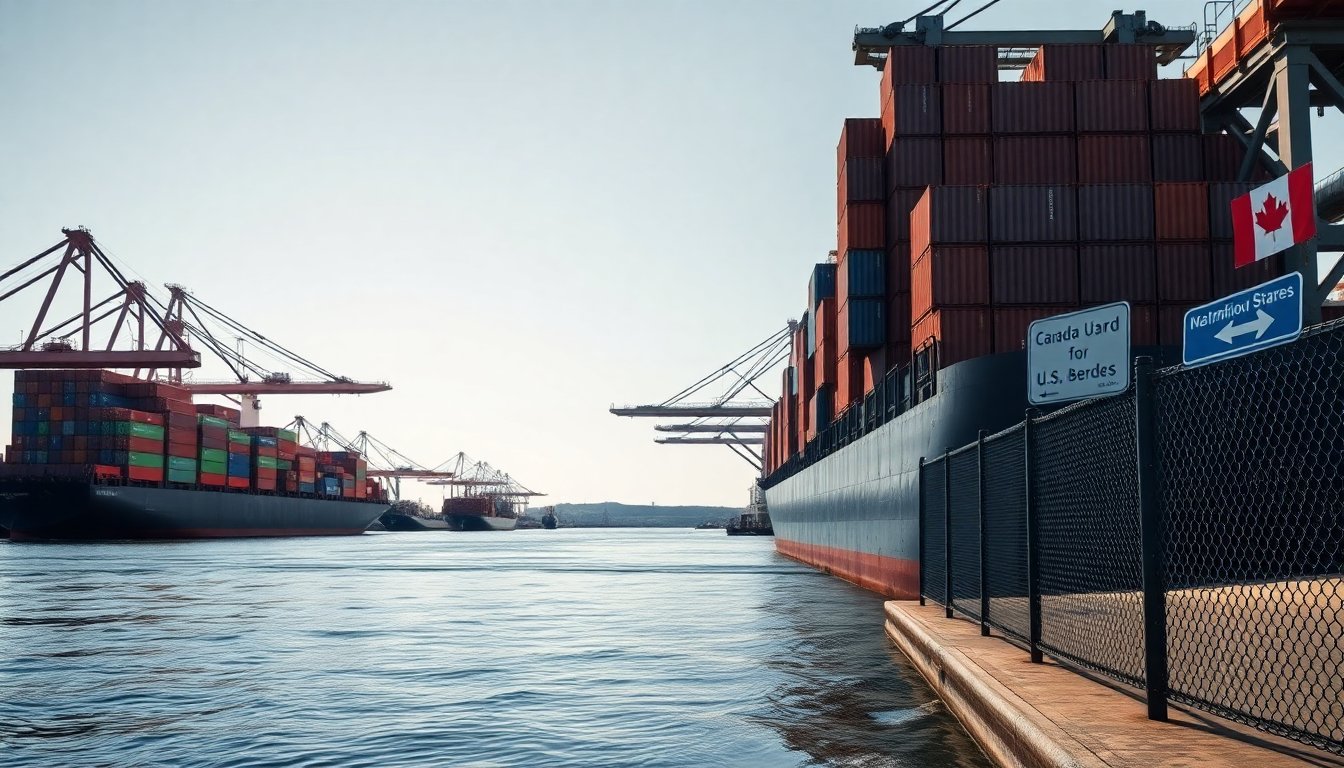
The landscape of trade between Canada and the United States is uncertain as the U.S. Supreme Court is set to examine the legality of tariffs imposed by President Donald Trump. This situation presents a significant economic challenge for Canada, which is already grappling with the repercussions of a trade war that has altered its export dynamics.
The justices will consider whether Trump exceeded his authority when implementing these tariffs through emergency powers. The consequences for Canada could be substantial. While removing certain tariffs might offer relief, the introduction of new tariffs could complicate the trade climate further.
Understanding the legal context of the tariffs
The inquiry by the U.S. Supreme Court focuses on tariffs enacted under the International Emergency Economic Powers Act (IEEPA). This legislation gives the President broad economic powers to address what he perceives as an emergency. In Trump’s case, a security emergency was declared concerning illegal immigration and drug trafficking, resulting in significant tariffs on Canadian and Mexican goods starting in early March.
Initially, a 25 percent tariff was imposed on a wide range of imports from Canada and Mexico, alongside a 10 percent tariff on energy products. Shortly thereafter, Trump announced considerable exemptions for goods meeting the criteria of the Canada-U.S.-Mexico Agreement (CUSMA), allowing many Canadian exports to enter the U.S. without extra tariffs.
The impact of tariff exemptions
Trade consultant Eric Miller notes that these exemptions have been crucial for Canadian businesses, allowing them to retain a competitive position in the U.S. market. As tariffs increased to as much as 35 percent in subsequent months, the importance of these exemptions grew.
However, Miller warns that should the Supreme Court rule against the Trump administration, the current exemptions may not be secure if new tariffs are enacted. This uncertainty places Canadian industries in a vulnerable position, as they may face different tariffs without the protections they previously had.
The future of trade relations
In the broader context of North American trade, concerns about free trade stability are rising. The Supreme Court’s ruling may not only influence tariffs but also shape future trade negotiations under CUSMA. U.S. Trade Representative Jamieson Greer has indicated that ongoing discussions will focus on resolving key issues, including Canadian market access for U.S. dairy products and provincial restrictions on U.S. alcohol imports.
These trade negotiations illustrate the delicate balancing act both nations must perform to achieve favorable outcomes. Greer has noted that while CUSMA has stabilized North American trade, there are still areas needing improvement. The U.S. seeks more stringent rules regarding the origin of goods and mechanisms to penalize the offshoring of American production.
Potential outcomes and concerns
The impending Supreme Court decision raises questions about the future direction of U.S. trade policy. If tariffs are invalidated, officials in the Trump administration have suggested alternative methods to maintain tariff revenue. This may involve utilizing different legal frameworks to impose new tariffs, potentially surprising Canadian exporters.
Experts like Richard Madan, representing Manitoba’s trade interests, caution that Canada could face additional tariffs regardless of the court’s ruling. Trump has consistently favored tariffs, indicating he may pursue various options to safeguard U.S. interests.
The justices will consider whether Trump exceeded his authority when implementing these tariffs through emergency powers. The consequences for Canada could be substantial. While removing certain tariffs might offer relief, the introduction of new tariffs could complicate the trade climate further.0
The justices will consider whether Trump exceeded his authority when implementing these tariffs through emergency powers. The consequences for Canada could be substantial. While removing certain tariffs might offer relief, the introduction of new tariffs could complicate the trade climate further.1


