
Table of Contents
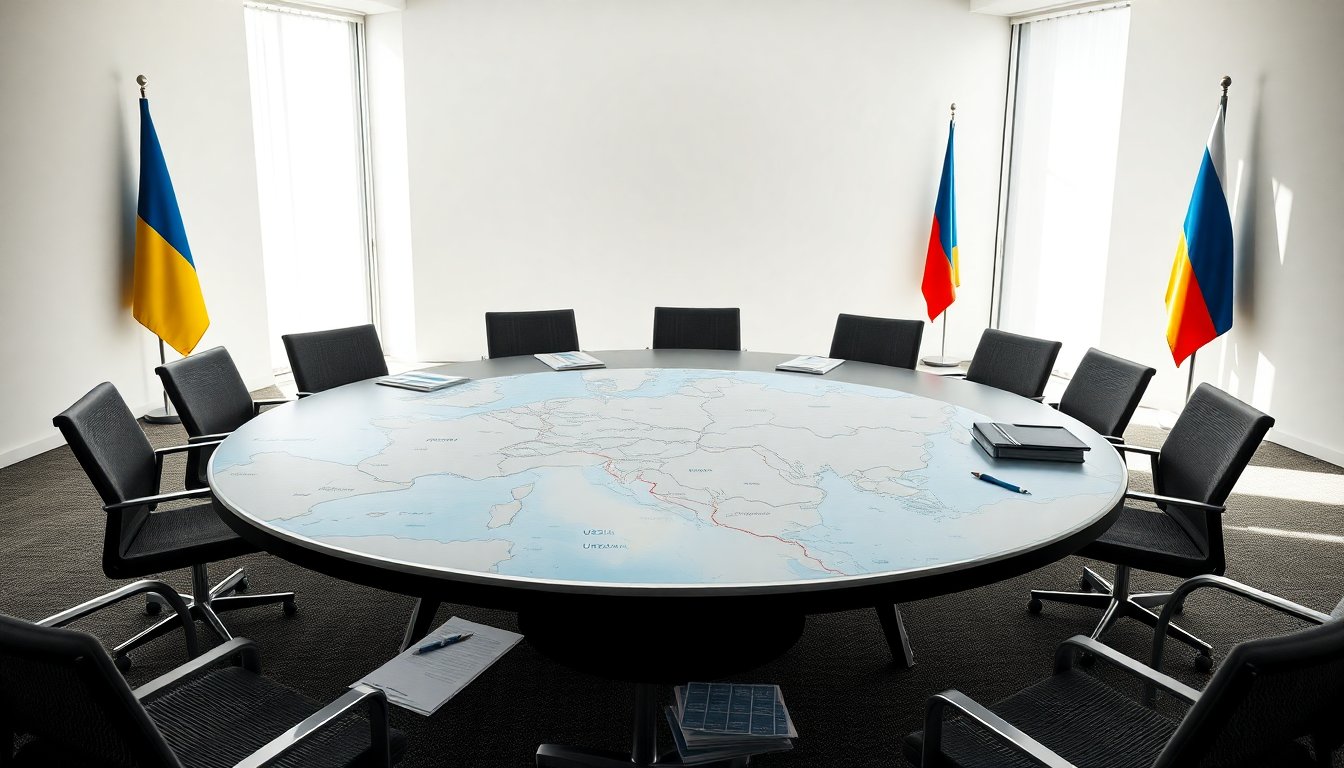
The ongoing peace negotiations between Ukraine and Russia have become increasingly complex, with territorial disputes emerging as a significant barrier to achieving a resolution. Ukraine’s President Volodymyr Zelensky has identified the issue of territory as the ‘most challenging’ aspect of the discussions aimed at ending the conflict that has persisted since Russia’s invasion. Meanwhile, Vladimir Putin has suggested that a controversial 28-point plan proposed during the Trump administration could potentially act as a foundation for a final peace agreement.
Despite pressure from international parties, including the United States, Ukraine remains firm in its refusal to cede any territory. As negotiations unfold, both sides are increasingly focusing on territorial claims as their non-negotiable points. Meduza’s analysis provides insight into the current stances of each nation and the potential pathways to resolving the conflict.
Current state of negotiations
The latest peace talks commenced on November 19, following reports that the U.S. and Russia were quietly working on a new proposal to end hostilities in Ukraine. On that same day, the leaked 28-point plan elicited immediate backlash, perceived as a wishlist from the Kremlin. Just two days later, Putin publicly endorsed this plan as a potential basis for a peace settlement.
Since then, the negotiation process has been tumultuous, characterized by leaked information and delegates traveling across the globe for discussions. Zelensky and his European partners have attempted to propose amendments to refine the original plan, yet a revised proposal has yet to be made public, with territorial issues remaining a major sticking point.
The role of the U.S. in the negotiations
Putin continues to demand that Ukraine withdraw its forces from areas within the Donbas that they currently control, an assertion that Ukraine firmly rejects. Zelensky has reiterated that territory is the core issue complicating the negotiations. After an extensive five-hour meeting in the Kremlin on December 2, U.S. Special Envoy Steve Witkoff and Jared Kushner were unable to extract any compromises from Putin, with Kremlin aide Yuri Ushakov highlighting that territorial claims remain the primary concern for Russia.
Trump’s administration has played a pivotal role in the negotiation dynamics, leading to a fluctuating strategy where both parties are pressured at different times. Initially, it appeared that both Moscow and Kyiv were attempting to convince Trump that the other was the primary obstacle to peace, justifying potential U.S. penalties. However, the latest discussions indicate that both Russia and Ukraine may be open to peace, with their demands for resolution beginning to align.
Territorial demands and implications
The leaked plan from the Trump administration highlights the territorial aspect as a crucial element. While Putin appears steadfast in his desire to maintain control over the Donetsk and Luhansk regions of the Donbas, he has not officially abandoned aspirations for the Zaporizhzhia and Kherson regions. Russia annexed these four territories back in September , and Putin repeatedly calls for Ukraine to withdraw from the regions it occupies.
There are indications that the Kremlin may be contemplating some form of compromise, particularly following Putin’s meeting with Trump in August. Discussions have shifted slightly, with Kremlin officials no longer explicitly demanding control of all four regions. In a leaked conversation, Witkoff hinted that a peace deal might hinge on the status of Donetsk and possibly a land swap, without mentioning Kherson or Zaporizhzhia, which are already under Russian occupation.
Challenges of reaching an agreement
Uncertainties linger regarding whether Putin would accept the American proposal involving a demilitarized buffer zone or the absence of international recognition for the territories claimed by Russia. A Russian official recently indicated that Moscow has three non-negotiable points: the integrity of the Donbas, limitations on Ukraine’s military capabilities, and recognition of territorial claims by the U.S. and Europe.
As negotiations unfold, Ukraine remains resistant to the notion of a land swap and insists that territorial discussions should only take place following a ceasefire. However, Kremlin representatives maintain that a ceasefire can only be achieved after Ukrainian forces withdraw.
Conclusion
While the talks have faced numerous challenges, there is a sense that progress has been made compared to previous years. Ukraine’s position still emphasizes the complete restoration of its territorial integrity and the withdrawal of Russian troops, while Russia demands immediate withdrawals as a precondition for further negotiations. The ongoing conflict has severely impacted the region’s economy and infrastructure, complicating efforts to find a peaceful resolution.
As both nations navigate this intricate landscape, the path to peace remains fraught with challenges, and the significance of territorial control will continue to dominate discussions. The resolution of these territorial disputes will be crucial in determining the future relations between Russia and Ukraine.