
Table of Contents
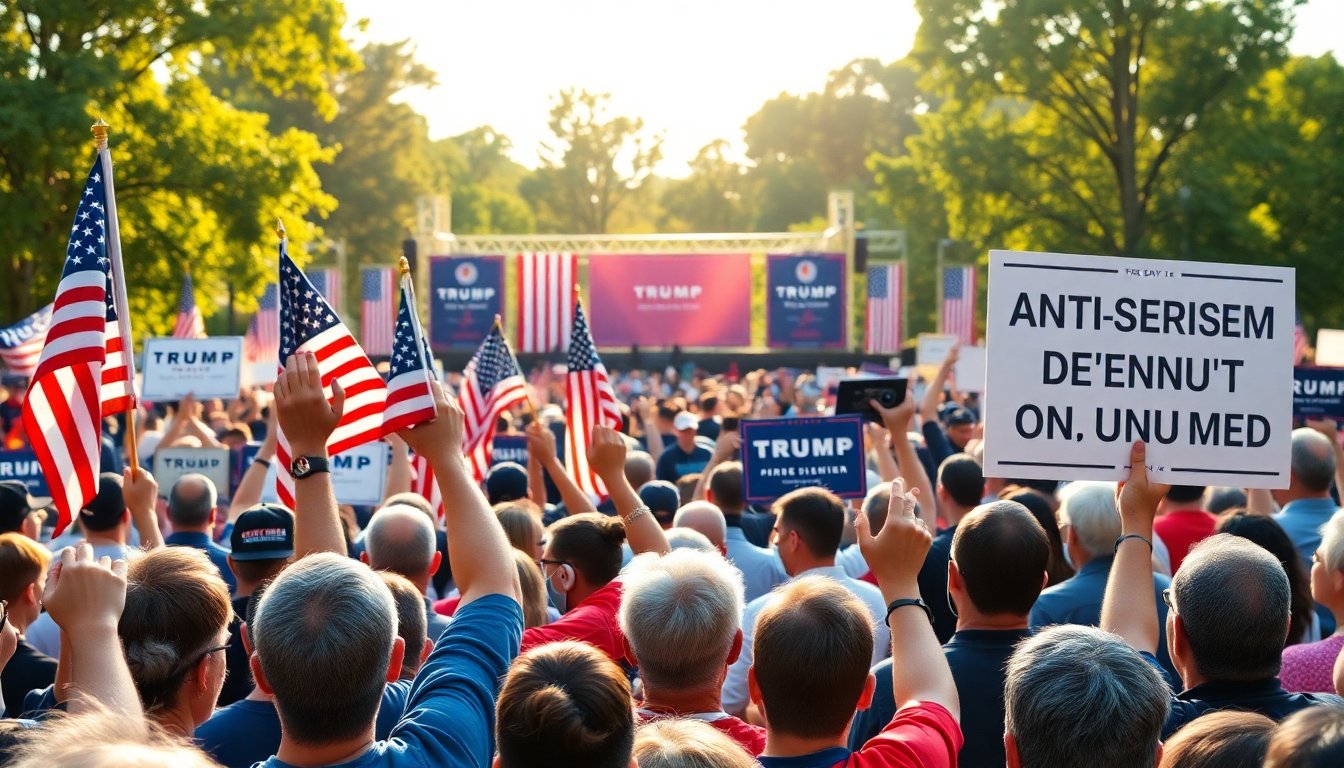
The political landscape in the United States is witnessing a pivotal moment as President Donald Trump addresses the tensions surrounding antisemitism within his MAGA (Make America Great Again) movement. His recent declarations that the MAGA coalition excludes antisemitic individuals have sparked intense discussions among party members about the direction of their political alliance. For years, Trump has had a controversial relationship with various far-right factions, raising questions about the inclusivity of the Republican Party and its fundamental values.
As the Republican Party grapples with its identity, Trump’s comments serve as a flashpoint for ongoing debates about the extent of its coalition. This article delves into the complexities surrounding Trump’s stance and the potential implications for future political dynamics.
Trump’s remarks and their implications
In a recent statement, Trump asserted that there is no place for antisemitism within the MAGA movement, a comment that contradicts his past interactions with extremist groups. This shift in rhetoric has led to a significant backlash among some Republican lawmakers who are concerned about maintaining the support of various factions within the party. Trump’s history of aligning with controversial figures and groups has created an atmosphere of uncertainty regarding the party’s future.
Internal party divisions
The response to Trump’s comments has highlighted a growing divide among Republican leaders. Many prominent figures, including House Speaker Mike Johnson and Senator John Barasso, have expressed their discontent with the president’s stance on issues like antisemitism and its implications for their political base. The tension is palpable, as a significant portion of the party’s electorate remains skeptical about distancing themselves from extremist views.
As reported by various news outlets, the MAGA movement’s relationship with far-right elements has been fraught with challenges, raising questions about the party’s ability to unify diverse factions. Trump’s comments may be an attempt to re-establish a more palatable image for the Republican Party, particularly as they approach crucial electoral contests.
Marijuana rescheduling and its fallout
In a parallel scenario, Trump has also made waves with his decision to reclassify marijuana, breaking with traditional Republican stances. His recent executive order aimed to downgrade cannabis from a Schedule 1 to a Schedule 3 controlled substance, a move that many believe is aimed at appealing to younger voters ahead of the upcoming midterm elections.
However, this initiative has encountered significant pushback from within the party itself. Key Republican lawmakers, including Rep. Andy Harris, have voiced their concerns about the potential ramifications of such a rescheduling, fearing it could disrupt ongoing efforts to maintain the party’s conservative values.
Implications for cannabis reform
The controversy surrounding marijuana rescheduling could hinder crucial reforms needed for the burgeoning legal cannabis industry, which is currently valued at approximately $32 billion. Experts suggest that while Trump’s executive order may open the door for discussions on cannabis banking protections, it still requires congressional action to effect real change. The SAFER Banking Act, for example, is one piece of legislation that could provide necessary banking services to cannabis businesses.
Despite the push for reform, recent polling indicates that only 40% of self-identified Republican voters support cannabis legalization, a significant drop from previous years. This statistic underscores the challenges Trump faces as he attempts to align his policies with the preferences of a shifting electorate while navigating the complexities of his party’s internal dynamics.
Conclusion
The interplay of Trump’s comments on antisemitism and his approach to cannabis reform illustrates the broader challenges facing the Republican Party. As it stands, the party is at a crossroads, grappling with its identity and the diverse opinions of its members. Trump’s recent statements may signal an attempt to redefine the MAGA movement, but the reactions from within the party suggest that significant divisions remain.
In the coming months, it will be crucial to observe how these dynamics evolve, particularly as the party prepares for critical elections. The path forward for the GOP will depend on its ability to reconcile these internal conflicts while appealing to a broader base of voters.