
Table of Contents
The excitement surrounding hockey at the Winter Olympics is palpable, especially with NHL players returning after a long absence. However, a notable change is that the tournaments will take place on ice rinks shorter than those typically seen in the NHL. This adjustment has prompted discussions among players, coaches, and fans alike, as they ponder the implications of these dimensions on gameplay.
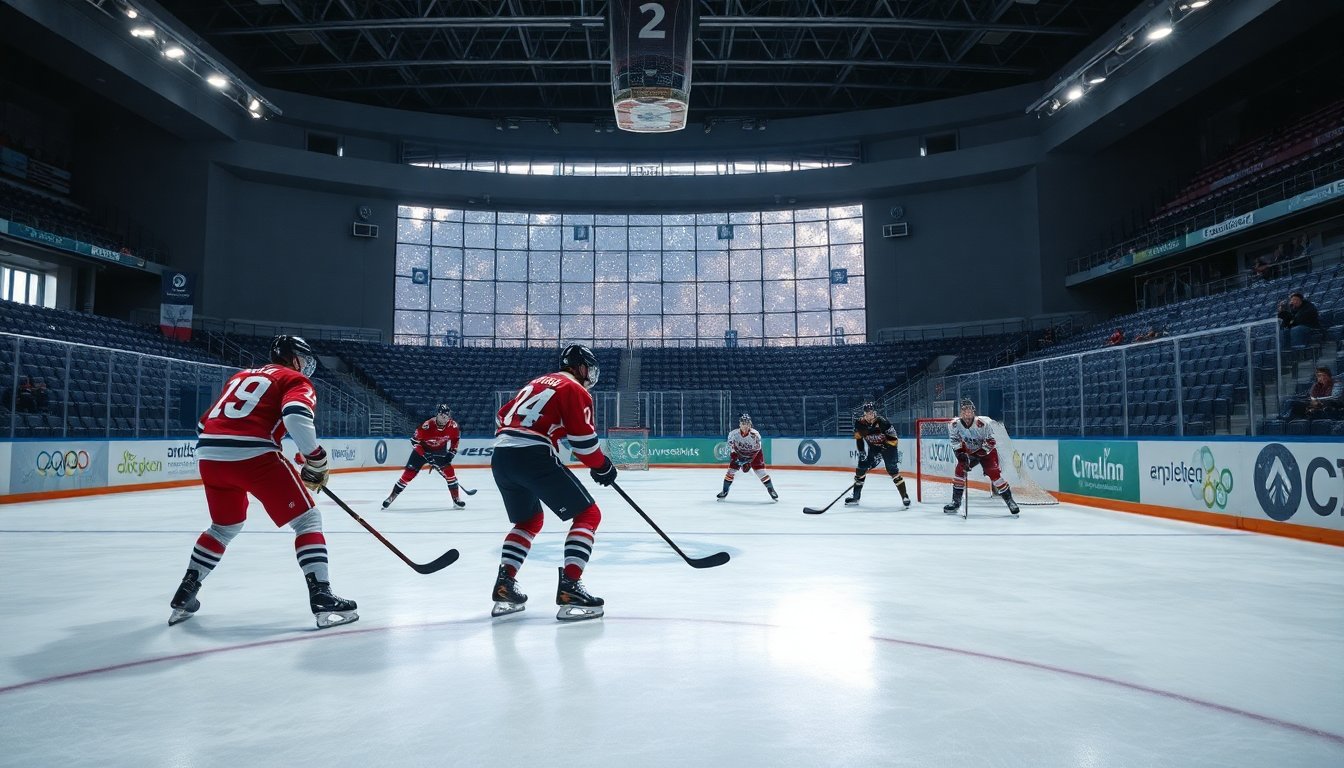
The men’s and women’s competitions will be hosted in two distinct arenas, where the ice dimensions will measure 196.85 feet in length and 85.3 feet in width. In contrast, standard NHL rinks are 200 feet long and 85 feet wide. This means that while the Olympic rinks are slightly wider, they fall short by more than three feet in length.
International Ice Hockey Federation’s approval
The International Ice Hockey Federation (IIHF) has approved these rink dimensions for the Milan Olympics, claiming they align with their regulations. Interestingly, these dimensions were also utilized during games involving the Pittsburgh Penguins and Nashville Predators in Stockholm last November. The shift to NHL-sized ice rinks started at the Olympics in 2018, continuing through, but the upcoming games will revert back to these international specifications for the first time since 2014.
Although the IIHF has confirmed the use of these dimensions in Milan, they offered no further explanation. They stated, “While these dimensions differ slightly from a typical NHL rink, they are consistent with IIHF regulations, and all involved parties agree that the differences are insignificant for safety and gameplay quality.” This assurance aims to quell concerns from stakeholders in the hockey community.
Historical context of Olympic ice dimensions
Historically, Olympic hockey has been played on larger ice surfaces, measuring 196.85 by 98.4 feet during tournaments held in 1998, 2006, and 2014, with a minor variation in Salt Lake City in 2002. The 2010 Vancouver Olympics marked an exception, as the games were held on NHL-sized ice due to the existing infrastructure.
General Manager of the Finnish men’s hockey team, Jere Lehtinen, emphasized that all teams will face the same conditions. He noted, “It’s the same for every team, and I think that’s the ” This sentiment is echoed by others who believe that the change will provide interesting tactical challenges that teams must adapt to.
Challenges facing the Santagiulia Ice Hockey Arena
Construction of the main venue, the Santagiulia Ice Hockey Arena, is ongoing and has faced delays. Set to hold approximately 16,000 spectators, this arena is being built specifically for the Olympics and will later host various events beyond hockey. Currently, there are no backup plans for any potential issues that may arise. Organizers have expressed confidence that the venue will be ready for the events.
In the lead-up to the Olympics, a test event was relocated to the Rho Ice Hockey Arena, with additional testing scheduled for the main arena just weeks before the Olympic games commence. Bruce Cassidy, assistant coach for the Canadian men’s team, acknowledged the construction delays but remained optimistic that preparations would be completed in time.
Concerns from NHL and logistical challenges
As the NHL prepares for the Olympics, concerns regarding logistics have been raised by Gary Bettman, the NHL commissioner. During a recent board meeting, he mentioned the constraints the league faces regarding requests and demands, underscoring the importance of timely completion of the facilities. However, assurances from the International Olympic Committee (IOC) and the IIHF have mitigated some of these worries.
The men’s hockey tournament is set to run from February 11 to 22, while the women’s competition will take place from February 5 to 19. With NHL players participating again, the stakes are higher than ever, and the implications of the rink dimensions may very well influence the outcome of these prestigious games.