
Table of Contents
Exploring human connections within the American penal system
The American penal system houses millions of incarcerated individuals, whose lives often reflect a harsh and challenging reality. Despite this, unique stories emerge within these steel walls, showcasing profound human connections even in the bleakest of circumstances. Petra Volpe‘s film, Frank & Louis, offers a poignant glimpse into such a relationship, focusing on two inmates who navigate the complexities of their intertwined fates.
The unlikely partnership of two inmates
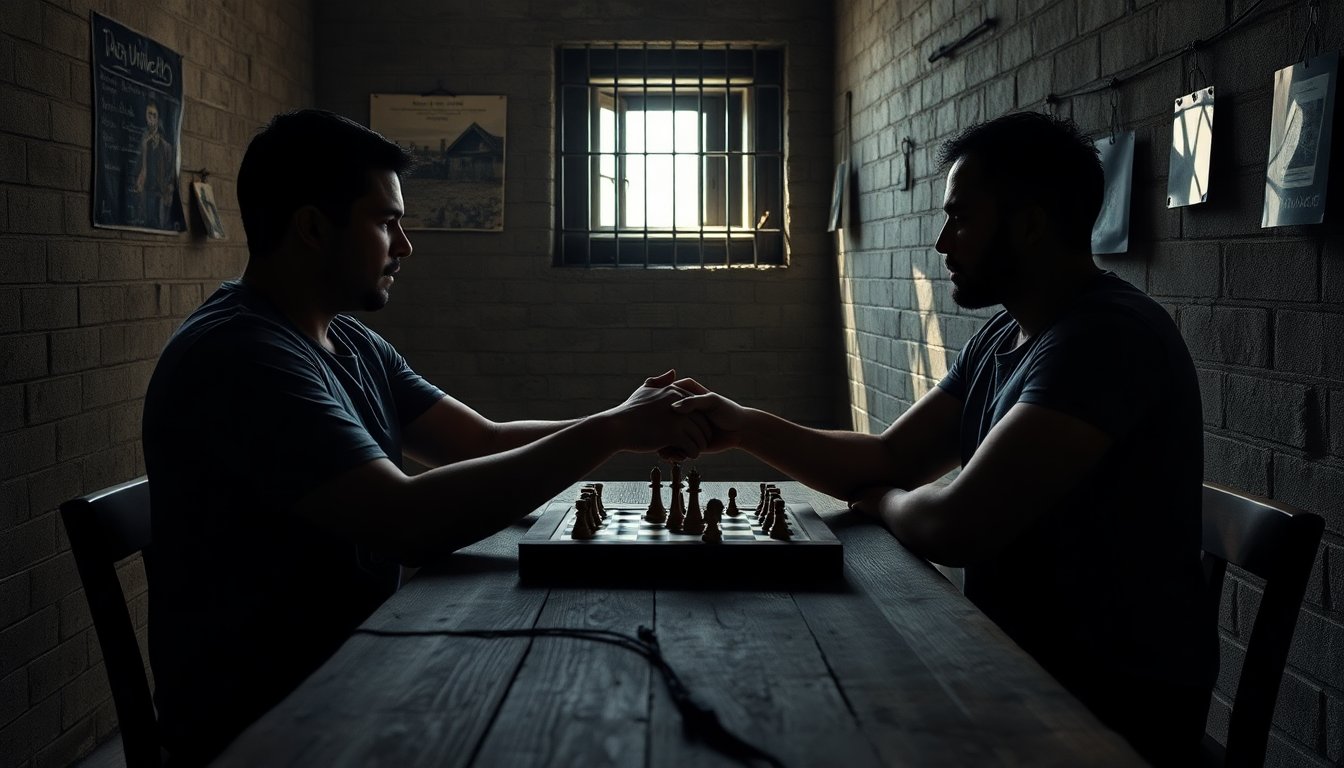
Set in a nameless correctional facility, the narrative centers on Frank, a 60-year-old veteran of the prison system coping with the early stages of Alzheimer’s disease, and Louis, a younger man seeking parole. Initially, Frank’s decision to join a caregiving program stems from self-interest; he believes volunteering as a caregiver will demonstrate to the parole board that he has reformed. However, as the story unfolds, it becomes evident that both men are in desperate need of each other’s support.
The caregiver and the cared-for
Frank’s assignment to care for Louis, who faces significant health challenges and cognitive decline, establishes a complex and evolving relationship. Initially, Louis resists Frank’s help, feeling a deep sense of loss regarding his independence. However, as Frank embraces his caregiving duties, he begins to recognize the emotional fulfillment that comes with the role. He also discovers a strong sense of community among the other participants in the program, known as the Yellow Coats.
Building trust in a fragile environment
As Frank and Louis develop a deeper bond, their connection becomes increasingly significant. The film portrays intimate moments that illustrate their evolving relationship, notably in a poignant scene where they share a meal of cup noodles. This moment symbolizes the fleeting sense of home they create together within the confines of their stark prison cells, which are marked only by remnants of their distant pasts. In an environment stripped of familial ties, Frank and Louis emerge as surrogate family members, embodying both companionship and the accompanying heartache.
Emotional resonance and understated storytelling
Director Petra Volpe emphasizes the film’s emotional depth through a respectful portrayal of its narrative. By avoiding melodrama, the film allows the seriousness of the themes to resonate genuinely. It explores the passage of time as Frank faces his fading memories, while Louis seeks meaning amid personal struggles. This poignant examination of mortality and human connection leaves a significant impact, moving beyond conventional prison film clichés that often rely on sensationalism.
The performances that bring the story to life
At the core of Frank & Louis are the performances of Rob Morgan and Kingsley Ben-Adir. Both actors deliver compelling portrayals, marked by a profound stillness that reflects the emotional turbulence of their characters. Morgan’s interpretation of Louis is particularly striking, illustrating the character’s struggle between presence and absence. In contrast, Ben-Adir’s Frank captures a complex mix of sadness and latent strength.
As the story unfolds, their performances immerse viewers in a nuanced representation of life behind bars, exploring the emotional terrain of their shared experiences. Their relationship transitions from one of obligation to a profound friendship, highlighted by moments of tenderness and vulnerability.
The enduring power of companionship
Frank & Louis weaves a poignant narrative about companionship in a setting characterized by isolation. The film encourages audiences to consider the strength of human resilience and the connections formed under challenging circumstances. Petra Volpe’s work serves as a powerful reminder that even in moments of despair, relationships can thrive. This story illuminates the shadows of confinement with hope and compassion, showcasing how bonds can flourish in the most trying situations.