
Table of Contents
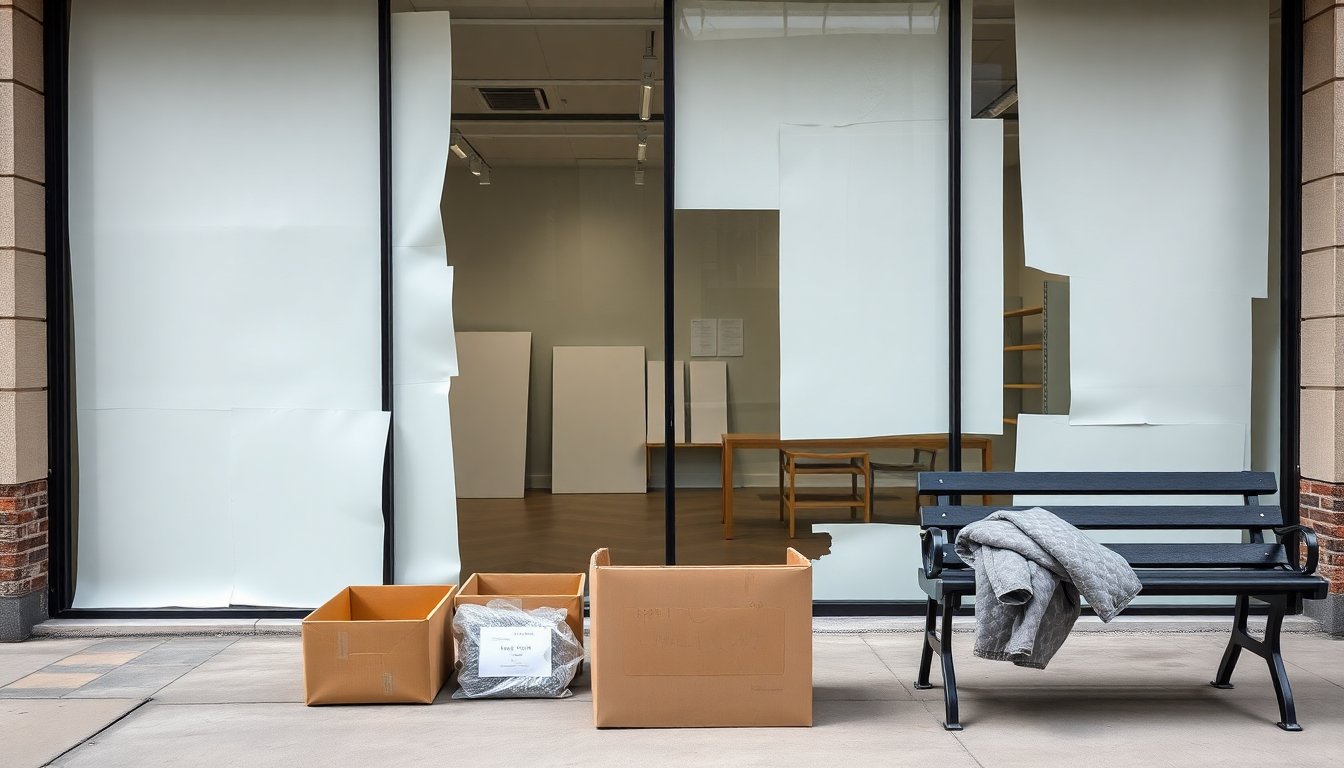
The College of Visual Arts and Design at the University of North Texas (UNT) in Denton has abruptly canceled a solo exhibition by Brooklyn-based artist Victor “Marka27” Quiñonez. Installed and scheduled to open publicly on February 19, 2026, the show was closed after installation, with gallery windows papered over and the works removed from view. The silence from university officials has fueled criticism from faculty and students who view the move as an affront to academic freedom and open artistic expression.
The exhibition, titled Ni de Aquí, Ni de Allá (Not From Here, Not From There), included pieces from Quiñonez’s I.C.E. Scream series, which reimagines paleta-shaped resin sculptures containing handcuffs or firearms to comment on immigration enforcement. The artist, born in Mexico and raised in Dallas, described the work as celebrating immigrant communities while confronting systemic injustices, not solely as an attack on law enforcement.
What happened at UNT and why it matters
According to reports, the exhibition was installed and visible on UNT gallery materials before being taken offline. Artist communications indicate that gallery staff stopped responding and that the university terminated the loan agreement with Boston University Art Galleries, which had arranged for the show to travel. UNT has not provided a public explanation for the removal, leaving students, faculty and the artist searching for answers and citing campus policy that emphasizes the First Amendment and principles of academic freedom.
Institutional policy and claims of inconsistency
UNT’s published policy on art exhibitions references adherence to the First Amendment, the Texas Constitution and campus regulations, and states the university “does not discriminate against works of art based on its content or the viewpoint(s) expressed.” Faculty members have pointed to this language in a public open letter urging President Harrison Keller and university leadership to explain the rationale behind the removal and how the decision aligns with the school’s stated commitments.
Reactions from the artist, faculty and students
Victor Quiñonez has publicly condemned the cancellation as censorship. On social media he wrote that the show was “taken down but we will not be silenced,” framing the closure within a broader conversation about diminishing democratic norms. He emphasized that his work highlights the resilience and culture of immigrant communities and that removing it amplifies rather than erases the message.
Faculty in the College of Visual Arts and Design drafted an open letter asserting that the quiet removal undermines the “open exchange of ideas fundamental to higher education.” Students organized a demonstration described as a memorial-style protest in the college courtyard, inviting participants to wear funeral attire in a symbolic act to mourn the canceled exhibit. These actions aim to pressure administrators for transparency and to demand adherence to institutional commitments on expression.
Previous controversies and the broader context
Observers note this is not the first time UNT has pulled politically sensitive work. Last year, the university removed a pro-Palestinian piece following complaints from lawmakers, and internal discussions have reportedly produced new guidelines intended to navigate such controversies in light of state-level pressures. Critics argue that removing exhibitions without public explanation damages trust and chills curricular and creative freedom.
Content of the exhibition and public debate
The works in Ni de Aquí, Ni de Allá juxtaposed playful imagery with stark political critique: candy-colored frozen-pop sculptures that conceal objects traditionally associated with coercion and violence. The I.C.E. Scream series reframes a familiar cultural object into a vehicle for protest, using visual irony to interrogate policies and power structures shaping immigrant lives. Supporters say the pieces invite empathy and conversation about migration, heritage and surveillance.
Opponents of politically explicit campus displays argue universities must balance expression with community concerns and public safety. Proponents counter that institutions of higher learning exist precisely to host uncomfortable conversations and that removing art for fear of offense risks abdication of educational responsibility. UNT’s lack of a statement has left both sides grappling with how policies are applied in practice.
Next steps and possible outcomes
Quiñonez hopes Boston University or other institutions will provide an alternative venue, preferably in Texas, allowing the exhibition to reach local audiences. Meanwhile, faculty demand a formal explanation from administration, and students plan further demonstrations to keep attention on the issue. The dispute may prompt renewed scrutiny of campus exhibition rules and how universities respond to political pressure.
As momentum builds, the episode raises questions far beyond a single gallery: how should universities uphold academic freedom when art intersects with politics, and what transparency obligations do public institutions have when they remove work from view? For now, the untold reason for the removal remains central to the controversy, even as the removed artwork continues to spark debate.